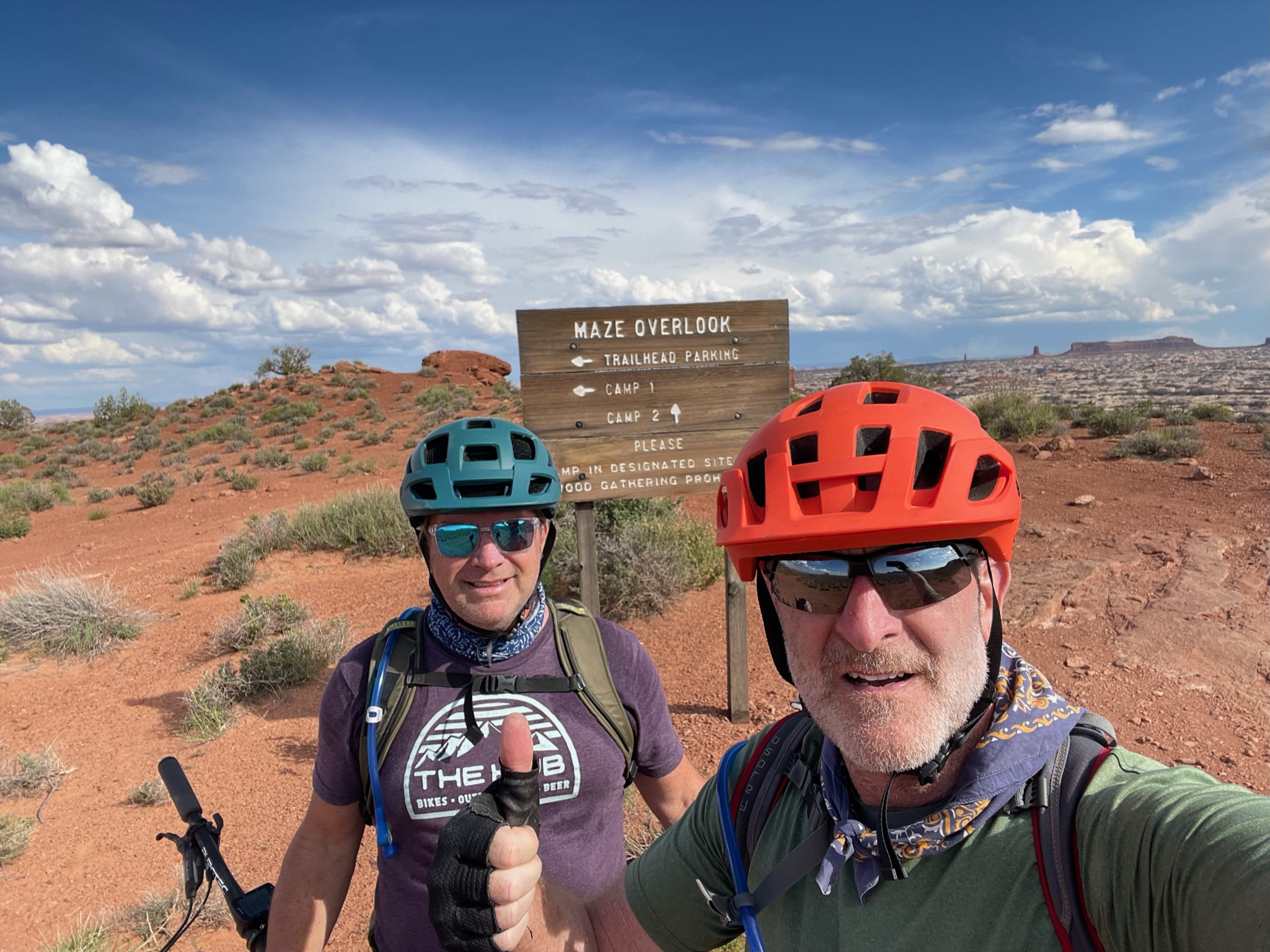
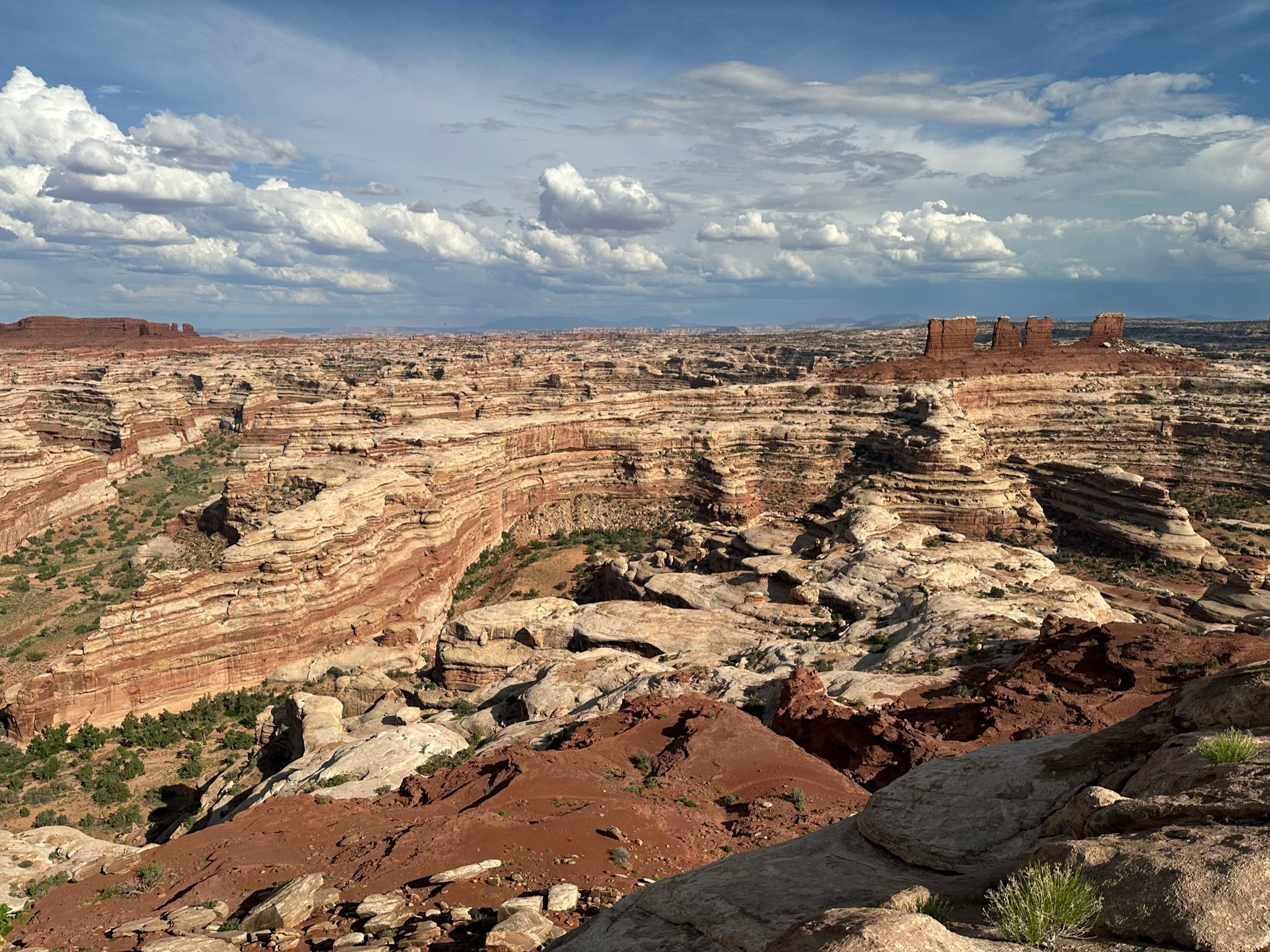
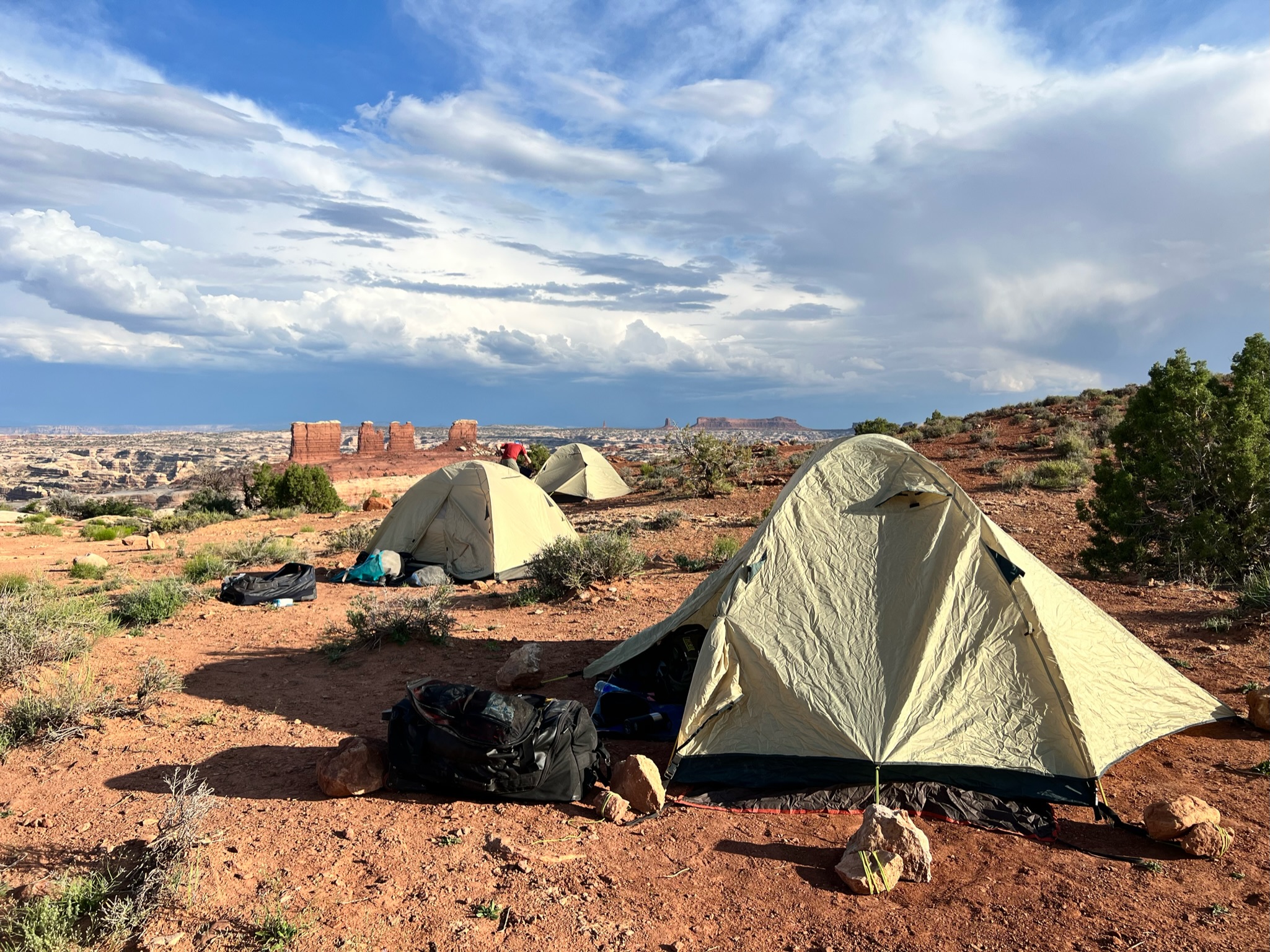
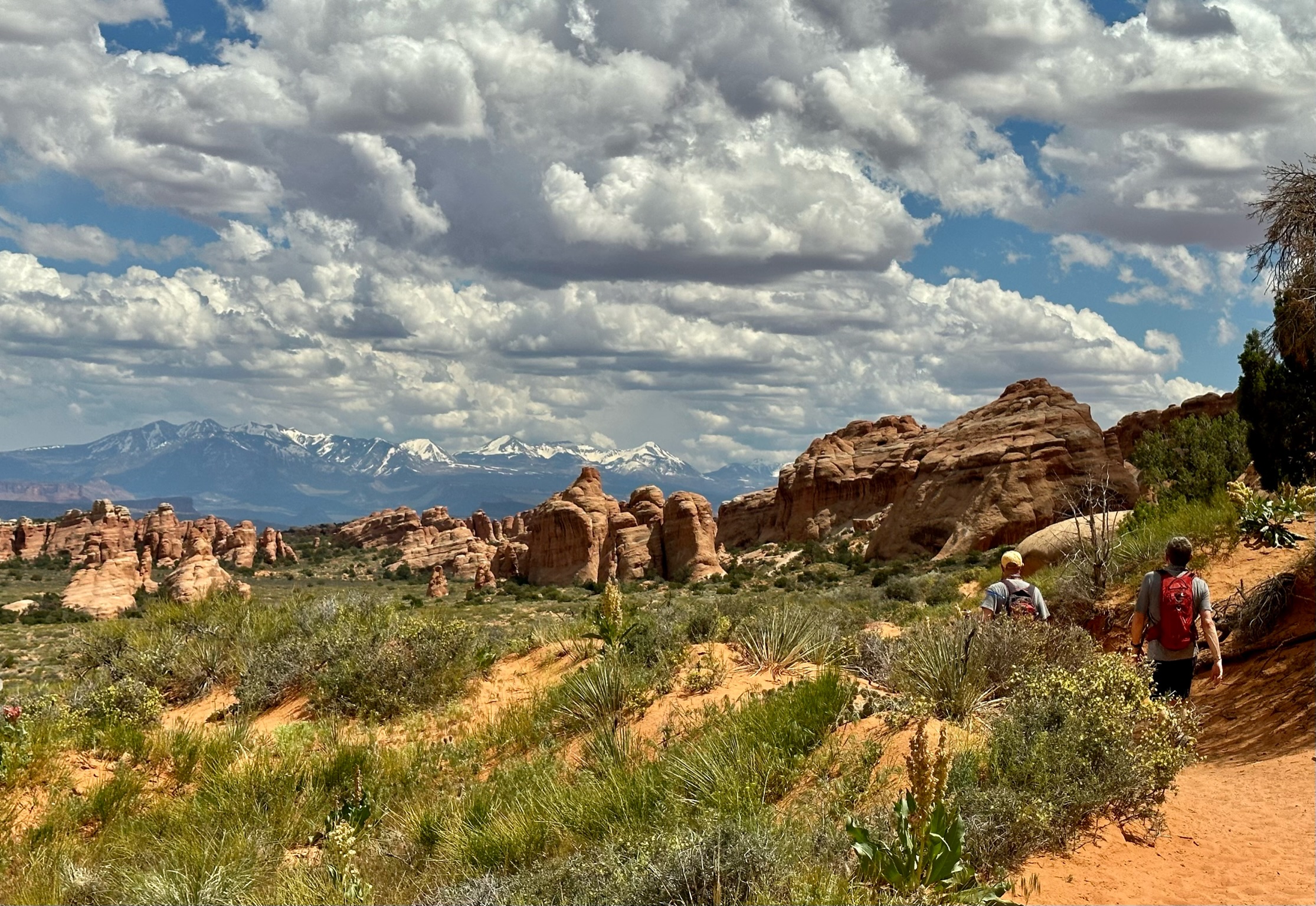
The Maze 2023 – Day 3 – Maze Overlook to Teapot Campsite

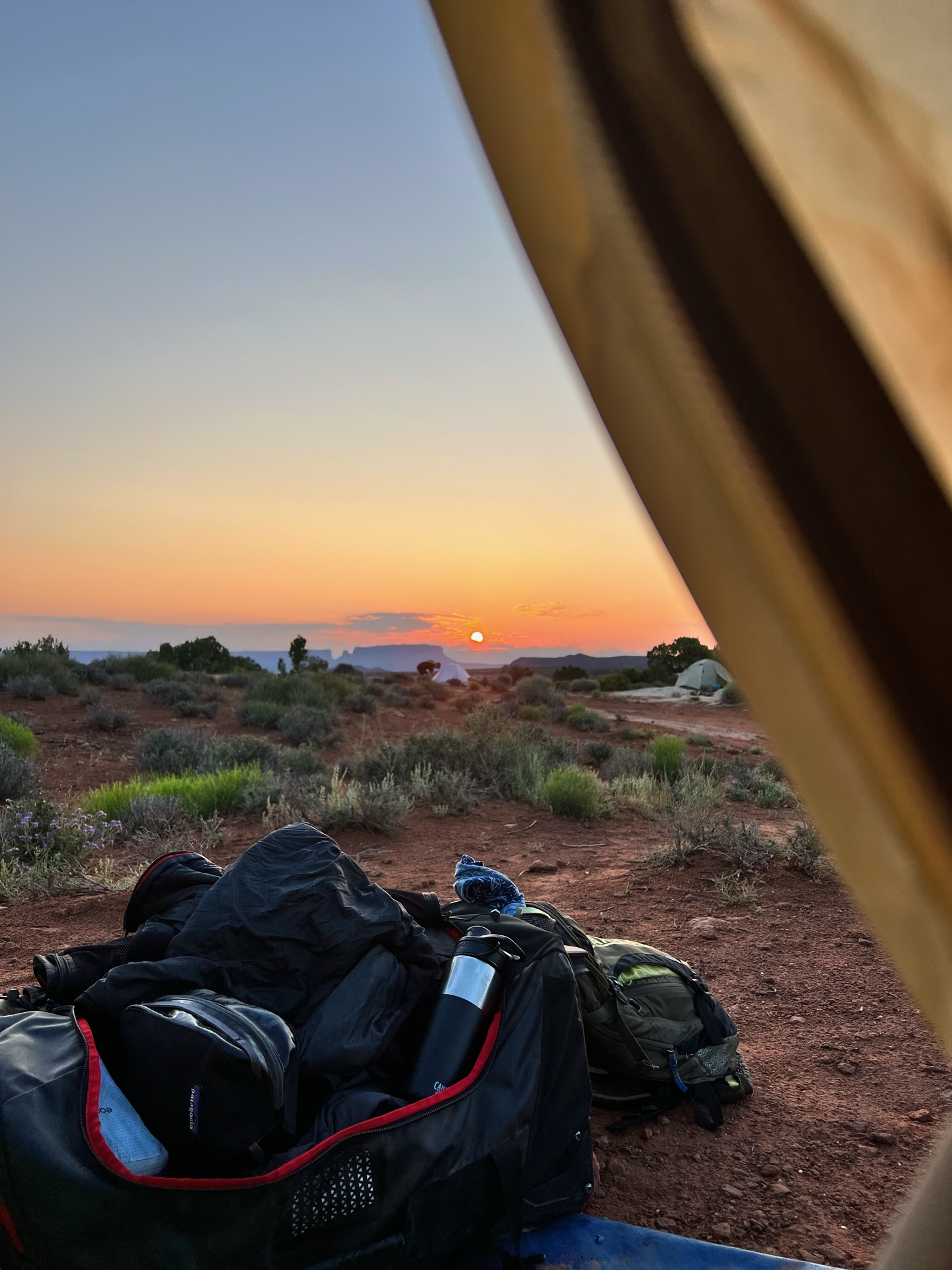
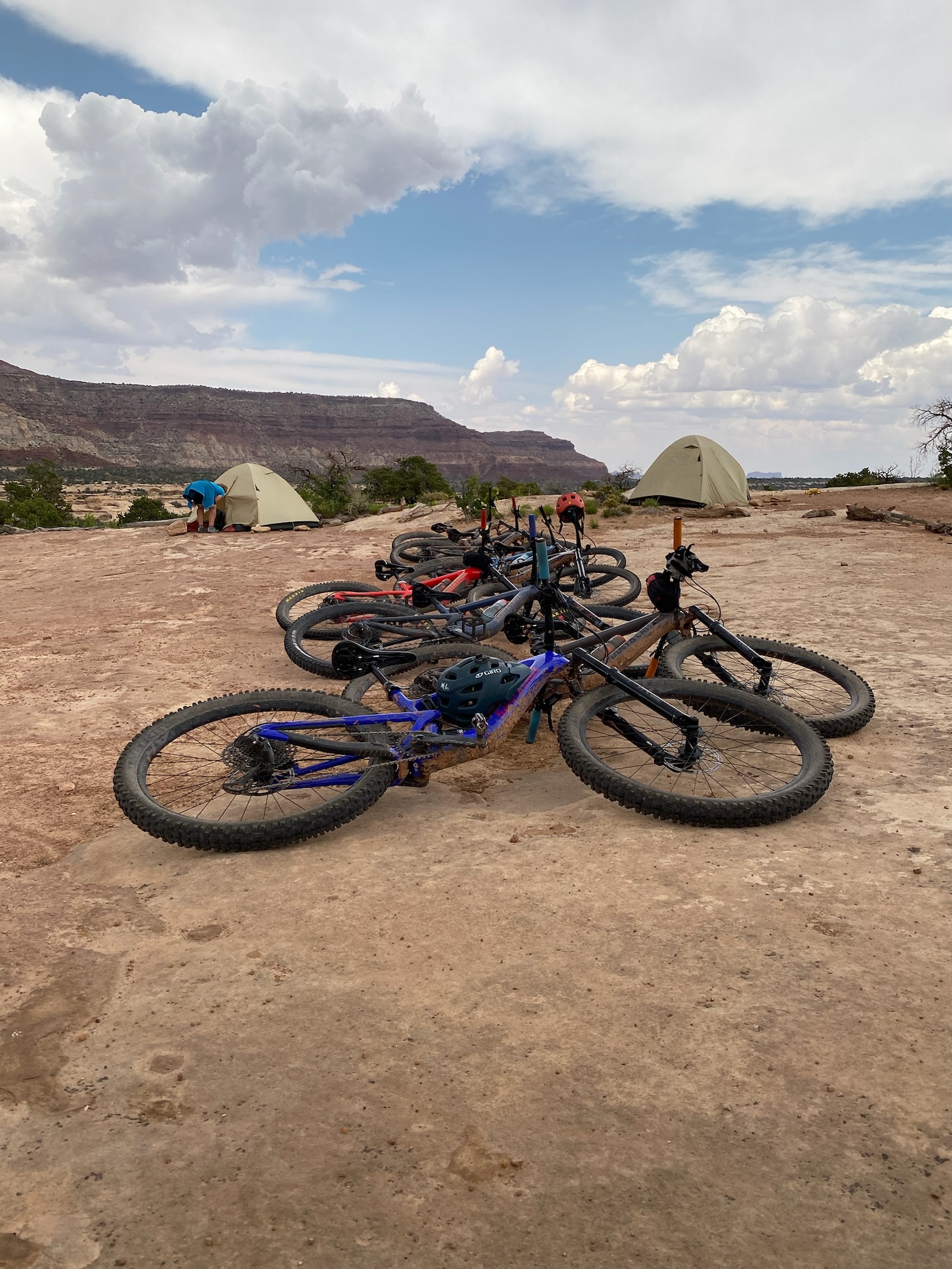
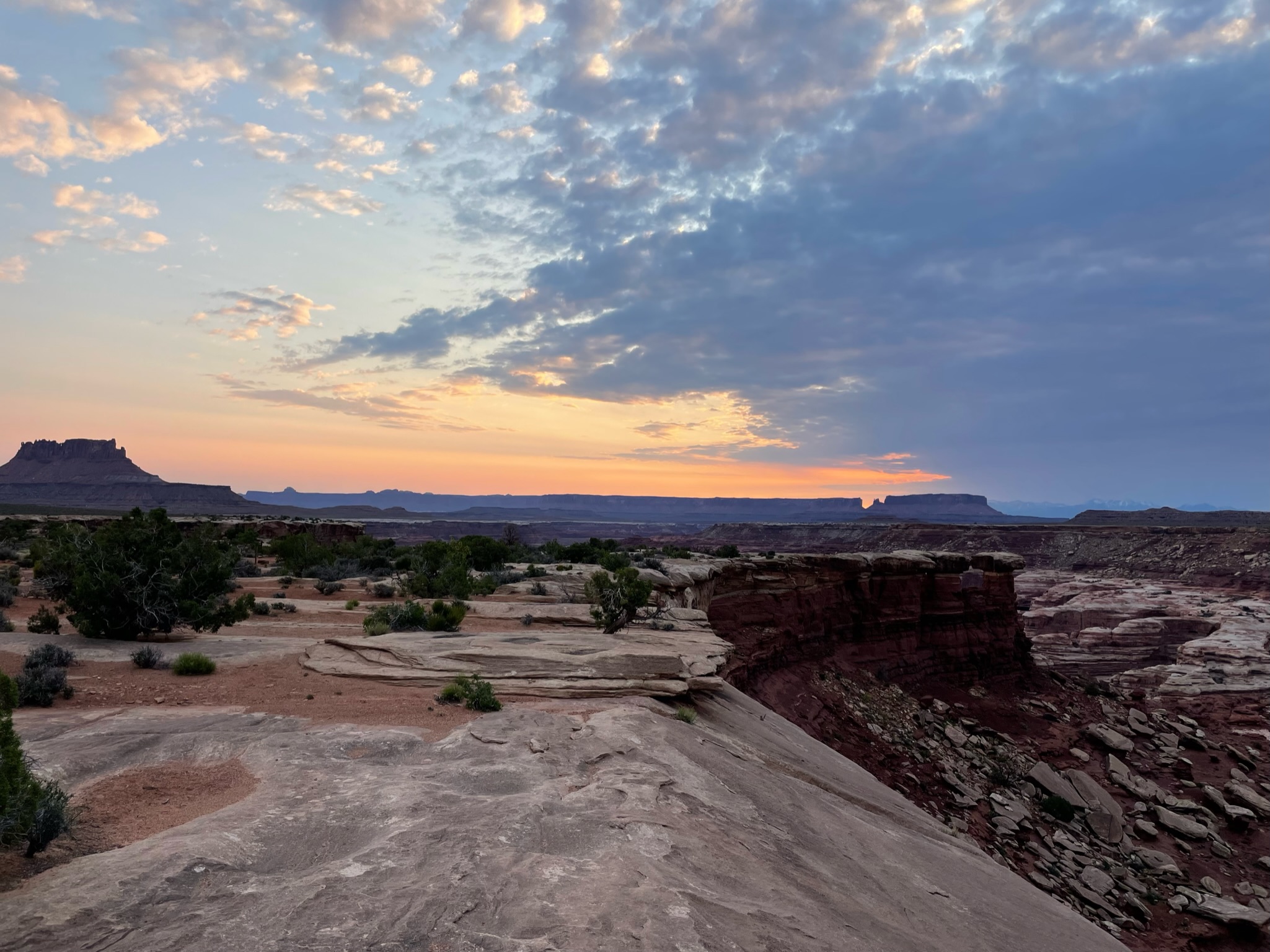
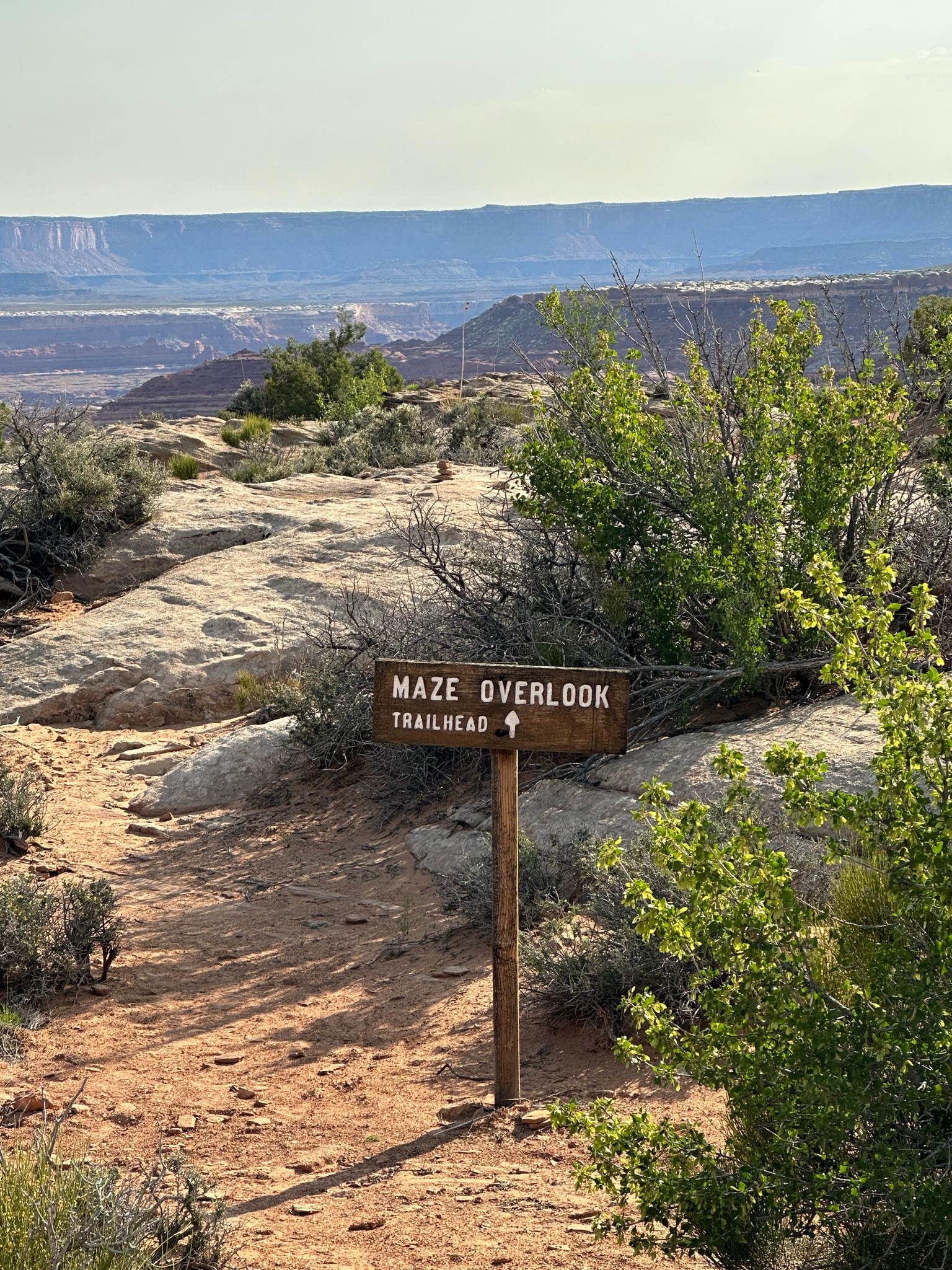
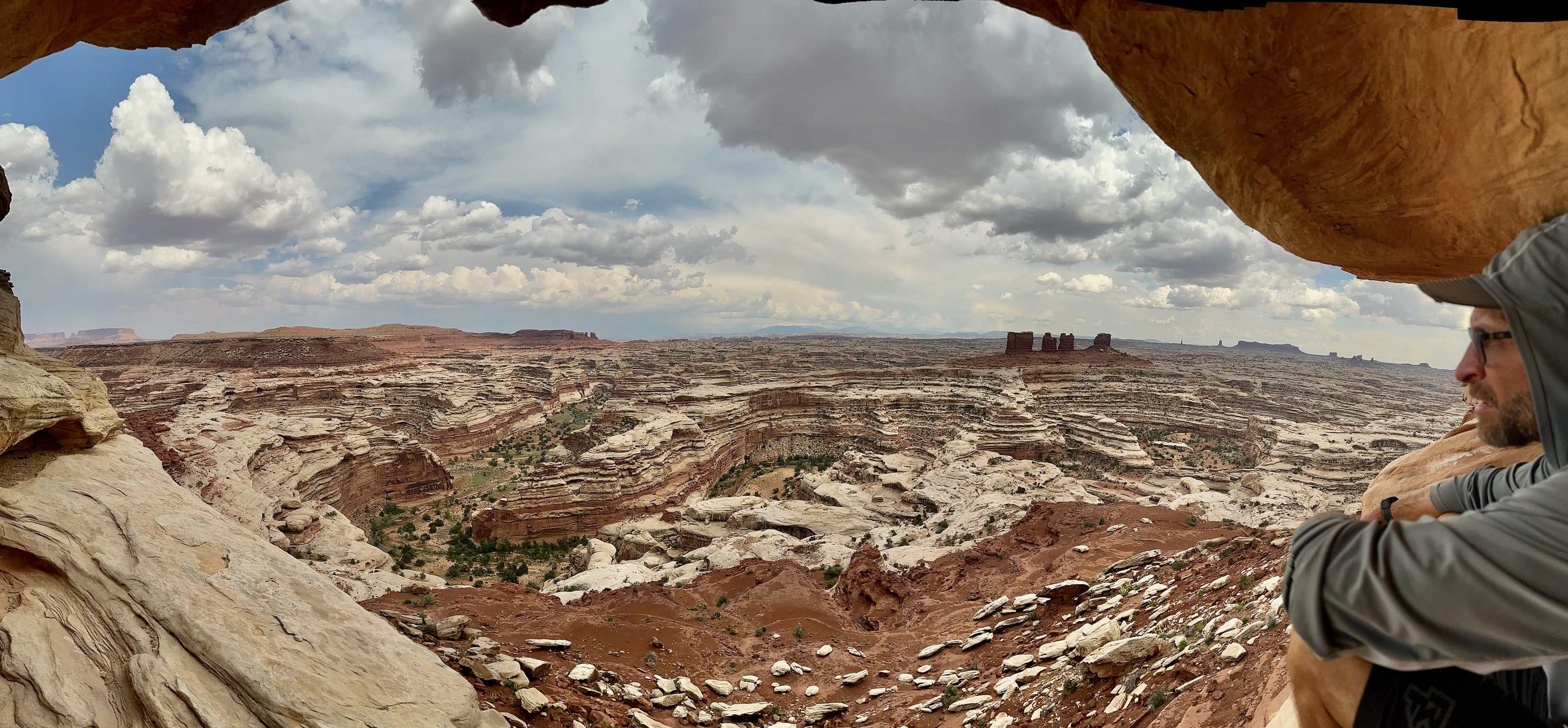
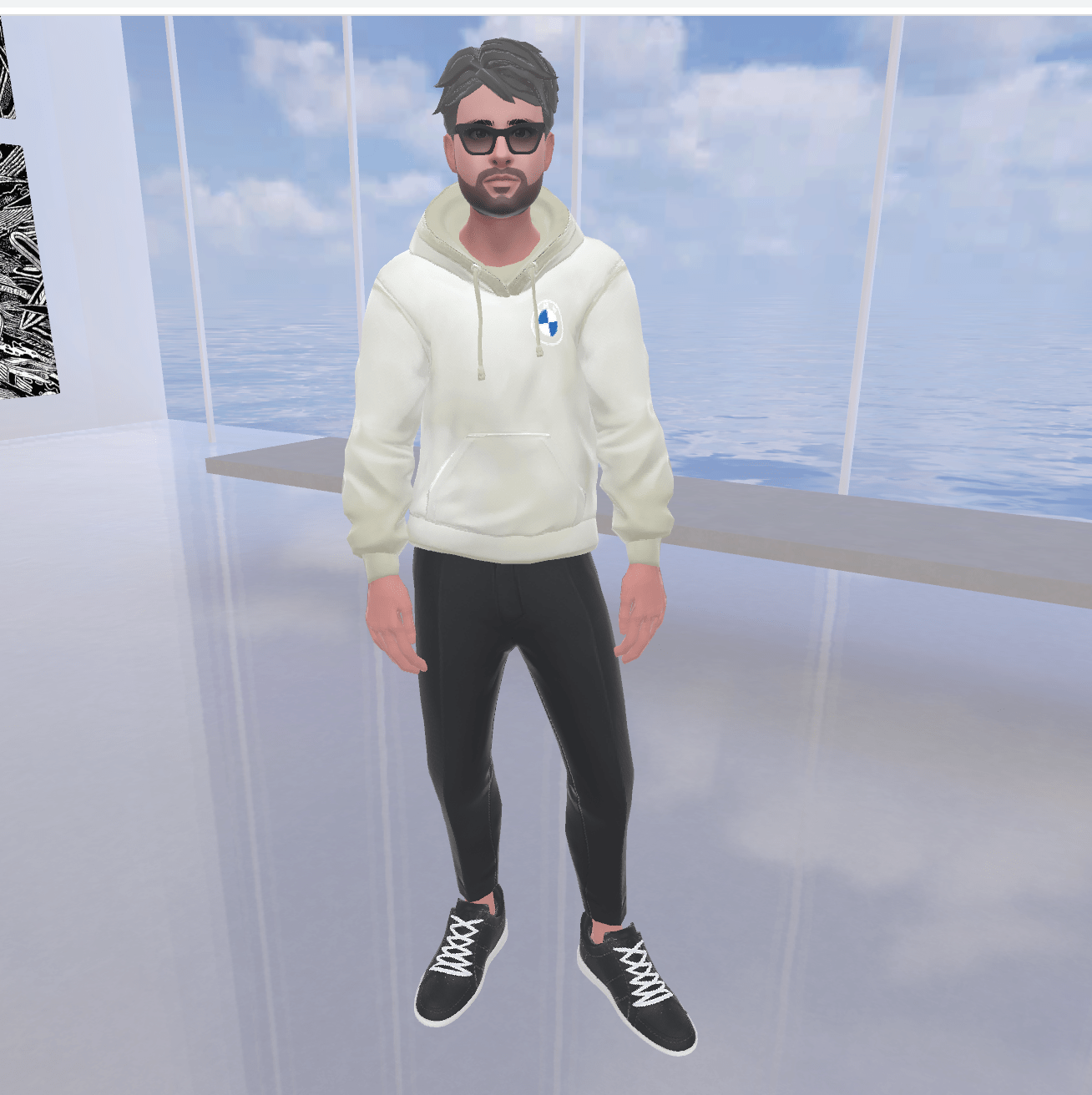
I’ve made a couple of these trips before (White Rim in 2016, Kokopelli in 2022), and I prefer this format – camping at two sites for two nights each vs. a new campsite every night – camping and decamping is a lot of work – especially when you’re already exhausted after a long ride. At this point – it’s worth pointing out that these back-country campsites are nothing more than an area marked for camping. There are no facilities – no water, bathrooms, seating, shade, fire-pits, nothing but boundary markers. But what they lack in amenities, they more than makeup for in location and stunning views. The Maze Overlook is one of the most incredible places I’ve camped at, and even the privy (aka Groover) spot has breathtaking vires while you contemplate the day ahead.

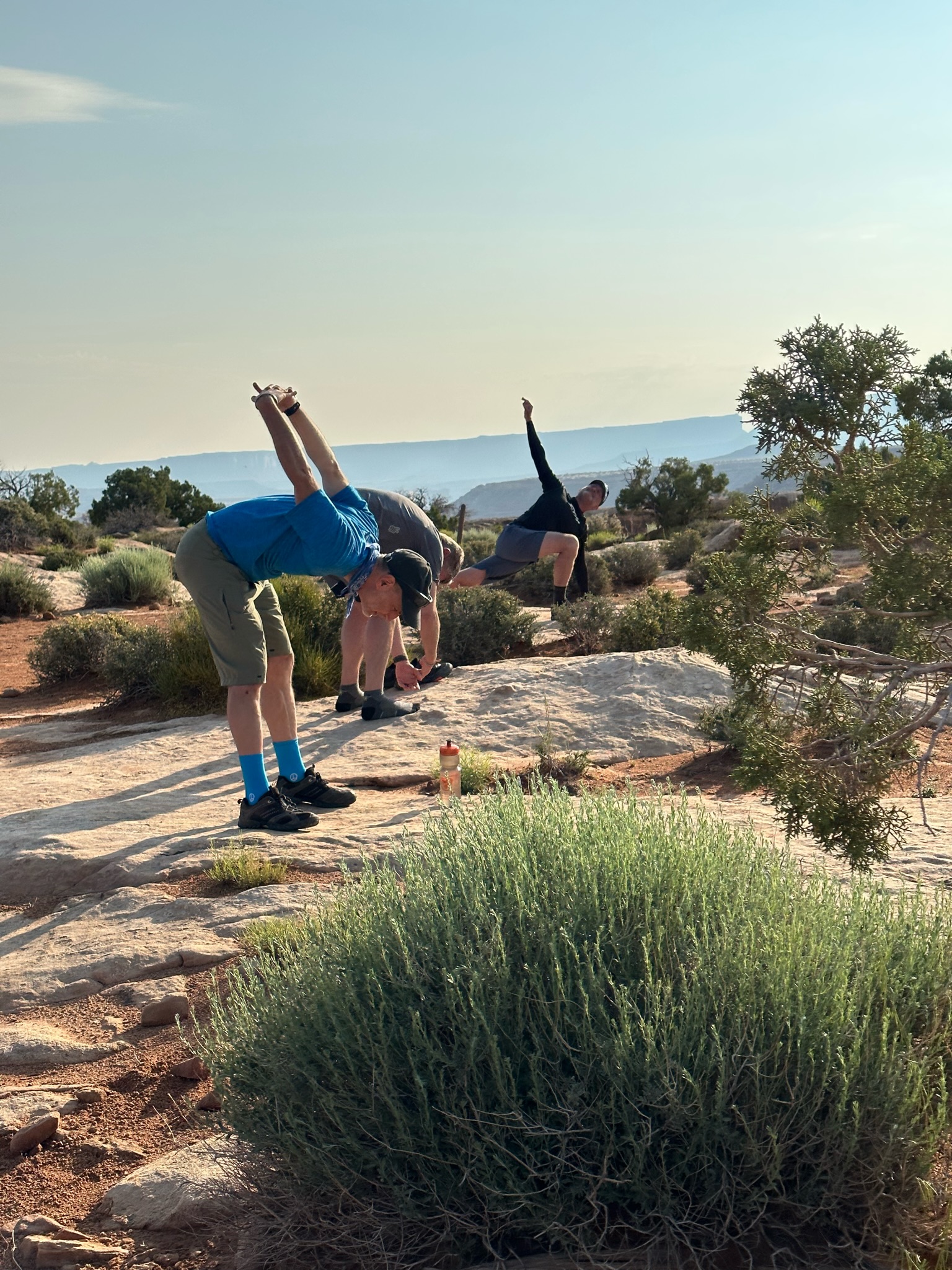
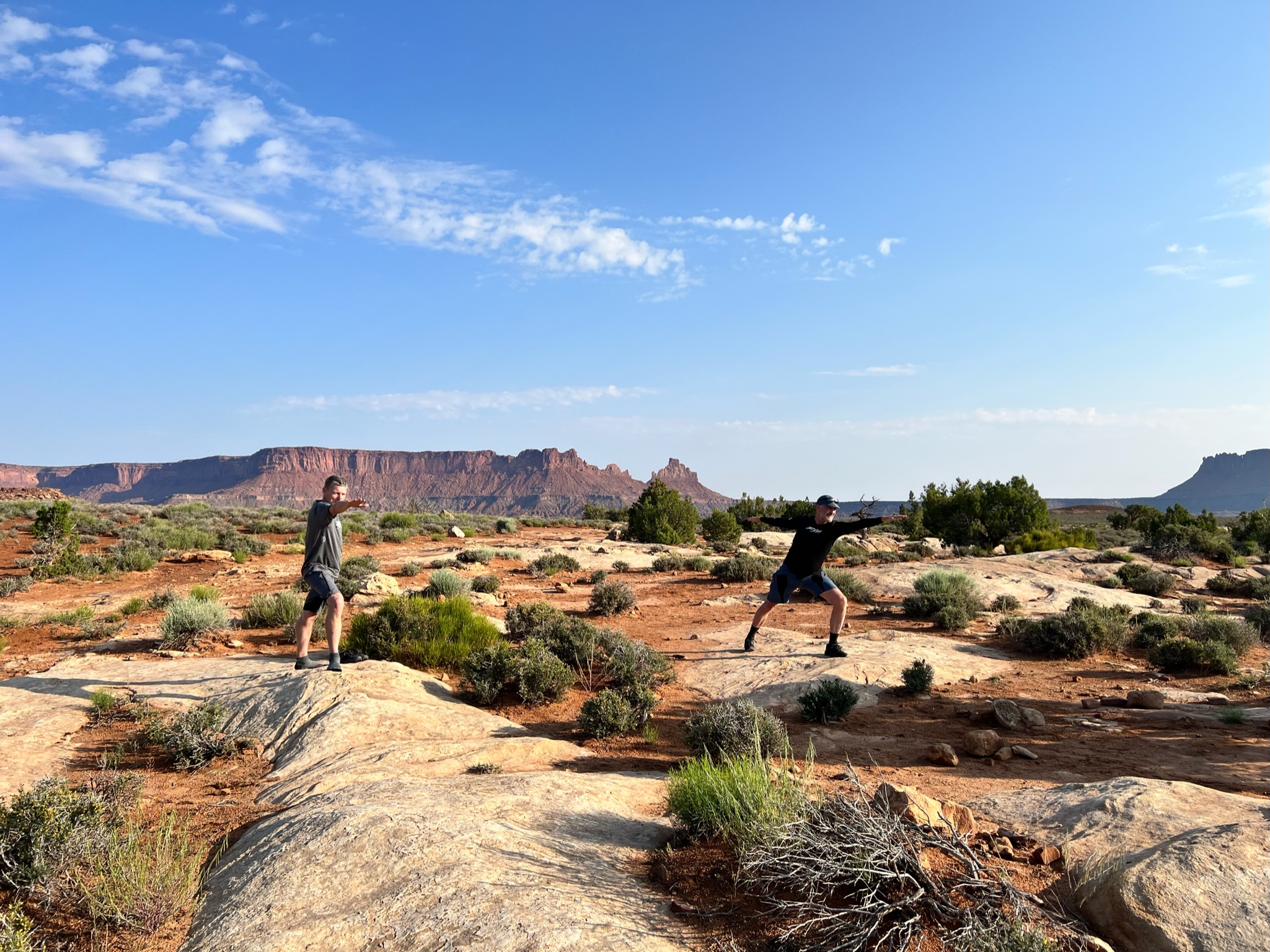
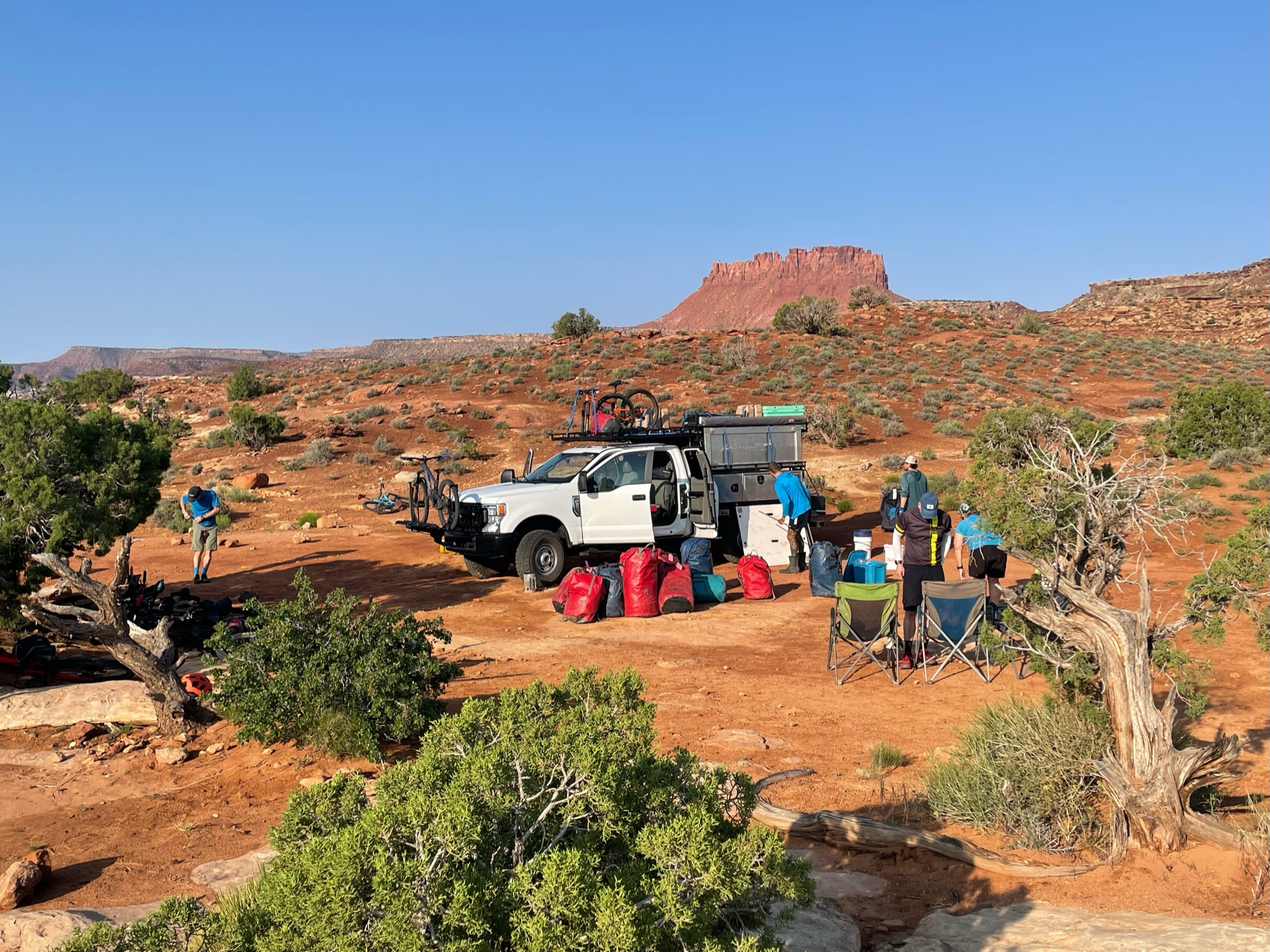
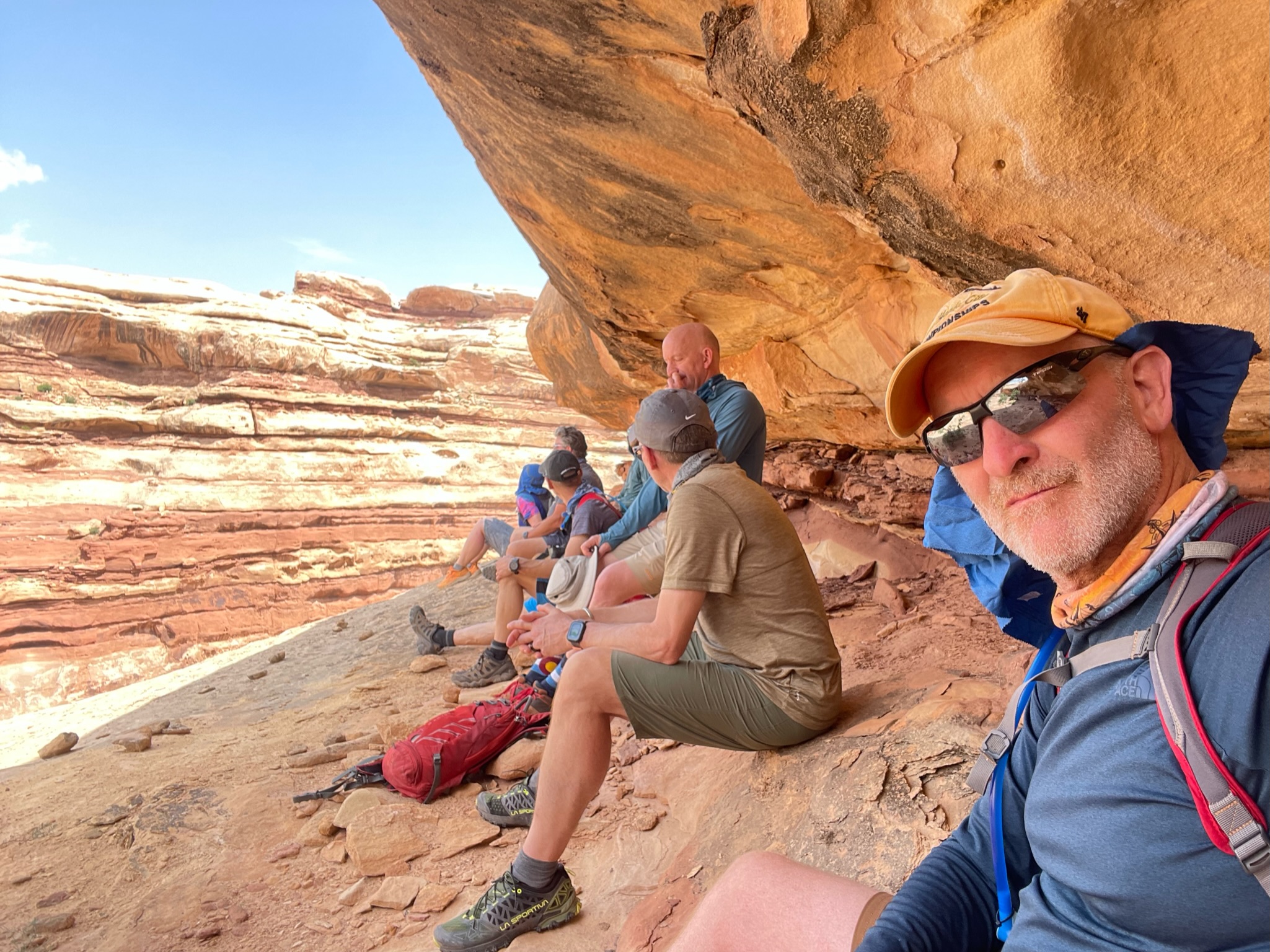
We hit the trails after packing our gear, de-gunging the bikes, doing a little bit of recovery yoga, and helping load the truck.

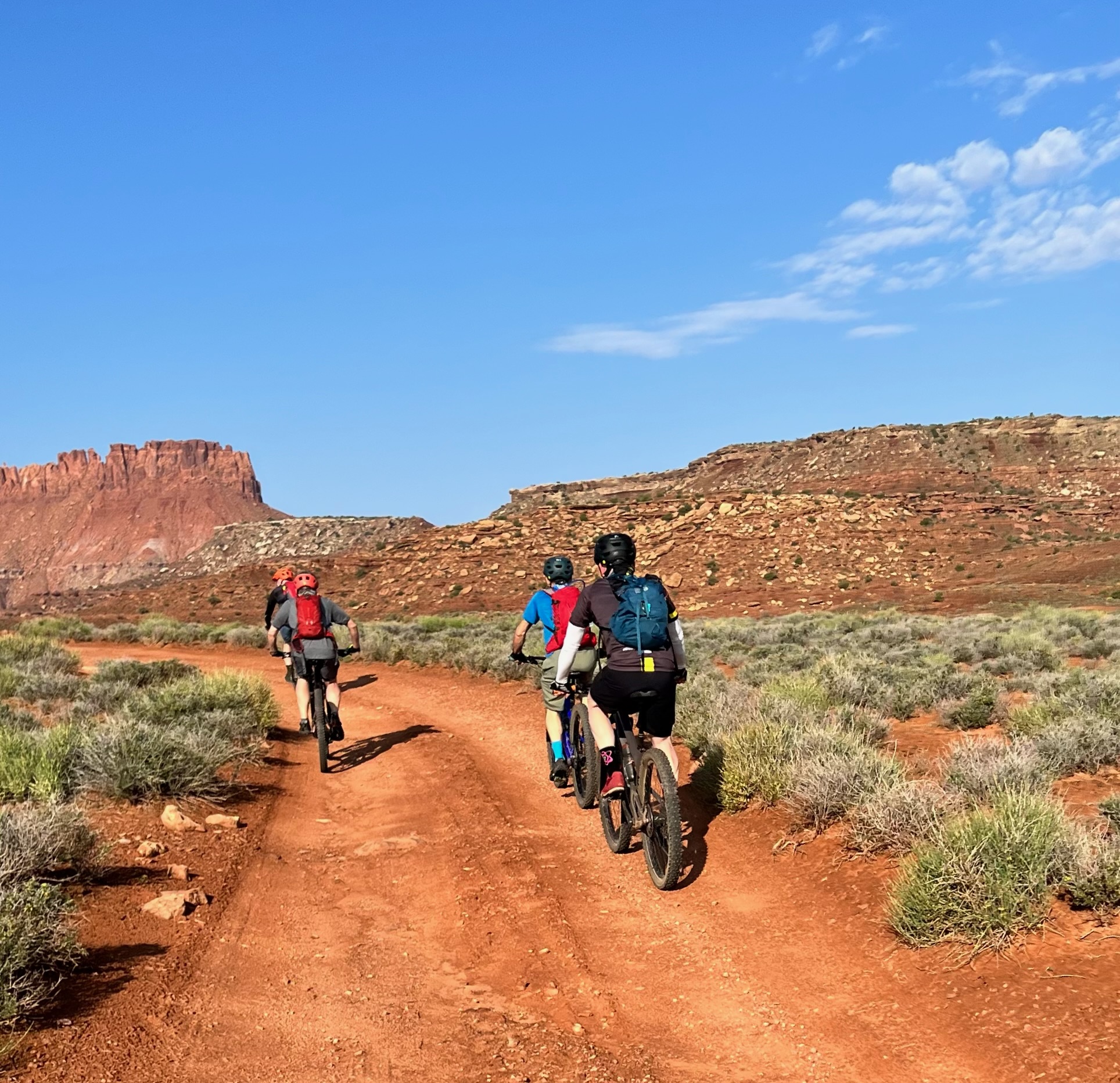
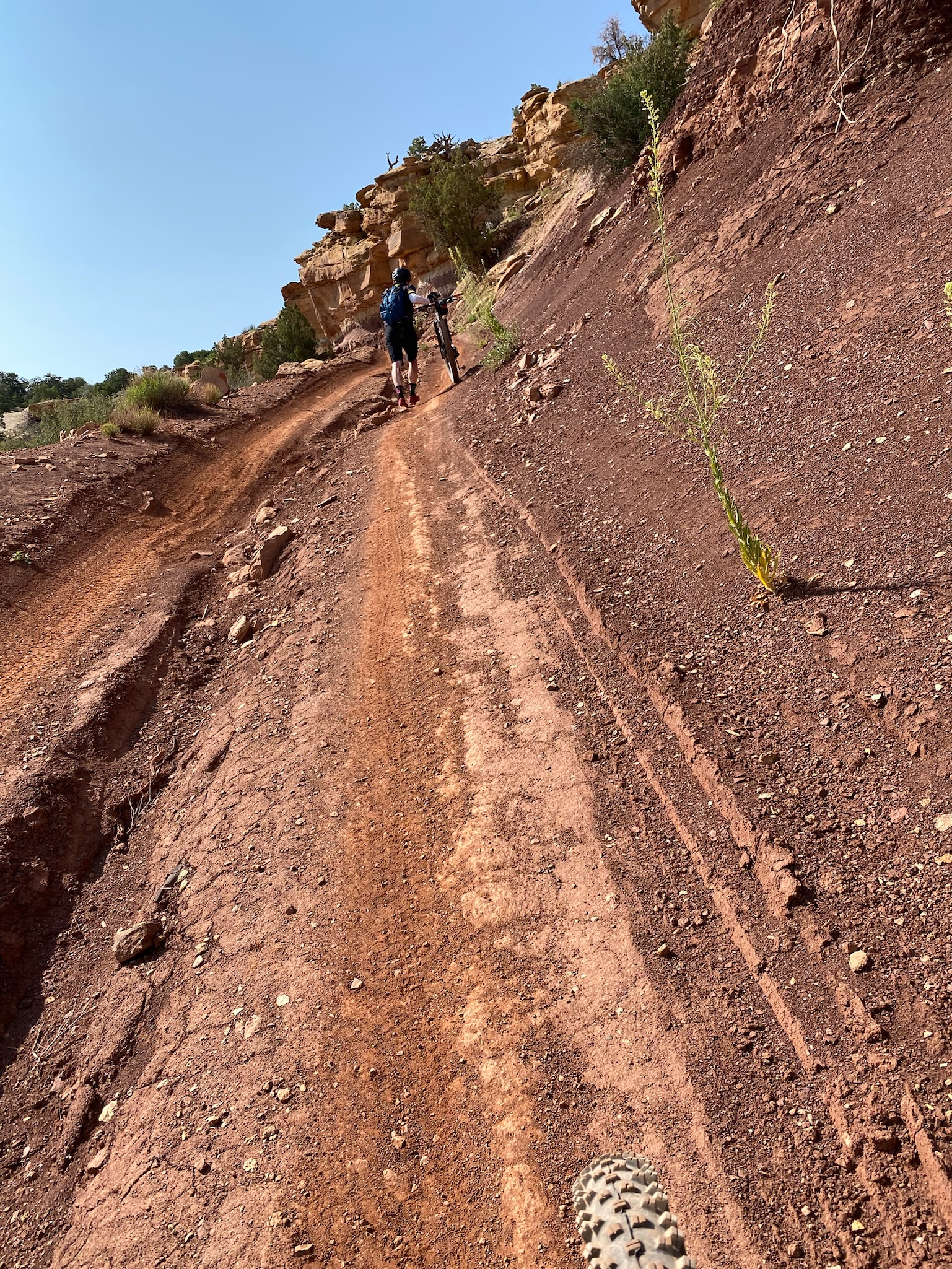
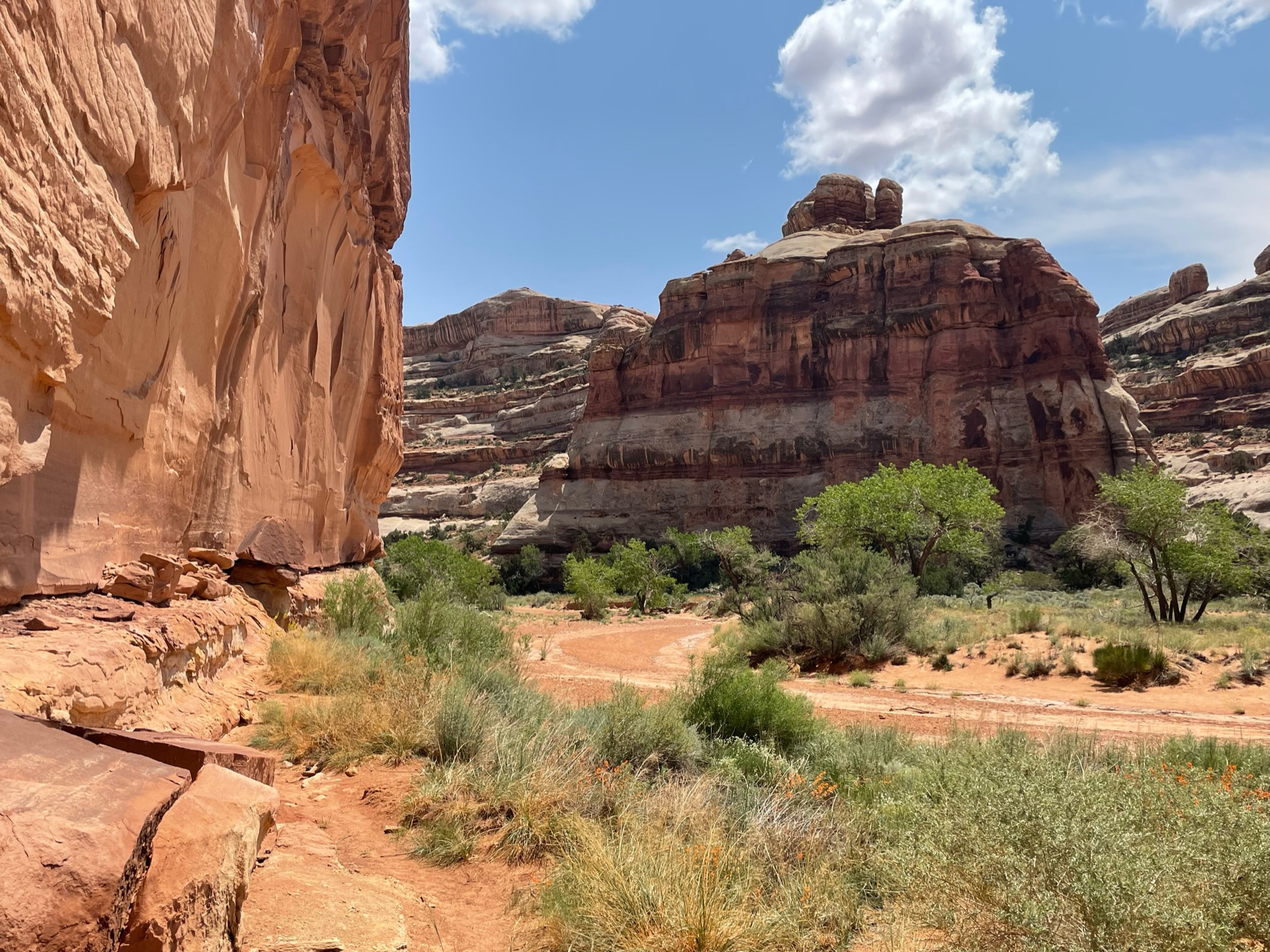
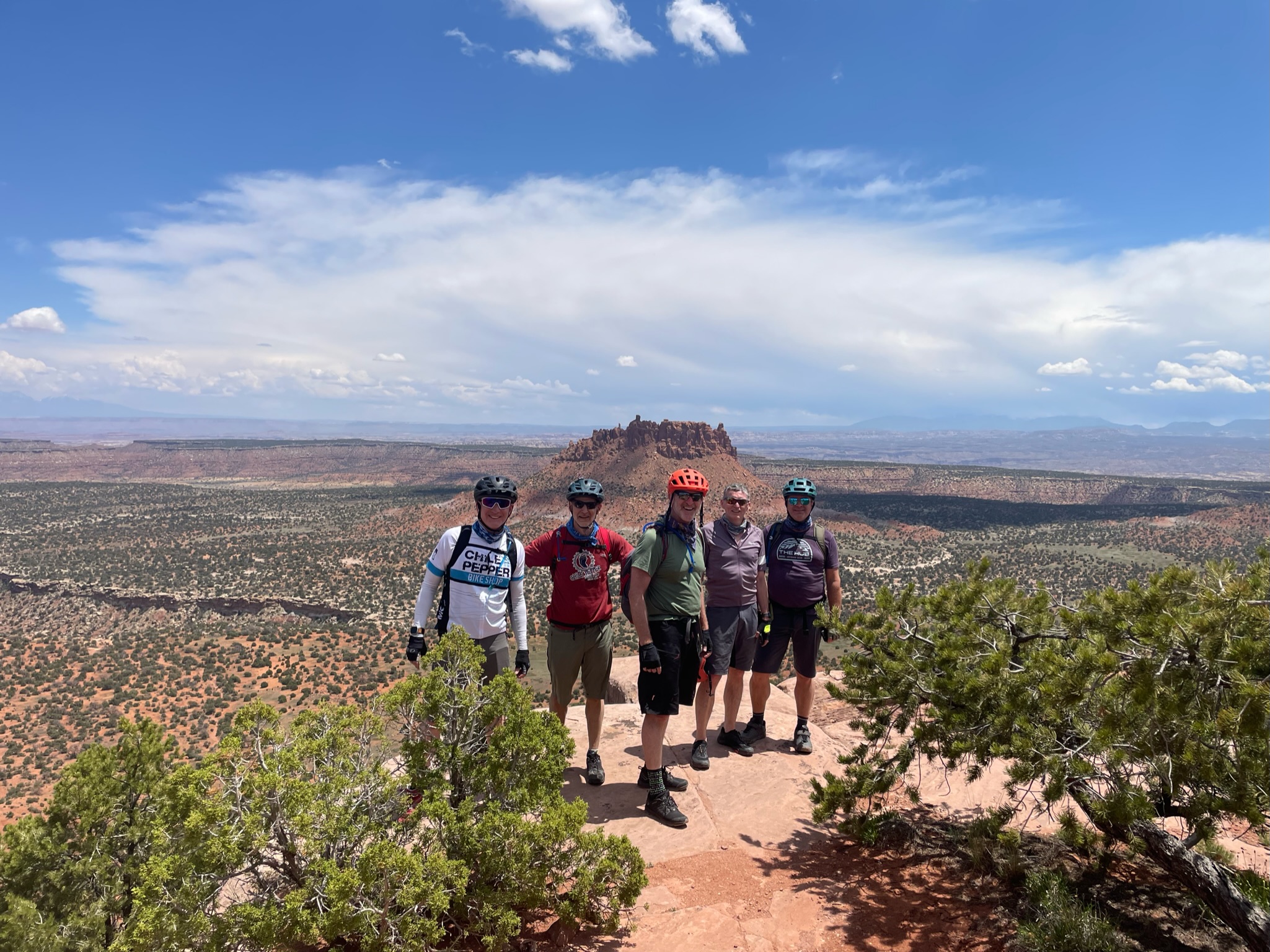
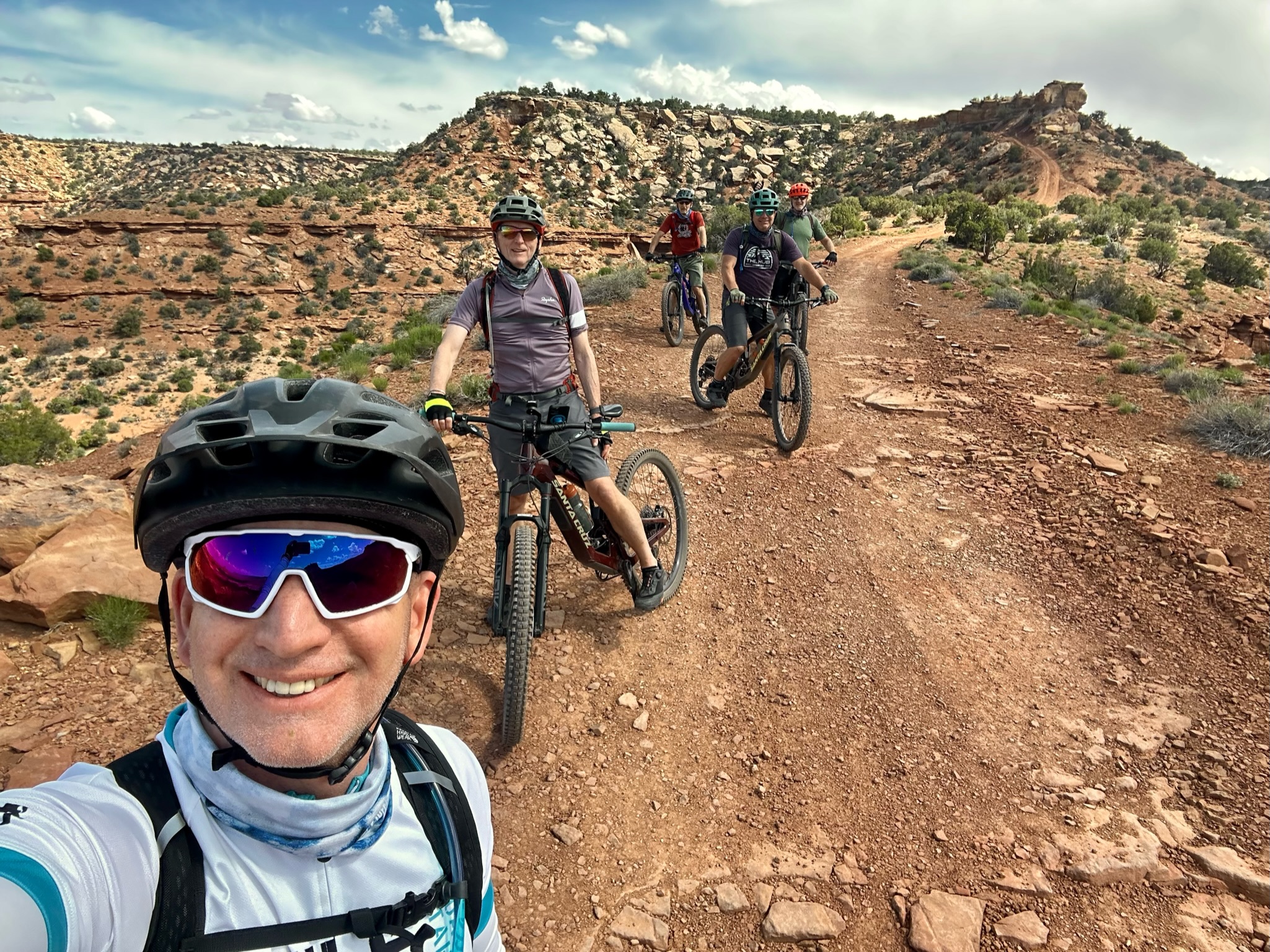
The morning entertainment was reversing our ride from day 1 – climbing back up the Golden Stairs, and regaining 800 feet in the process. After a quick photo op overlooking Canyonlands and Bagpipe Butte while we waited for the support truck to pick its way through the fairly technical uphill we bombed down and had lunch stop in a dry creek bed with little shade. Hot, hot, hot !

Post lunch was a leisurely cruise down to Teapot Campsite – our home for the next few nights. We had a big day of riding tomorrow on very technical trails. so we walked over to check it out and pick out some lines through the rock gardens.

My Strava ride is here.

The Maze 2023 – Day 2 – Hike to the Harvest Scene Pictographs

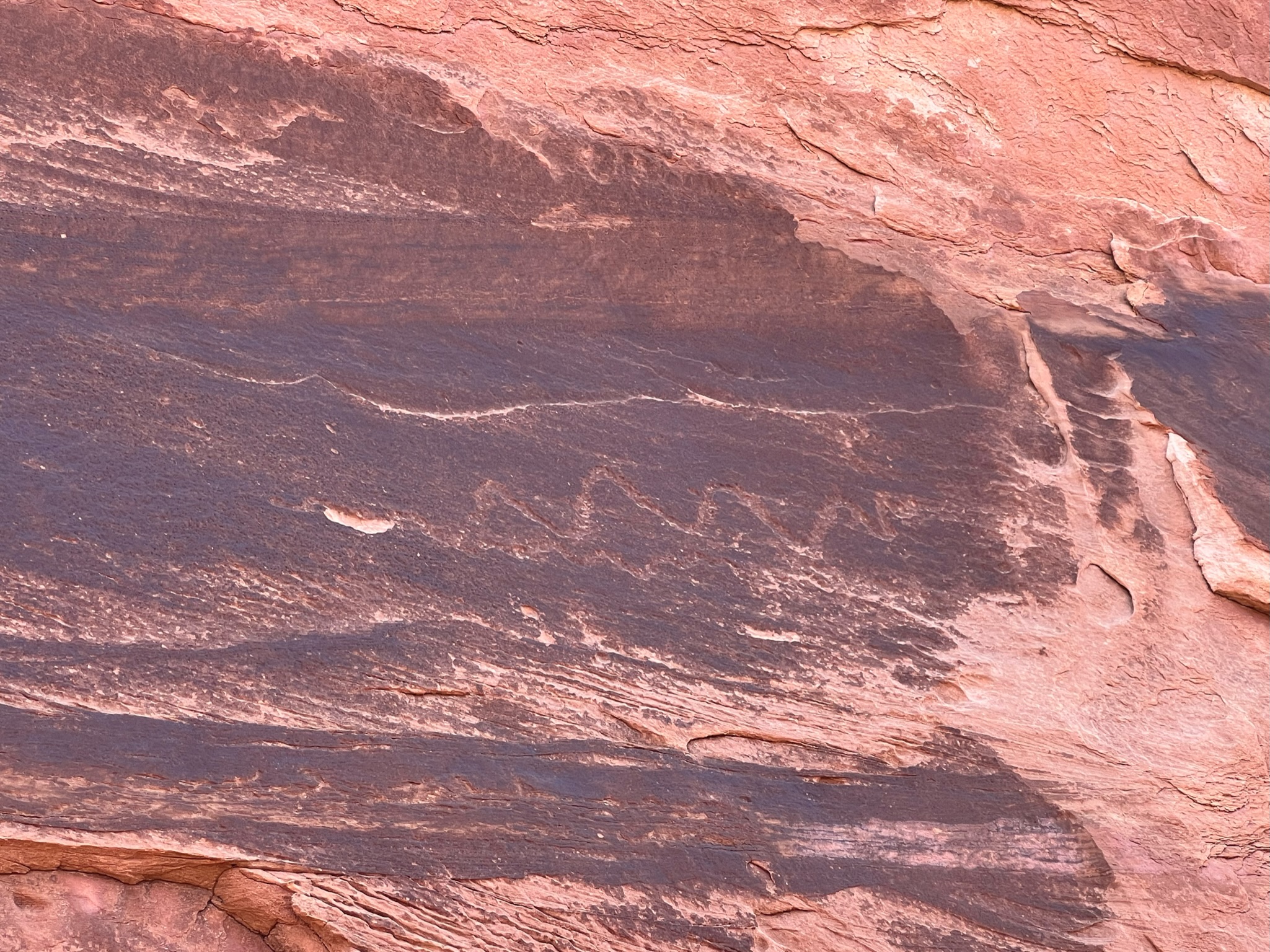
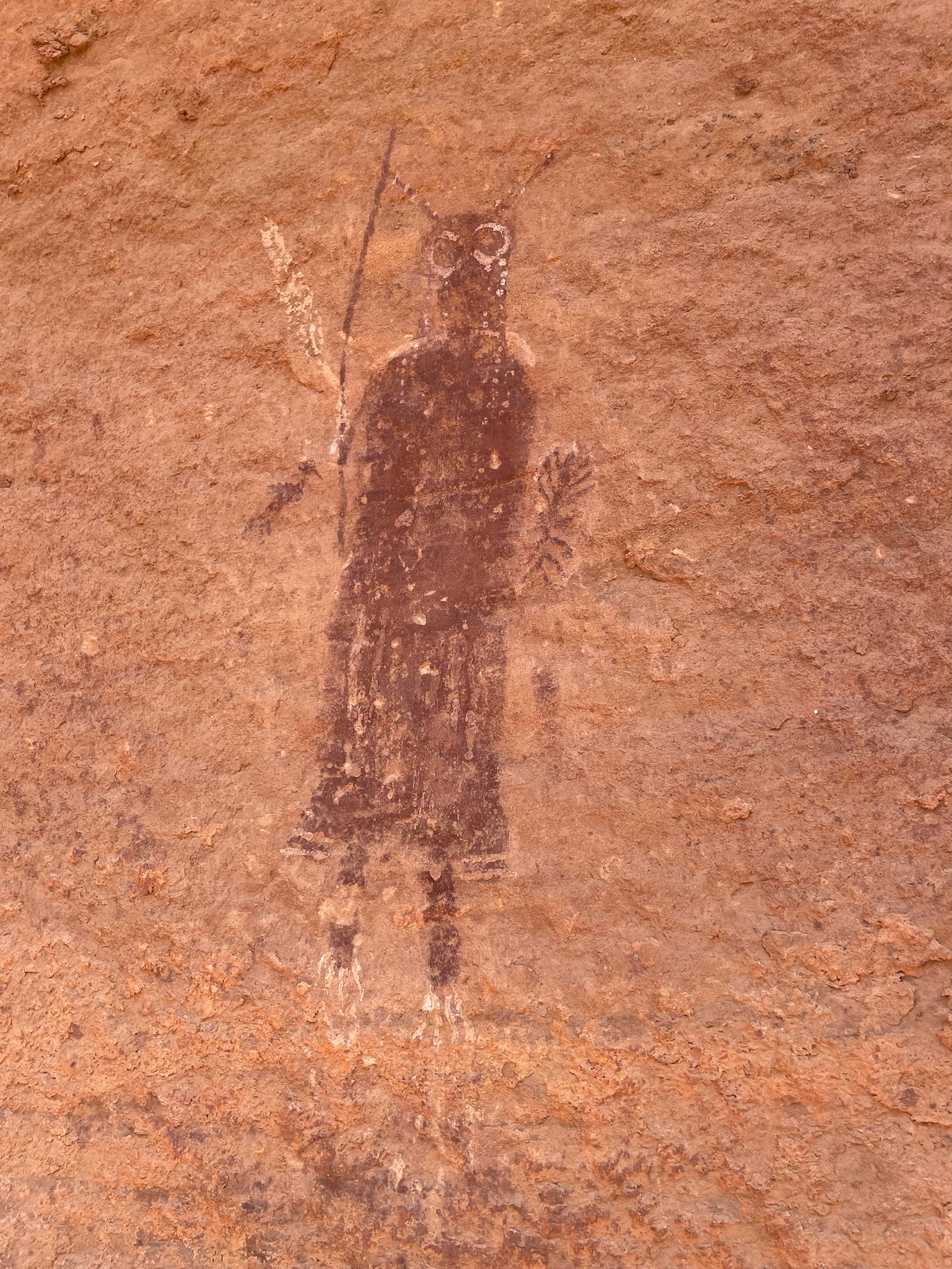
Today was a “rest” day – meaning a rest from riding. Instead, the plan was to hike/scramble/climb down into the canyon below our camp to view some of the world-famous Barrier Canyon pictographs and petroglyphs. The pictographs are believed to date from 2000 BCE to 500 CE (Common Era), but not much is known about who created them or their exact meaning.

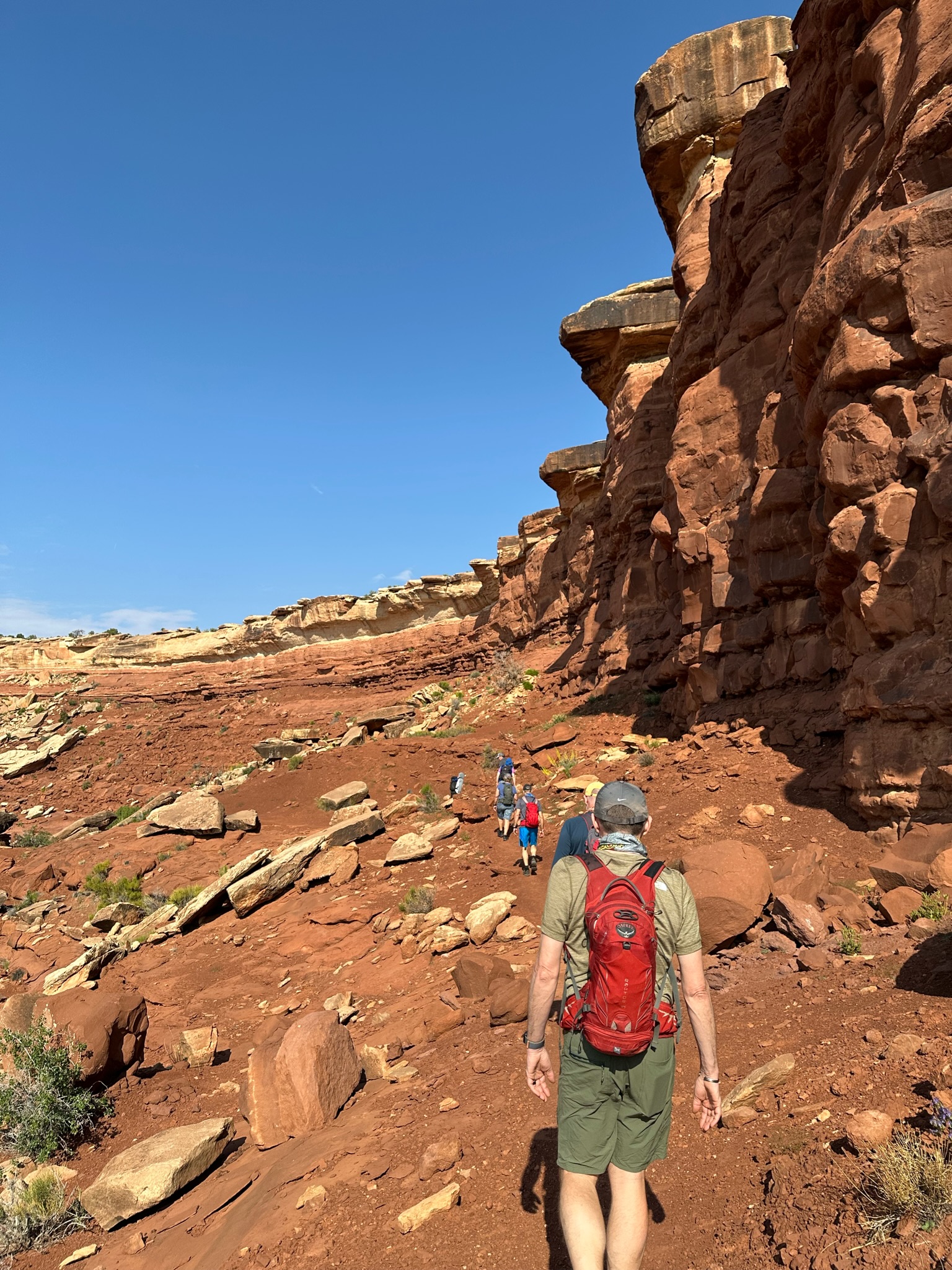
After drinking plenty of the best coffee for 50 miles in any direction and a cooked breakfast, we set off. It took us about 90 minutes to scramble down into the canyon, and unless you know exactly where you are going, I will not attempt this – there are plenty of places you could go off course and get into trouble. It’s a very exposed descent, the trial is not well marked, and a slip or fall would likely end in severe injury. There are some primitive Moki steps at a couple of points if you can find them. Getting out of the canyon with any kind of injury would be impossible without assistance and the right equipment.

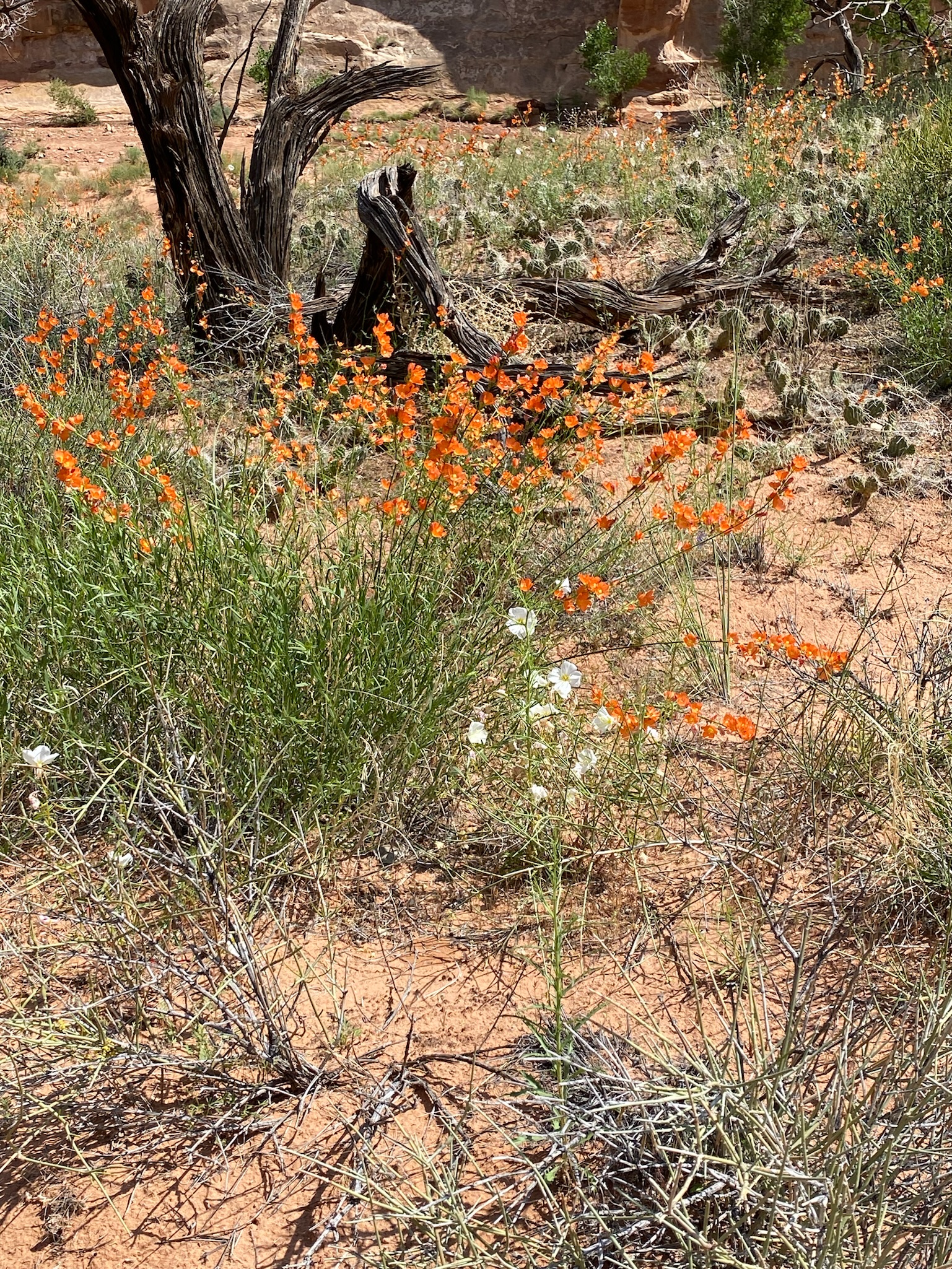
It was a toasty hike to the main Pictograph canyon with full sun, no shade, and no breeze. Once we got to the canyon floor, we were treated to an explosion of desert plants. There’s been a lot of rain in the area, and this was apparently one of the best spring blooms in living memory.

There’s not much online about these pictographs other than people’s accounts of hiking into the canyon to visit them. They are the same Barrier Canyon style as other sites in the area – nearby Horshoe Canyon being one of the most extensive sites.

The hike back up to camp was much quicker and easier but still pretty strenuous, and we even found a little shade. Fortunately, there were no injuries aside from a few scrapes, and it was great to spend time in an area that very few people will ever have the opportunity to visit, given its remoteness.

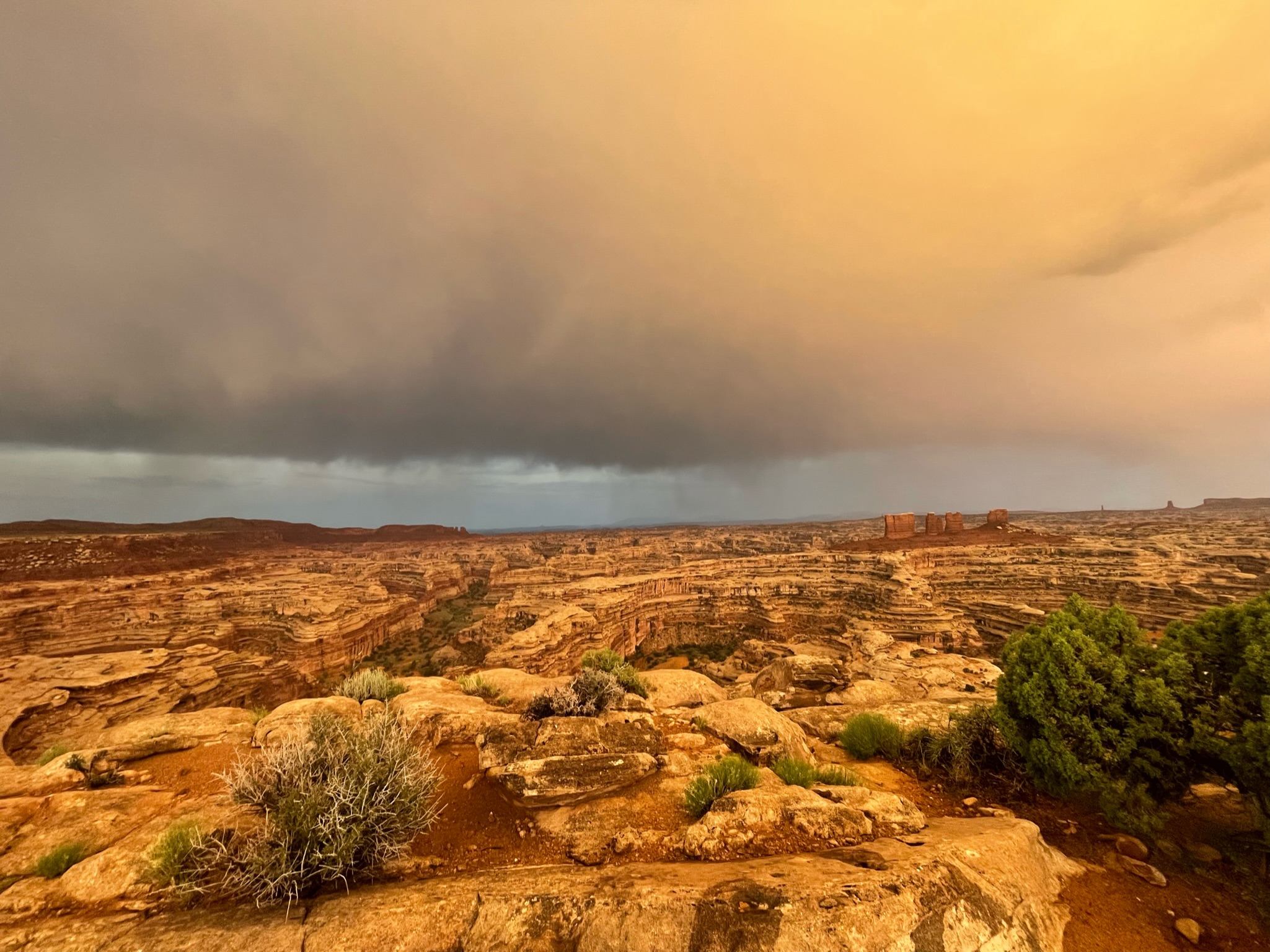
Returning to camp for a few beers, another excellent dinner, and a spectacular lighting and rainbow show was a good end to the day.

The Maze 2023 – Day 1

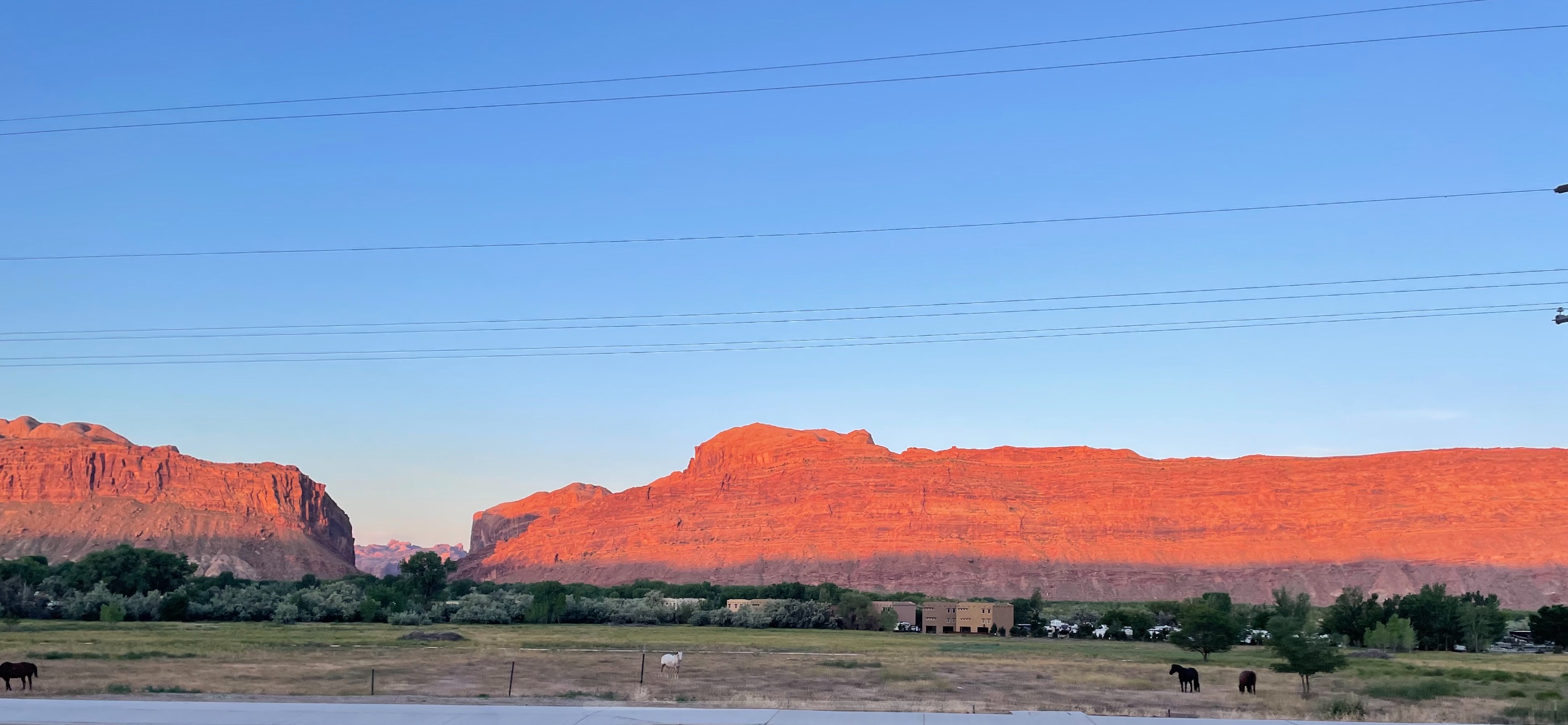
We had an early start, but as we’re all East Coasters – we were all wide awake before the 5.30am alarm. The Sunrise in Moab is always special – the red sandstone cliffs glow red, and you can start to feel the sun’s heat. We packed up the rental car – literally packed it to the gills, and headed off to Green River to meet our Rimtours guides and fellow explorers. We caffeinated on the edge of town at Horsethief Coffee and arrived at Green River in time for breakfast at Tamarisk, where we watched the very swollen Green River rush by.

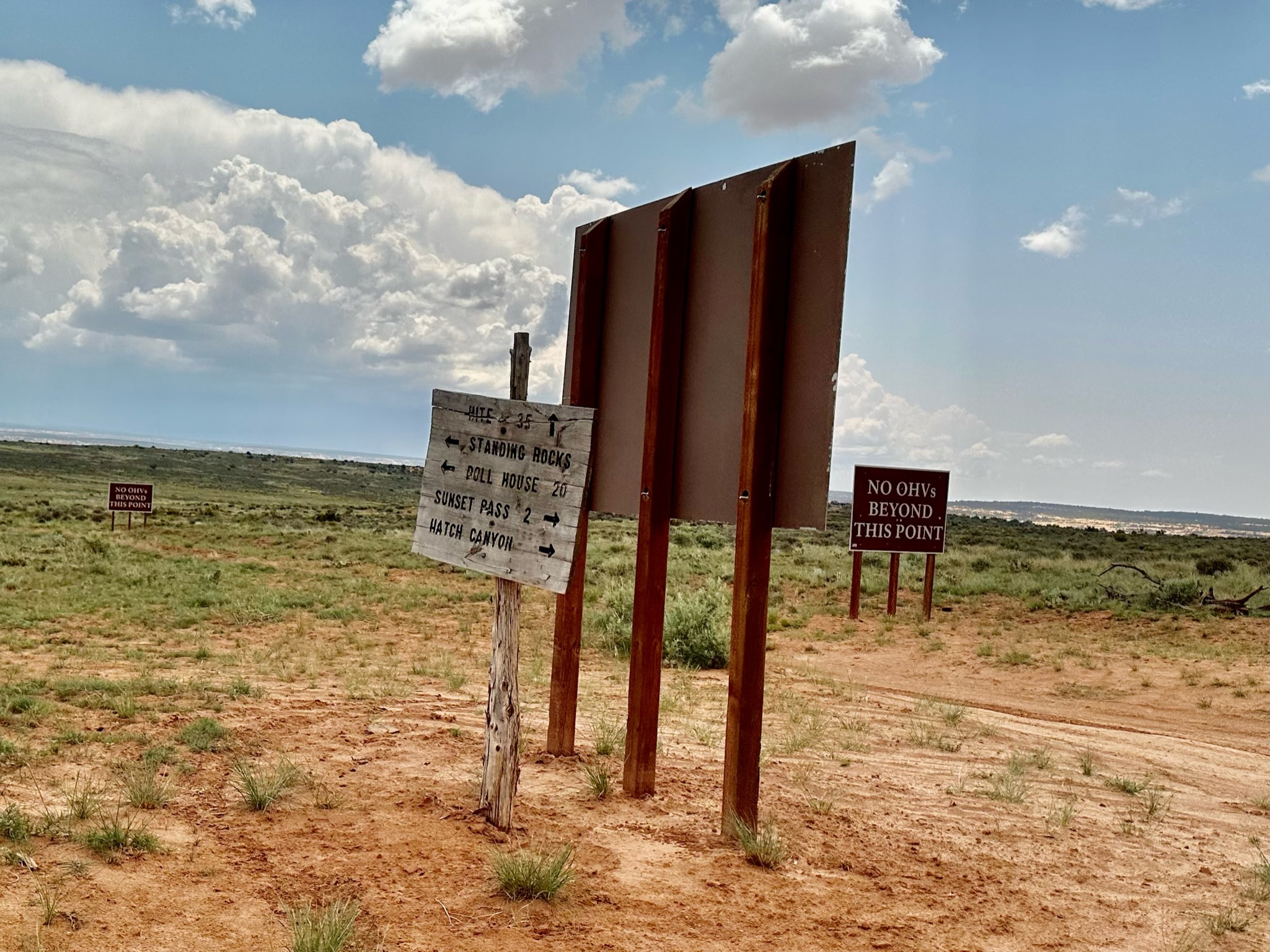
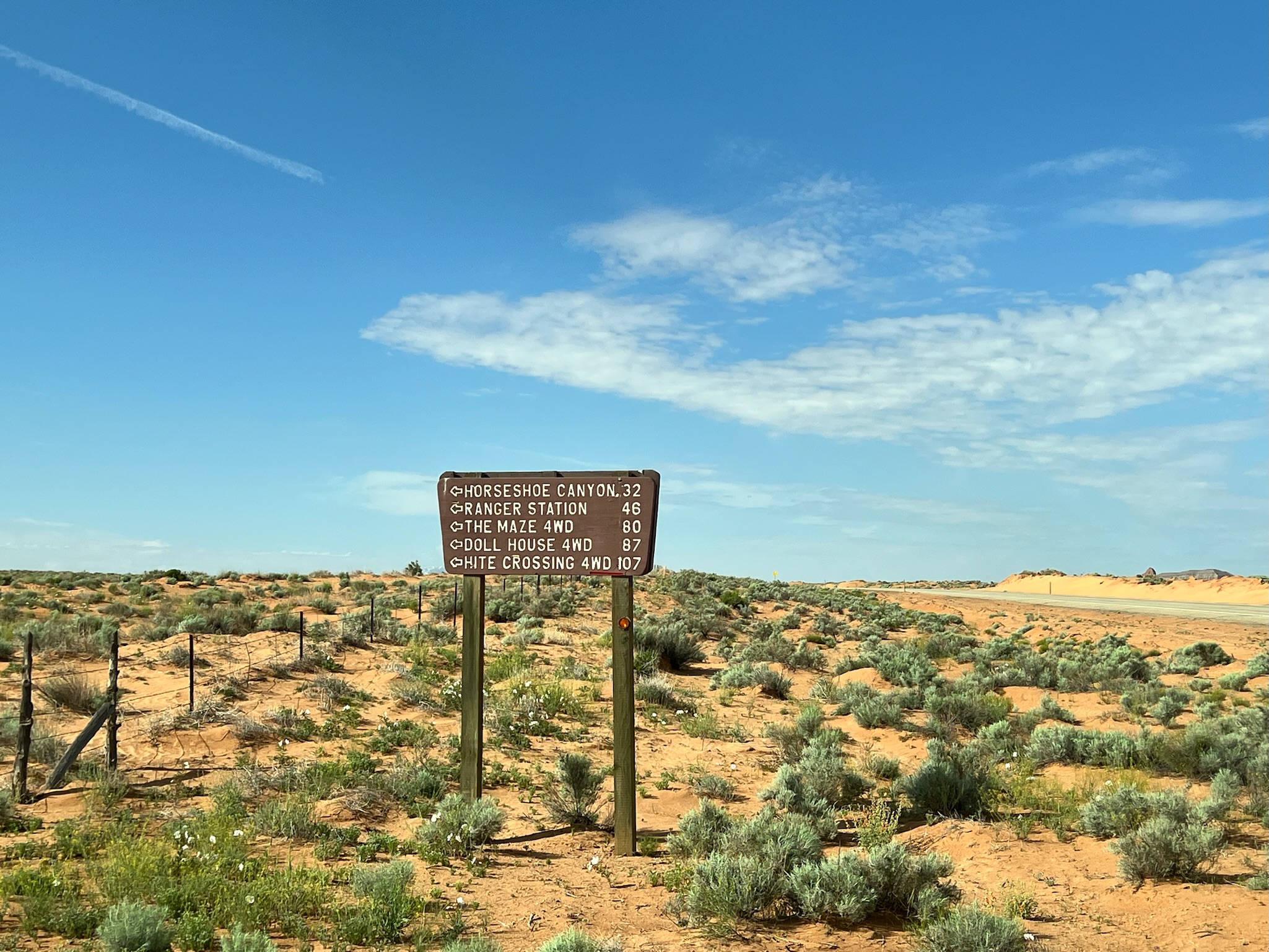
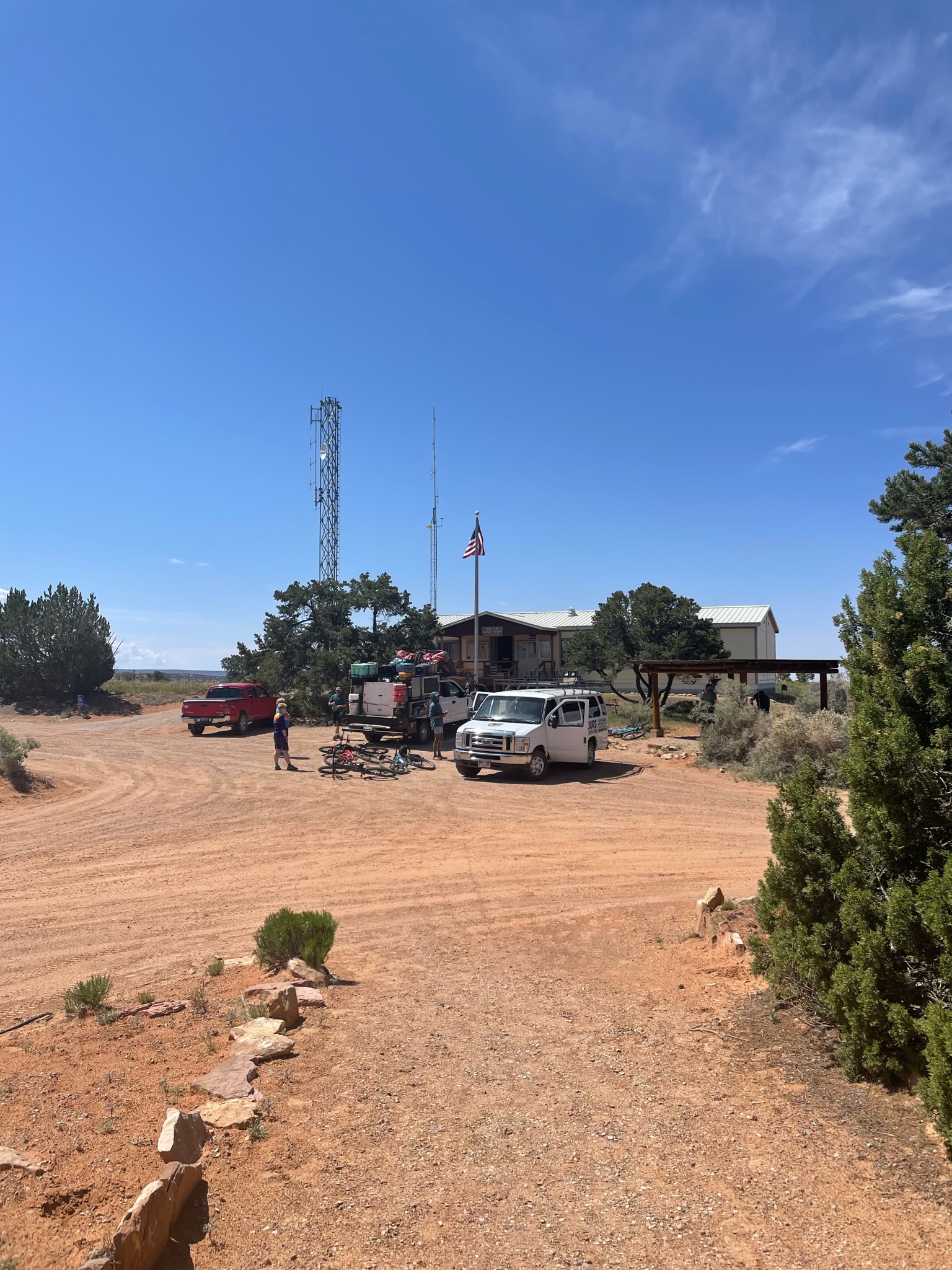
The start of our ride was at the Hans Flat Ranger Station on the western boundary of the Canyonlands. Getting there was an adventure – 46 miles of washed-out Jeep trails through barren BLM-owned high desert. Once there, we met our guides and fellow travelers (Donna and Sue), got our gear and bikes ready, transferred our packs and camping gear, and reviewed the route for the rest of the day.  

Saying goodbye to civilization and the extensive facilities at Hans Flat – a shaded picnic table, a vault toilet, and a map. From here on – there’s no potable water, bathrooms, or electricity, and the only shade is provided by stubby Juniper trees and your own headwear.

The morning ride was a pretty easy, flat ride along the top of the Orange Cliffs, stopping for pictures at the Bagpipe Bute overlook; we then dropped down the Flint Trail switchbacks and had a quick lunch break at the bottom.

After lunch, we dropped a few more hundred feet and entered the Canyonlands NP, where we encountered our first Canyon. As impressive as it was – we’d discover in the next hour or so that it was barely a ditch at the side of the trail compared to The Maze.

Day 1 – mission accomplished – 28 fairly easy miles. The final destination for day 1 is Maze Overlook, Camp 1, and our base for the next few days.

Follow the Strava link for more details.

The Maze 2023 – Day 0 – Moab and The Arches

This is the first post in a series of our recent Mountain Biking and Hiking trip to Utah :

Day 0 (May 18th, 2023) was our acclimation day before heading off into the Canyon Lands on our 5-day MTB tour of the Maze organized through Rimtours. We started with Breakfast at the Jailhouse – a bit of a Moab institution. Then some last-minute shopping for gear and food/drink. In the afternoon – we crammed a lot more into our last day of civilization for a while – Arches NP Hike, more shopping, dinner, and Slickrock Sunset.

(from left to right – David, Rich (author), Bryan, Tim, and Iain)

Please be advised that if you intend to hike at Arches National Park, a highly popular destination, it is important to book in advance. Otherwise, you may face disappointment and be turned away at the gate. As most of us have already explored the more popular sights at Arches, we ventured deeper into the park towards Devil’s Garden. We followed the regular trail to Double O Arch and Fallen Angel and returned via the more interesting primitive trail. Hiking at Arches never disappoints though it can get pretty crowded. Strava map here.

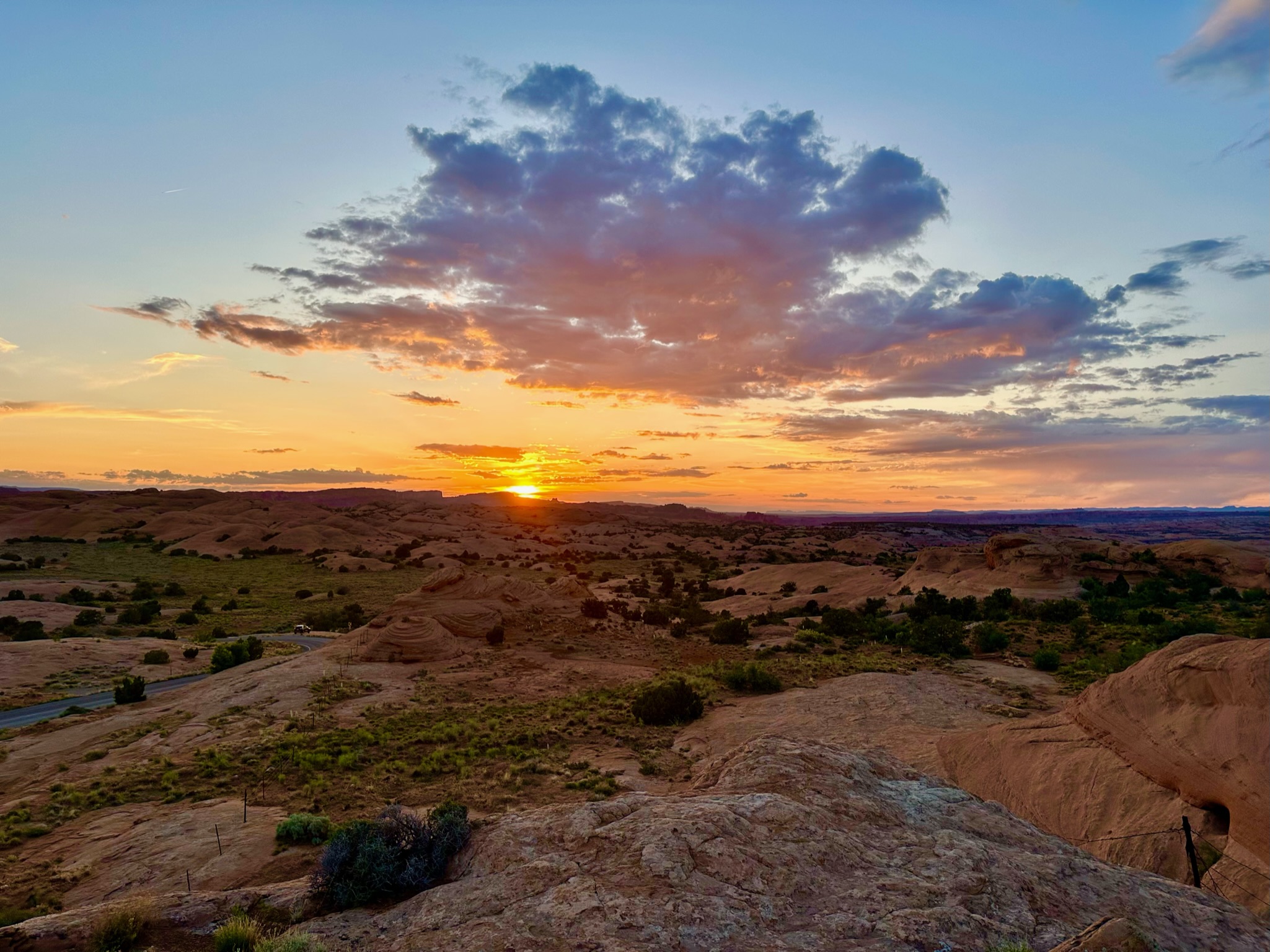
A great spot to catch the sunset in Moab is located outside town on the rocks overlooking the Slickrock trails. Although it may not have been considered a spectacular sunset by some, it’s a lovely spot to relax with a beer, enjoy the sunset, and chat about our upcoming plans for the morning.

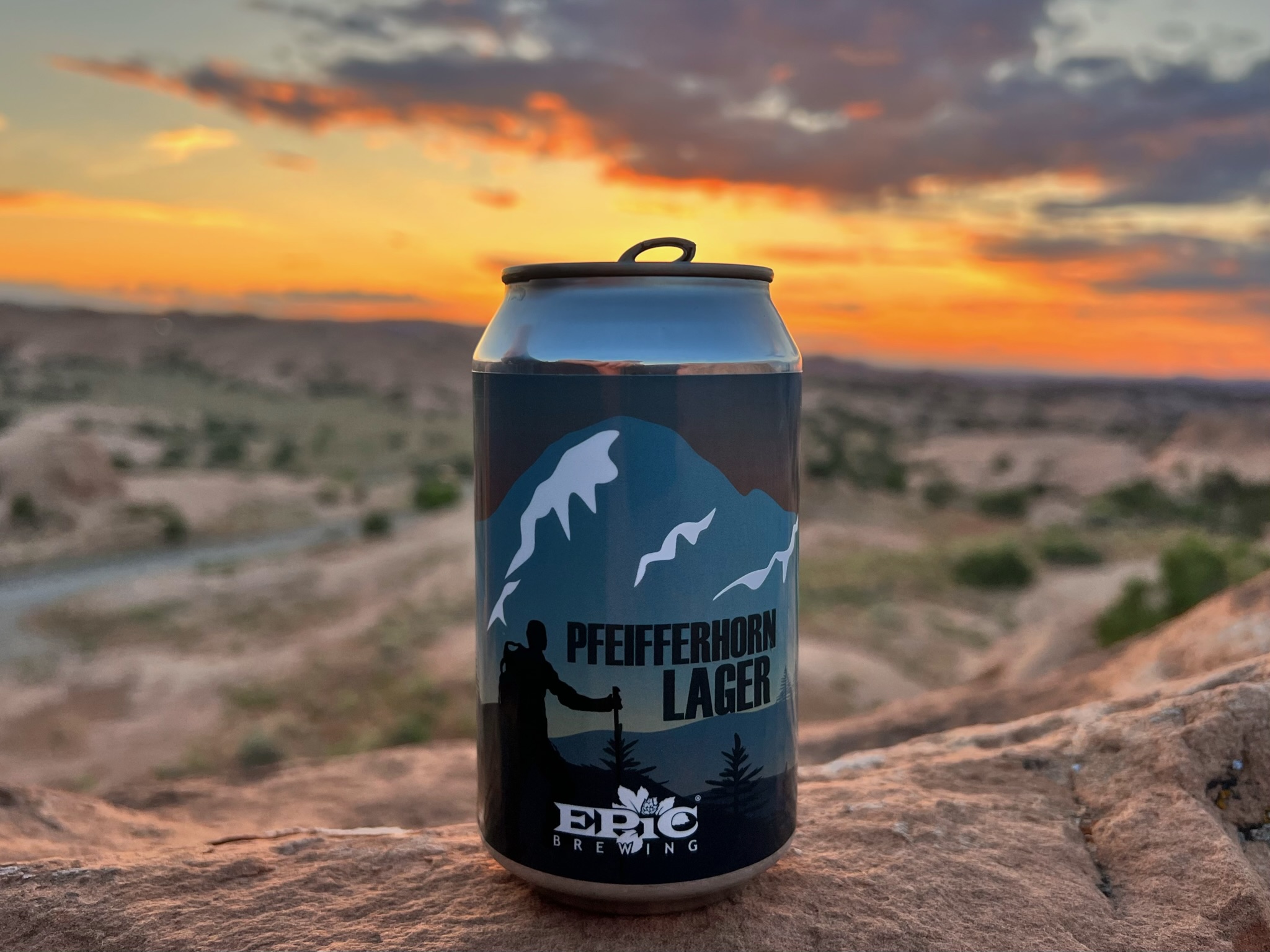
“putting the can back in Canyonlands” – Photo by Rich, slogan by Bryan !

Mastodon and the Fediverse

Yesterday’s decoder episode is an interview with Eugen Rochko, the author and BDFL of Mastadon – the crowd-funded, open source decentralized social network that many Twitter users are moving to (myself included).

At its core, it’s a pretty standard story of an open source project disrupting a multi-billion dollar market with large, well-funded incumbents. The wrinkle in this story is that the primary incumbent is struggling to align to a massive overvaluation and is run by the world’s richest person – Elon Musk.

The next chapter of the Mastodon story is about commercial sustainability as it scales. I’m assuming that there will be new rounds of growth fueled by Elon Musk’s efforts to monetize the huge Twitter install base. The impending blue check mark sign-up deadline will likely cause another Twitter diaspora, and Twitter seems to be in a tailspin.

Rochko and the Mastodon ecosystem face some challenges – on the one hand, they have to ensure no single vendor dominates the fediverse. Conversely, the BDFL model provides the focus and direction many open source projects lack. And typically – a BDFL model requires a dominant vendor to guide the development and roadmap to fit the market need. Without a balanced ecosystem, we’re back to where we are today.

The challenge for incumbents is whether they can afford to ignore the unifying standards behind the fediverse (e.g., ActivityPub) and whether they have enough user affinity to avoid users taking their content and social graphs elsewhere.

It’s going to be interesting to see how this plays out.

I’ve been playing with Mastadon for a while, and you can follow me here: https://techhub.social/@RichSharples

A Eulogy to my Mother

This is the eulogy I gave at the church service after my mother’s funeral – I’m posting it here to ensure there’s a digital copy for her children and grandchildren. The funeral was held on Friday, 11th November 2022, at Margam Crematorium, and the church service was at Skewen Methodist Church – the church that was a big part of her life for the last ten years.

Brenda Ford, formerly Sharples, nee Hawkridge

May 25th 1942 – October 19th 2022

Over the last few weeks, I’ve spent a decent amount of time thinking about who my mother was. While that may sound strange, as I’ve known her all my life, we only get to reflect on the full life of someone at a time like this. I’m sure we all have stories, memories, and ideas of who Brenda Ford, formerly Sharples, née Hawkridge, was, and I would love to hear yours, but first, let me take a few moments to share mine.

My mother was born in the small town of Elland in West Yorkshire in 1942 – right bang in the middle of the second world war. Her father (Ernie) was in the Royal Engineers and absent for much of her early life repairing bridges in Holland.  She was a proud Yorkshire lass from the day she was born until the day she died. She liked her tea strong, was very down to earth, and would never shy away from sharing her honest opinion, and despite her diminutive frame, she could more than hold her own. Working the Friday night shift in Manchester Royal Infirmary was good preparation for dealing with a couple of unruly teenagers like me and my brother Rob. And I’m speaking from personal experience here – she would not hesitate to give us a good “clattering” if we stepped too far out of line.

In 1963 at the age of 21, my mother married my father, James Sharples, and a year later, she became a registered nurse and, a year after that – a mother for the first time. Over the next 40  years, she worked in large busy hospitals in Manchester, Oldham, and Lincoln and small family practices all over the country – wherever my Father’s Royal Air Force postings took us. 

As well as working full-time – she was often a single mother of two young kids, as my Father’s work frequently took him away from home for long periods. Then, every four years or so, we would get uprooted and redeployed – we lived all over the country and overseas several times. Despite that constant upheaval and disruption – my mother’s resilience, genuine warmth, and easy-going nature always meant friends surrounded us. Engaging with people came easily, and she quickly turned strangers into friends.

At the end of the 1970s, after living in Yorkshire, Lancashire, Lincolnshire, Berkshire, Malta, Cyprus, Berkshire again, and then Norfolk – my parents finally settled in Wiltshire. This move was an opportunity to be close to my mother’s family – brother Graham, his wife Beryl, their kids Pip and Anthony and my mother’s parents. We even lived in the same street for several years – demonstrating how important family was to my mother. I still remember the 1977 Queen’s Jubilee – like many of you, we had a street party, and all 3 generations of my entire family were there – we were very fortunate kids.

My other endearing memory from my childhood was the family holidays and day trips – camping in the lake district during the hottest summer on record and arranging family lunch in Cardiff on the same day as an international rugby game. The intent was good – the planning, not so much. She also made it out to California twice and North Carolina to visit my family and me. She was never one to shy away from an adventure.

As well as a long career as a professional nurse – my mother was always willing to care for those around her. She nursed my brother and me through countless illnesses, bumps, bruises, and breakages. Later in life – she looked after my paternal grandfather (Thomas)  and maternal grandparents (Ernie and Ivy), then later – my father when he was diagnosed with terminal cancer, and more recently, her second husband, John Ford, when he succumbed to dementia.

My mother married John Ford in 2013, having moved to Skewen in 2012. They both enjoyed being part of this community and church and gave up some of their time to make it the welcoming place it is today. I would try and call my mother once a week – though admittedly, I didn’t always manage that,  but when I did, she would, no doubt, mention her various church groups and friends, so it was clearly a huge part of her life.

So, in the coming days, weeks, and months when you remember my mother, Brenda, don’t be sad. Instead, remember the young girl from a small town in West Yorkshire who never could have imagined the long life before her. The places she’d live and visit, the things she would do, the adventures she’d embark on, and the friends she would make along the way. Remember the woman who lived an honest and long life of service to others as a nurse, carer, wife, mother, grandmother, and church member. A long life with no regrets and countless fond memories spent with friends and family is probably the most any of us could hope for. 

Finally, I would like to thank you all, on behalf of our family,  for being here today and for being an essential part of her life.
The Metaverse: the importance of interop

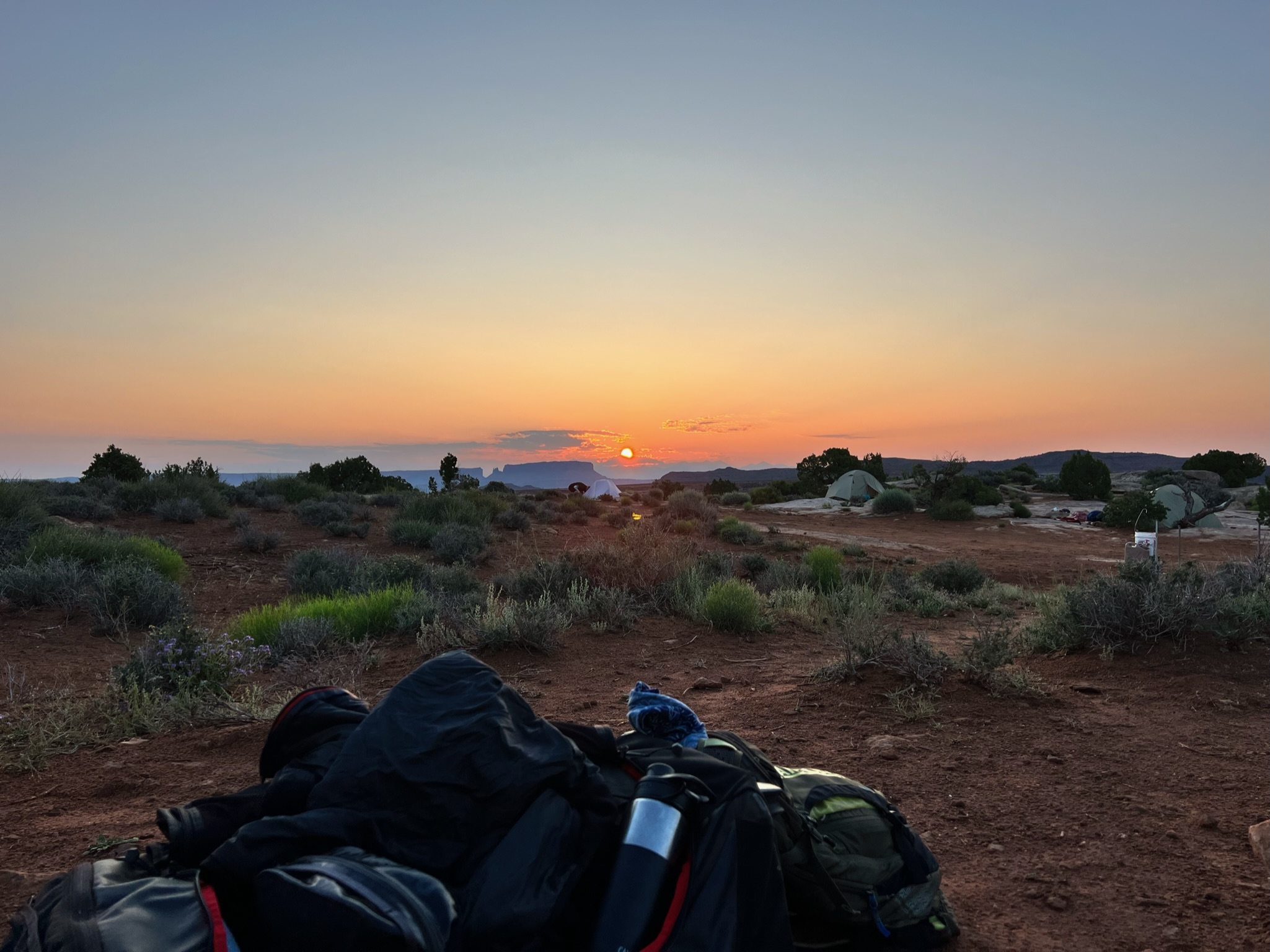
Avatar created in ReadyPlayerMe and imported into Somnium Space

Without interoperability, there is no #metaverse. Without open standards and open source and the resulting interoperability – there would be no Web or Internet as we know them today. It is no accident that the characters comprising this post are readable in any browser on any device and have been transported across the global network through various switches, routers, and proxies manufactured by different vendors. The reader doesn’t have to care or know which tool I used to create this post, nor which character encoding or font I prefer – that is all transparent to the user because of open standards like HTML, CSS, HTTP, and TCP/IP.

As the web evolves – standardization and interoperability will play an increasingly important role. The Metaverse is more ambitious than the current web regarding the sheer amount of technology involved. The Metaverse is an amalgamation of technologies from gaming, film, AR/VR, AI/ML, commerce, etc. Some of these areas have established standards; others are still nascent.

One of the critical areas of interop (according to a poll at the Metaverse Standards Forum) is the exchange of assets. This is required for seamless commerce, moving digital goods between assets, and choosing different tools at the design stage. Designers also need the ability to import assets into a virtual world from a film or game studio or real world without losing fidelity. 

There are already two major standards in this area – USD (Universal Scene Description) – first developed by Pixar and open-sourced in 2016. Today it enjoys strong support from AutodeskAppleNVIDIA, and the open source blender 3D graphics application. NVIDIA goes as far as claiming that USD is the HTML of the Metaverse – more here.

If USD is the HTML for the Metaverse, then maybe the other standard – glTF (GL Transmission Format) is what JPEG is for the Web and Mobile today. glTF is a lightweight file format for describing 3D scenes and models and is widely supported by @Microsoft, Meta/Occulus, and Unreal Engine.

Each standard has its benefits and supporting ecosystem, and it may not be possible or necessary to arrive at a single standard to meet all needs. Queue joke about the need for a  3rd standard to rule them all!

What this illustrates is that for something as central as being able to describe a 3D scene or object – the Metaverse will likely have to support (at least) two significant standards along with the overhead and complexity of versioning, converters, extensions, importers, and translators to ensure assets can be moved between ecosystems without exposing the problem to end users.

The efficient and seamless interchange of 3D assets is just the tip of the iceberg, and interoperability in many other areas (security, identity, money, reputation) will have to be addressed before the Metaverse becomes a reality.

Sleep. Part 1.

An aggressive cancer diagnosis in May 2018 got me thinking about my health more generally and specifically the importance of sleep in maintaining a healthy mind and body. I’m on my 3rd re-read (listen actually) of Matthew Walker’s, Why We Sleep, Unlocking the Power of Sleep and Dreams in which the author makes a pretty convincing case that sleep is everything and that with good sleep habits you will live longer, smarter and happier. If you haven’t read it and are interested in health you should check it out.

My cancer was deemed aggressive and so in consultation with a surgeon, two oncologists, a radiation oncologist and my wife – we decided to treat it aggressively. Over the last six months I’ve had surgery (prostate and lymph nodes removed), a two month course of radiotherapy and currently 4 months into 24 months of hormone therapy. Cut, burn, poison – they’re the current options when it comes to cancer treatment. That said, I believe a healthy diet, exercise and good sleep will have a big impact on my recovery and longevity. Hence the current interest in sleep.

Like most people – I’ve never really thought too much about sleep. You just sort of get on with it and battle on with what sleep you manage to get – your body lets you know when you don’t get enough and compensates to make it up . But travel, stress, illness, environment, diet can all have a short or long-term impact on your sleep and it’s more likely you just fall further into sleep debt.

After trying a few apps. on the Apple Watch (more on this in another post) I came to the conclusion that the poor battery life and form factor just weren’t working. While I love the Apple Watch for many reasons- the battery life sucks and I just can’t get used to sleeping with it on.

So prompted by a friend I took a look at the Oura Ring sleep / health / wellness tracker. The Oura ring is on it’s second generation and the first thing you notice is what a remarkable job they’ve done jamming a lot of technology into a small space – 3d accelerometer and gyroscope, body temperature sensor, infrared LEDs, battery and BLE radio.

img_0564.jpg

As you can see in the picture – It’s only slightly thicker than my platinum wedding band and a little bit lighter (titanium and plastic). I ordered size 10 but I’m probably a 9.5 so it’s a little loose but I erred on the bigger size assuming my fingers will swell in the summer. Oura have done a good job with the design – quite a few different finishes and styles – I chose the Heritage Stealth (matt-black). It’s waterproof and fairly scratch resistant so you can put it on a forget about it. The battery lasts about a week and only takes 20 mins to charge and uses a wireless charger (included). There is an airplane mode which turns off the BTE radio and that pushes battery life to about 11 days – but you have to remember to put it on the charger to re-enable it and upload data – so sorta defeats the purpose IMO.

The ring tracks a number of sleep metrics :

  • Resting Heart Rate (RHR)
  • Heart Rate Variability (HRV)
  • Body Temperature
  • Respiratory Rate
  • Activity

The first four of these are used to determine how much time you spend in different parts of the sleep cycle and gives you an overall  Readiness Score. Activity track, as you might expect – activity – it’s not really a dedicated activity tracker and from my experience the step and calorie tracking is pretty inaccurate compared to my Apple Watch.

Right now I’m really just interested in the overall score and duration of my sleep but will likely at some point dig a bit deeper into things like HRV and body temperature – especially when I get back to cycling.

The ring comes with a pretty decent app (I’ve only tried the iOS version) that basically derives the readiness score and presents last nights sleep as well as overall trends.

The key part for me is the duration of each element of the sleep cycle. REM and Deep sleep are the most important to overall health and recovery. Resting Heart Rate is a good indicator of general aerobic health. Everyone is different and it’s key to focus on the trends and not the absolutes.

At this point (now you can see the charts) – it’s worth pointing out that my sleep right now is really poor  – these are the effects of my aforementioned cancer treatment – I wake up 2-3 times a night for a bio break. But already I can see some improvements and I’m able to experiment with different sleep aids, bedtime routines and eventually impact of exercise (when I’m recovered enough).

So far – after about a month – I’m pretty impressed with Oura – I certainly have some suggestions for improvements in the app – more on that when I get time to write about my comparisons with other Apple Watch sleep trackers. Until then :


If you can’t measure it, you can’t improve it.

– Peter Drucker


Warrior Creek, Beech Mountain & Rocky Knob Park

My son and I are trying to hit all the best North Carolina trails over the summer and made a start last weekend with a trip to the mountains. The wish-list was Warrior Creek (conveniently on the way), a day a Beech Mountain and then Rocky Knob on the way home.

Day 1 – Warrior Creek.

We loaded-up and headed out midday on Friday  with the aim of riding Warrior Creek on the way up to Boone. It is part of the Kerr Scott Reservoir trail system and we recently raced in the Southern Classic at Dark Mountain and heard good things about Warrior Creek. We arrived about 3pm which was good and bad timing; bad because it was still in the low 90F’s and humid; good timing – for reasons I’ll get into later.

Warrior Creek is a really well-designed trail in a really pretty lakeside location; it’s a mix of hard-pack, rock-gardens and lots of huge, fast berms. There’s nothing too strenuous (even in 90F’s) as the trail mostly follows the same contours – just enough rise and fall to make it fun and fast. There were a couple of large trees down which meant we had to walk a two of the faster sections but otherwise the trail was in good condition.

At about mile 9 you can add the extra 1.6 mile Headwaters loop (Black Diamond) – we opted out because we were out of energy and out of water so we headed back to the parking lot. An unfortunate wrong turn towards the end added a couple of (downhill) road miles.

The trail is great – will head back in the fall and do the whole 18+ miles. The parking lot is worth a 5-star rating in itself – bike (or human) washing station, vending machine and bathrooms / changing rooms.

After re-hydrating, loading the bikes we hit the road – just 45 mins to our campsite near Boone. The first rain-drops started as we left the campground parking lot and within minutes we were in a full-scale storm – driving rain, lightning, trees down – probably the worst weather I’ve driven through. After 90 minutes, we arrived at the campsite unscathed but our camping spot had turned into a small river. With rain forecast until 4am; we put plan B into action and after a bit of last-minute hotel shopping, headed back into Boone for the night – most of which was in darkness due to the storm. Many of the restaurants were closed but we found a decent Mexican on the edge of town that still had power.

Day 2 – Beech Mountain

My son has been raving about Beech mountain for months – and it really was the main goal of this trip. Beech is pretty typical of the small ski resorts in the area – a couple of chair lifts and half a dozen runs and in the summer you can park right in the village at the bottom of the mountain. There’s also a bike shop in the village where you can rent enduro / XC bikes as well as protective gear. We decided to use our own bikes though I’d probably consider renting to get some extra travel next time – my Specialized Epic took a real pounding – really not made for the kind of terrain at Beech.

All-day lift tickets are $35, $28 for kids under 12. Loading your bikes on the chair-lift is pretty straightforward and there are a couple of guys to help if needed, you ride in the chair-lift behind your bikes and someone unloads your bike at the top; you can also ride down if you break your bike while on the mountain.

There are 3 green trails, a couple of blues and some black and black diamond – they are interrupted a third of the way down by an access road which allows you to mix and match trails. We mostly stuck to the greens and blues – nice, fast and flowy with a some technical sections – but basically everything was easily rideable; there are a few big drops and tables towards the bottom if you like air. We gave the black and black-diamond a try as well but being in the woods they really hadn’t dried out from the previous days storm – walking / sliding down was hard enough – riding would’ve been suicidal. Gives you some perspective though – these are actual Downhill Championship courses – amazing to see pros. fly down this stuff at full race speed in any condition.

Despite not actually pedaling much – I was surprisingly tired at the end of the day – you’re mostly out of the saddle and on your breaks. We did about 9 runs and a break for lunch in about 6 hours. Fortunately I was able to rehydrate and carb load with a 5506 Pale Ale from the excellent Beech Mountain Brewing Company at the bottom of the mountain and there’s a bike stand and hose to clean your bike – handy if you’re staying in a hotel.

Here’s Jack’s 5 minute video showing the green and blue runs  – starts off slow but the pace picks up about 2.30 as we gain confidence – crank it up to 1080p if you have the bandwidth. You won’t see much of me in the video – as usual – I’m struggling to keep up !

Day 3 – Grandfather Mountain and Rocky Knob

After a lazy morning watching the TDF in bed and breakfast we packed up for our journey home. Just two stops on the way. The first – Grandfather Mountain via a cruise along the Blue Ridge Parkway. It was a beautiful clear day  and you could see forever. The area was pretty busy due to the Highland Games  (who knew ?) – lot’s of red hair and sunburn.

Next stop was Rocky Knob Park  just outside Boone – there’s about 9 miles of trail here and there’s a bit of everything – some short climbs, rock gardens, skinnies, epic downhill, a skills area and pump-track. We only rode about 6 miles on the main trail – we climbed up Middle Earth and Boat Rock stopping at Stone Binge skills area then raced down the aptly named PBJ (Pump, Berm, Jump) – Jack burped a tire so we had to stop for some field-maintenance midway. Trails were in great condition aside from the large fallen tree blocking the last berm on PBJ.

In the parking lot there’s a fun little pump track with probably one of the best views in the state – Jack spent a good 40 minutes finessing his track skills while I chatted with some other riders from all over the southern US.

This is a really well maintained trail system – kudos to the trail keepers – wish it was in my backyard !

We’re planning another weekend in the mountains – would love to hear some more recommendations – Pisgah is on the list – what else ?


DevNation and Red Hat Summit 2016


It’s that time of year again (OK Summit is actually fairly late this year) but you get my drift. DevNation / Summit alternates between Boston and San Francisco – this year we’re at Moscone North and West in San Francisco.

Two events for the price of one – can’t be bad. DevNation is by developers and for developers. Red Hat Summit is for our partners, customers and prospects and has technical, strategy and business tracks revolving around our commercial offerings.

Would love to catch up with friends, colleagues, customers and prospects.

Here’s where you can find me :

Sunday 26th, 5.30pm – 8.30pm PDT – DevNation Welcome Reception (travel gods willing)

Monday 27th, 9.30am – 11.45am PDT – DevNation General Session

Monday 27th,  8.30pm – 10.00pm PDT – Technical Leadership Meet and Greet, Thirsty Bear

Tuesday 28th, 10.15am – 11.15am PDT – Session –  “The current state of enterprise languages, frameworks, and platforms”, Room 2020

Tuesday 28th, 11.30am – 12.30pm PDT – Session – “Build your game plan for enterprise Java 2020”, Room 3005

Tuesday 28th, 3.30pm – 4.30pm PDT – Panel – “Red Hat containers roadmap”

Wednesday 29th, 6am – 7am PDT Red Hat Summit 5k Run / Walk. In customer, press and analyst meetings all day, then …

Wednesday 29th, 8pm – APBG party (aka the JBoss Party) – you’ll have to use your contacts to get an invite (eg. come to one or all of my sessions above) !

I’m actually around ’til Friday morning and have some spare time on Thursday if anyone wants to catch up.