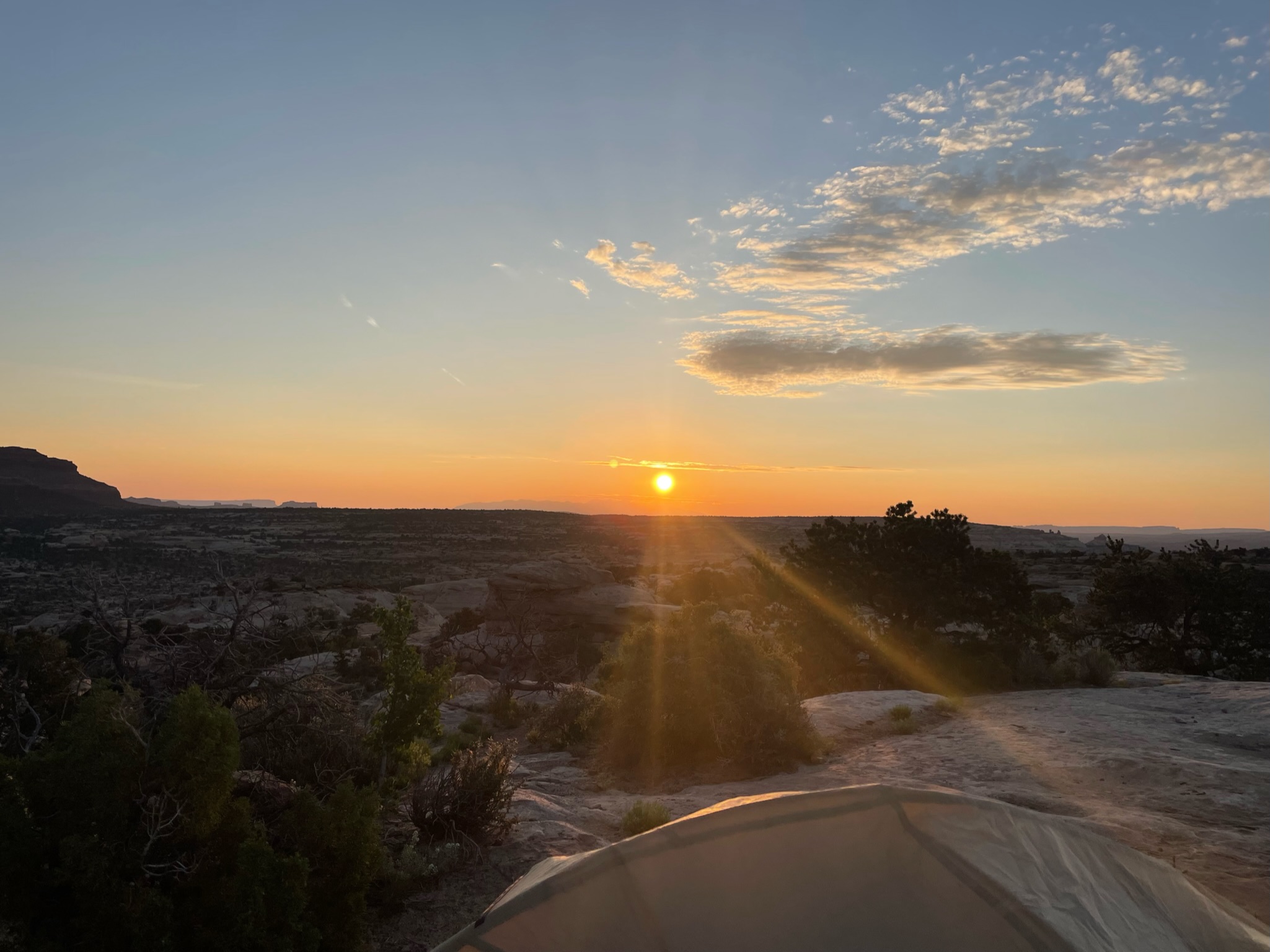
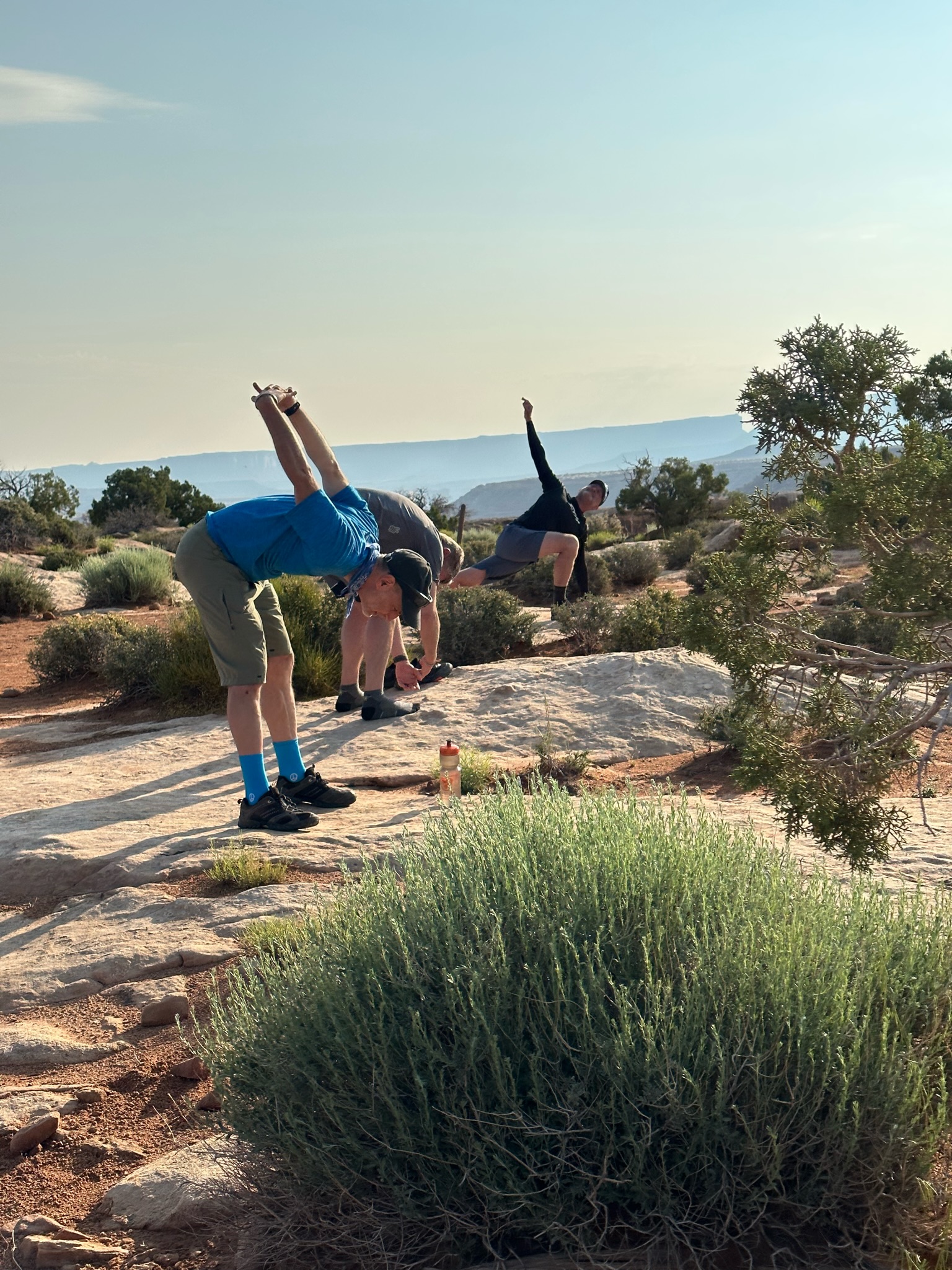
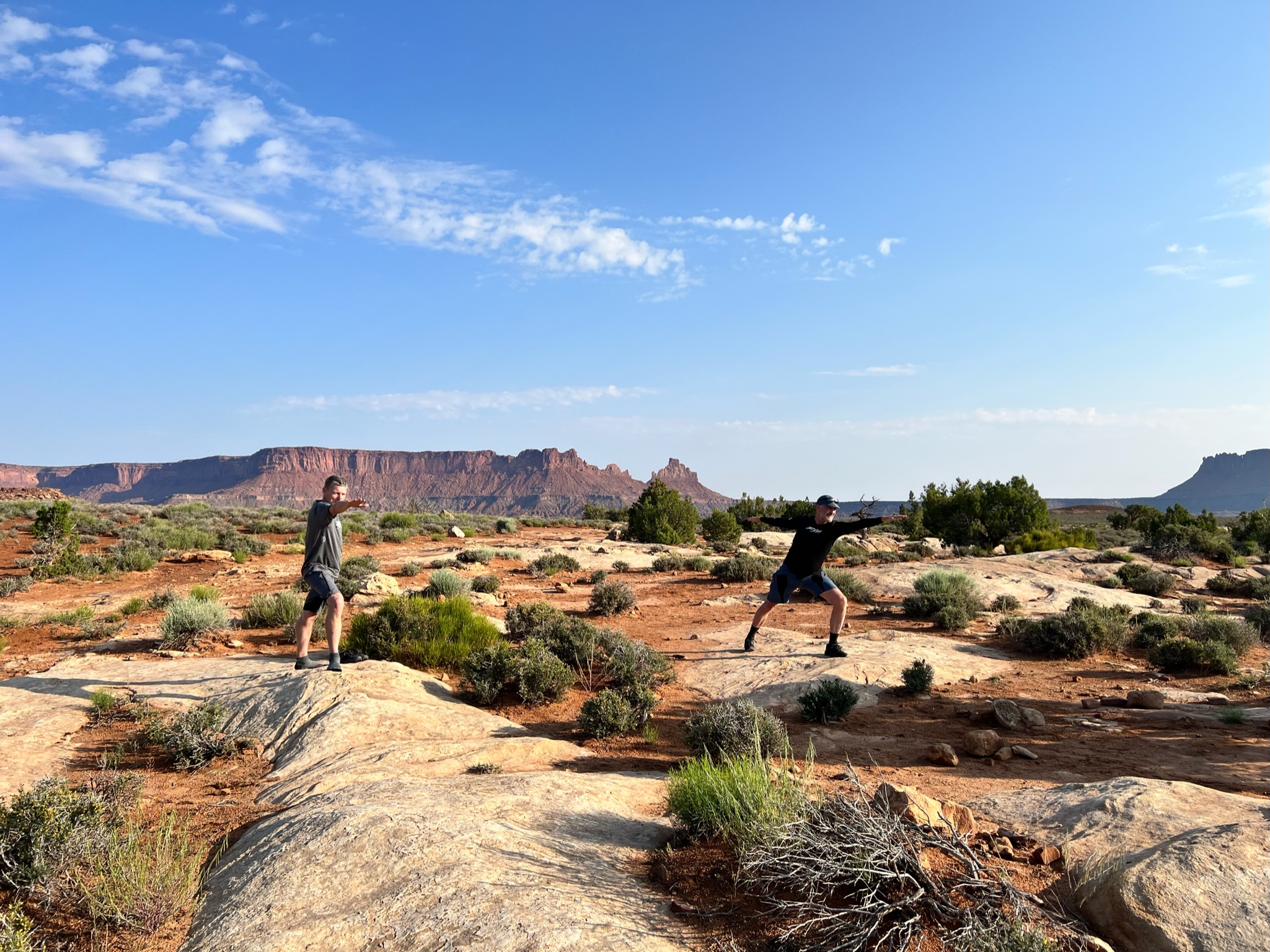
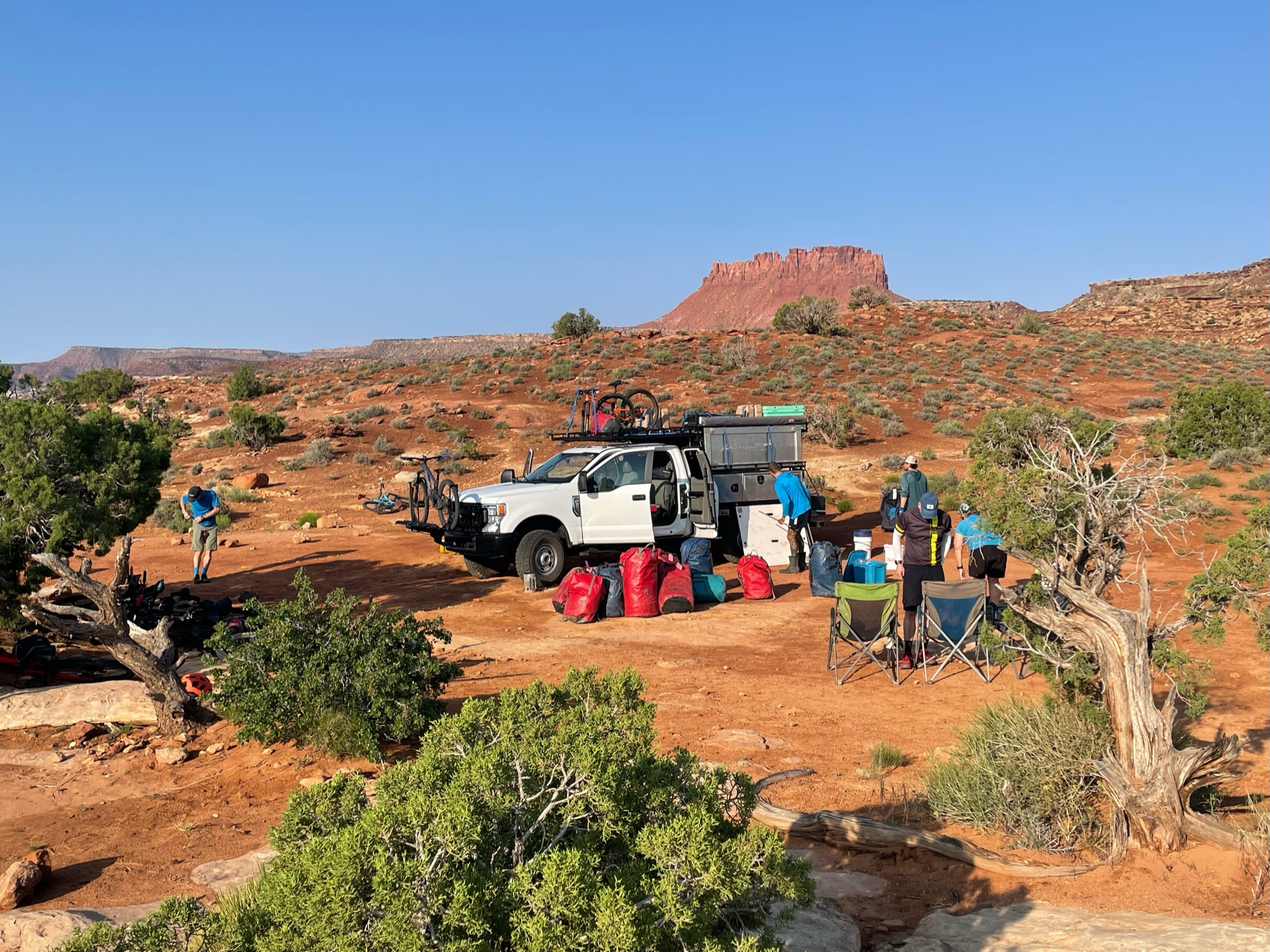
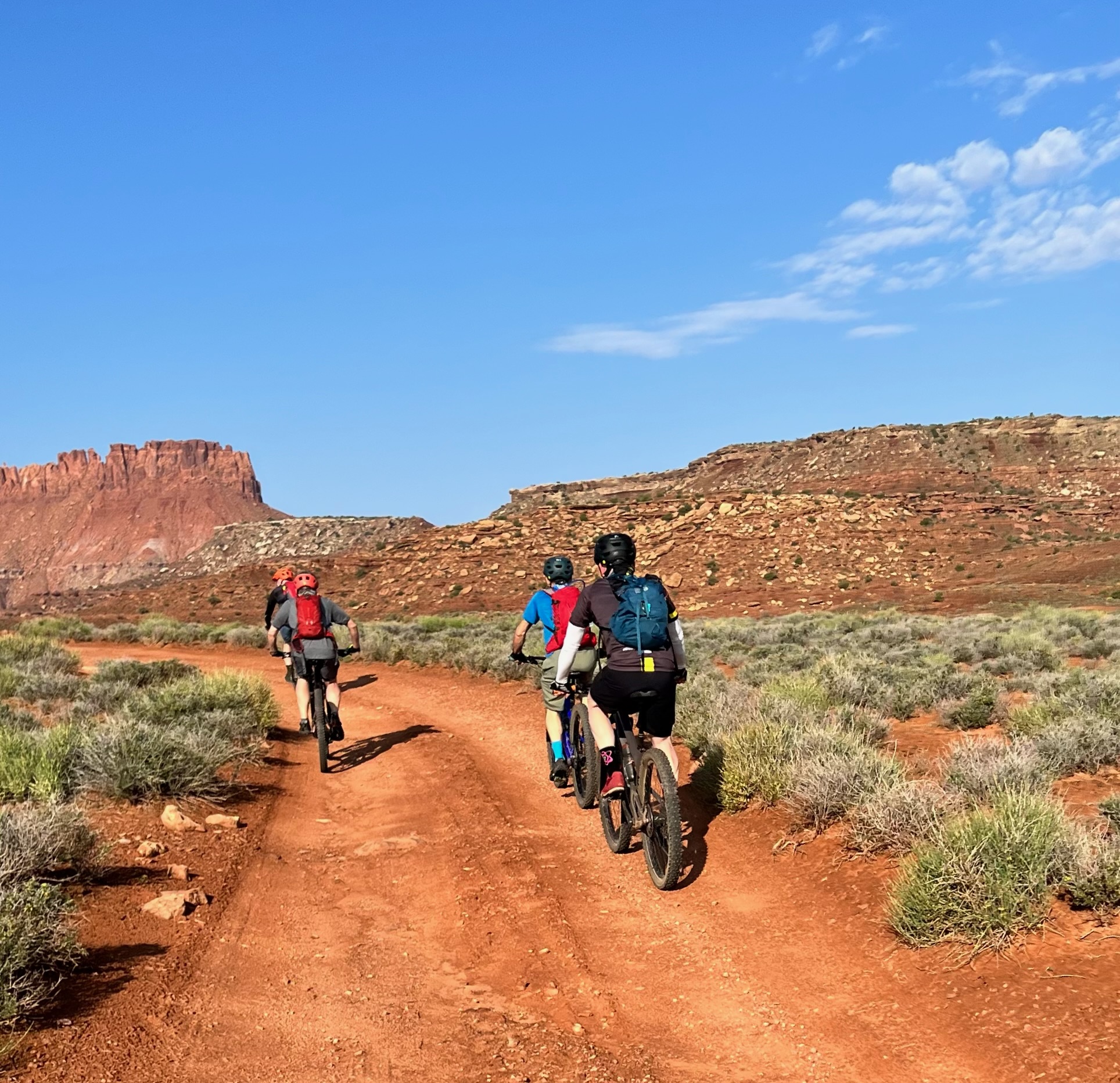
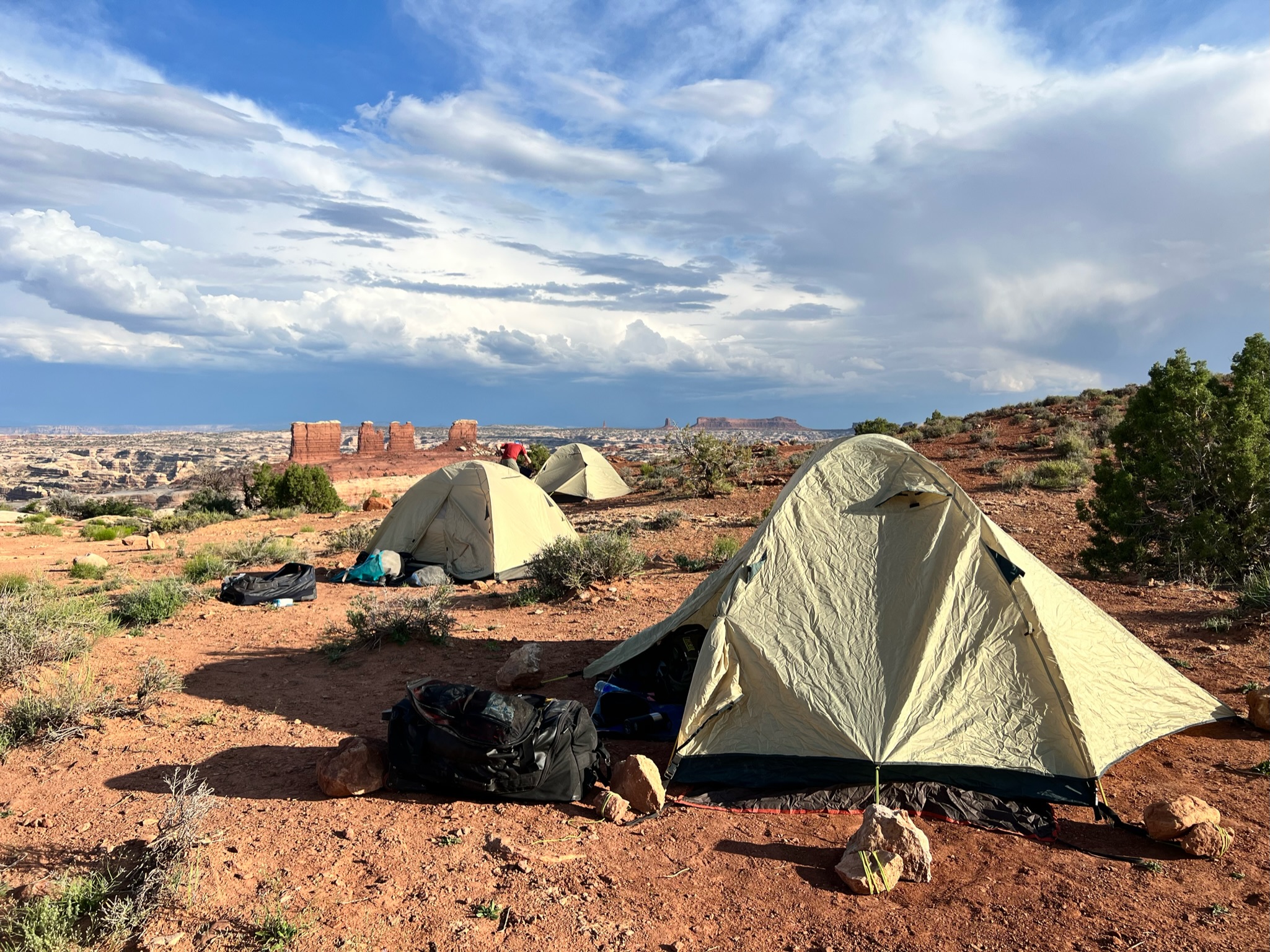
Final day and a long ride out of the Canyonlands to Hite at the north end of where Lake Powell used to be before it dried up and shrunk. We packed up camp – enjoyed the final views from our amazing campground, breakfast, and some stretching, then loaded the support truck to head out on our long but mostly downhill ride.
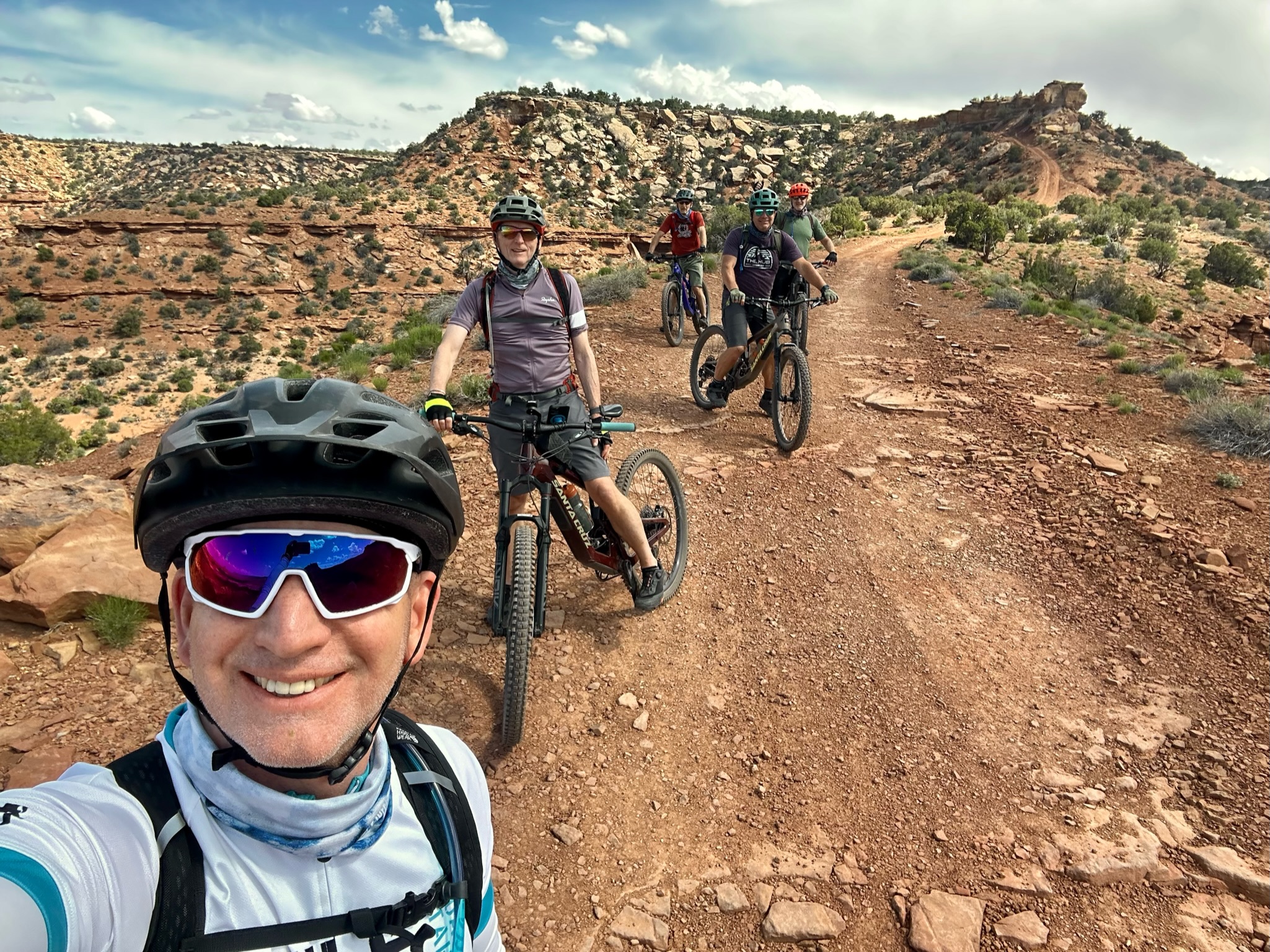
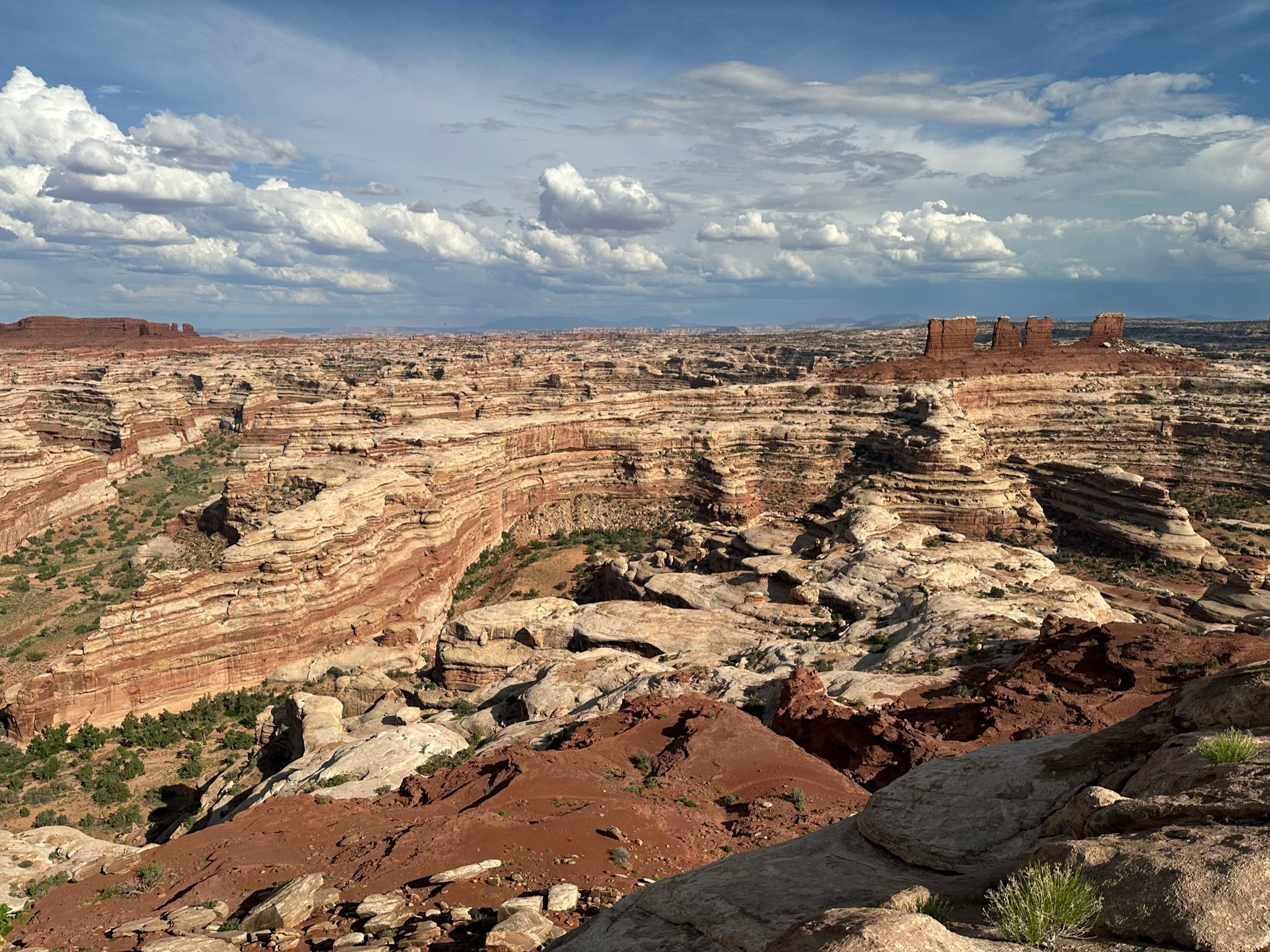
The riding was pretty easy, though on tired legs, even a small climb turns into a real effort, and there were plenty of climbs as we passed through washes and over rolling hills. The views were as spectacular as we’d seen over the last 5 days, with some broad vistas of the Henry Mountains to the North West.
We made a few quick stops to regroup and take in the views but mostly hammered toward our goal. The goal was Stan’s Burger Shak in Hankersville which serve the best / only milkshakes for a hundred miles – good to be back to cold and creamy civilization.
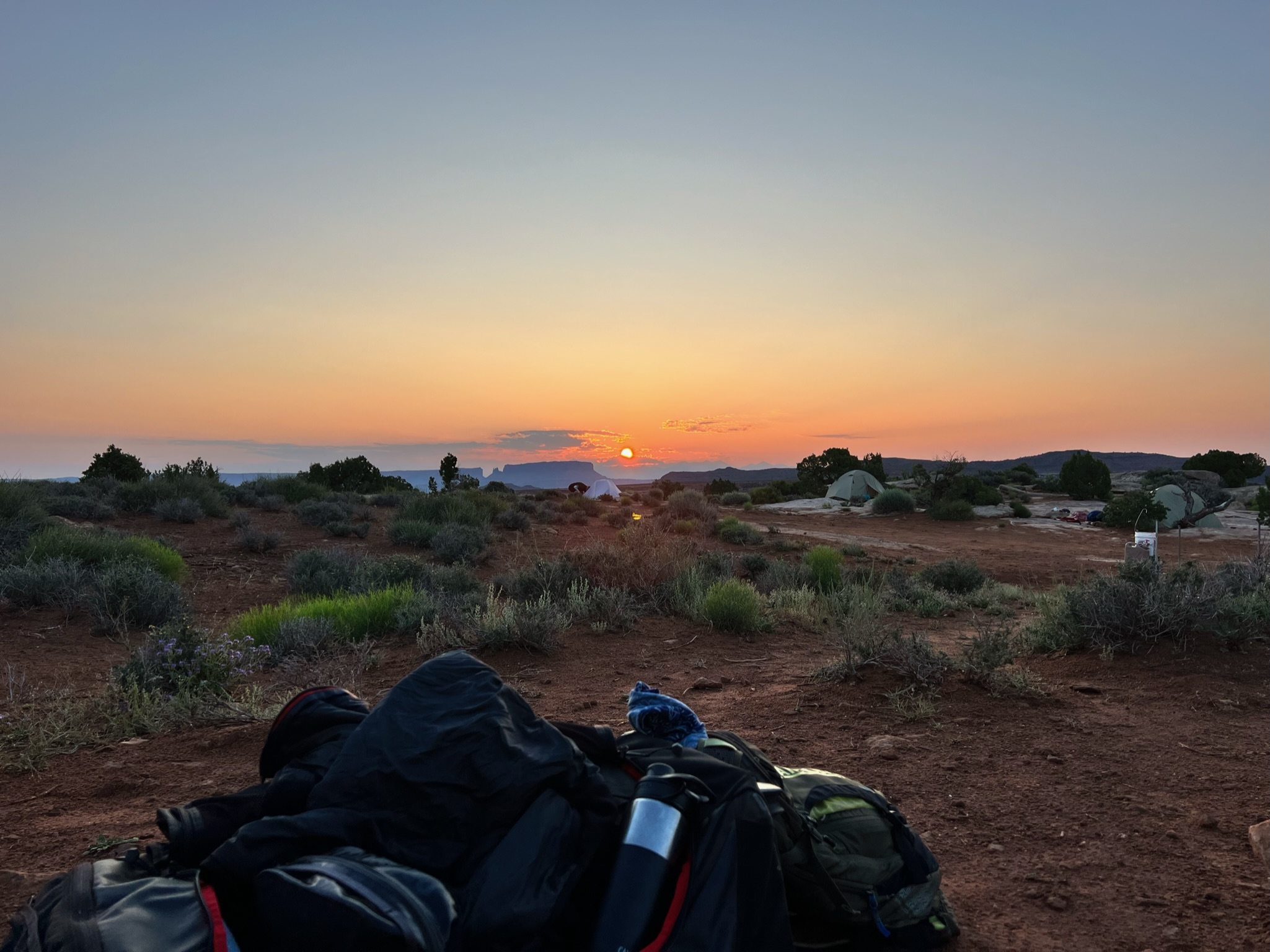
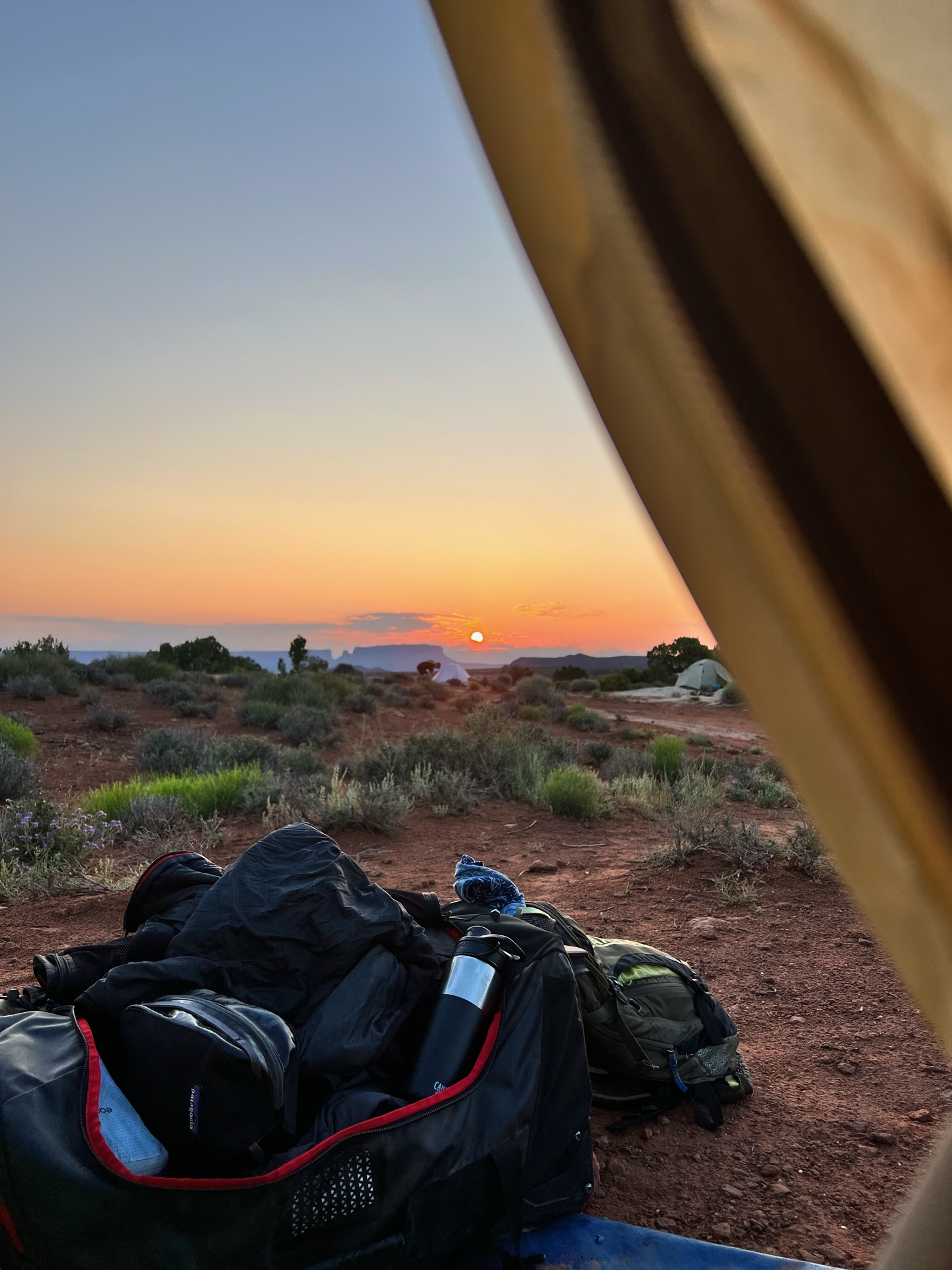
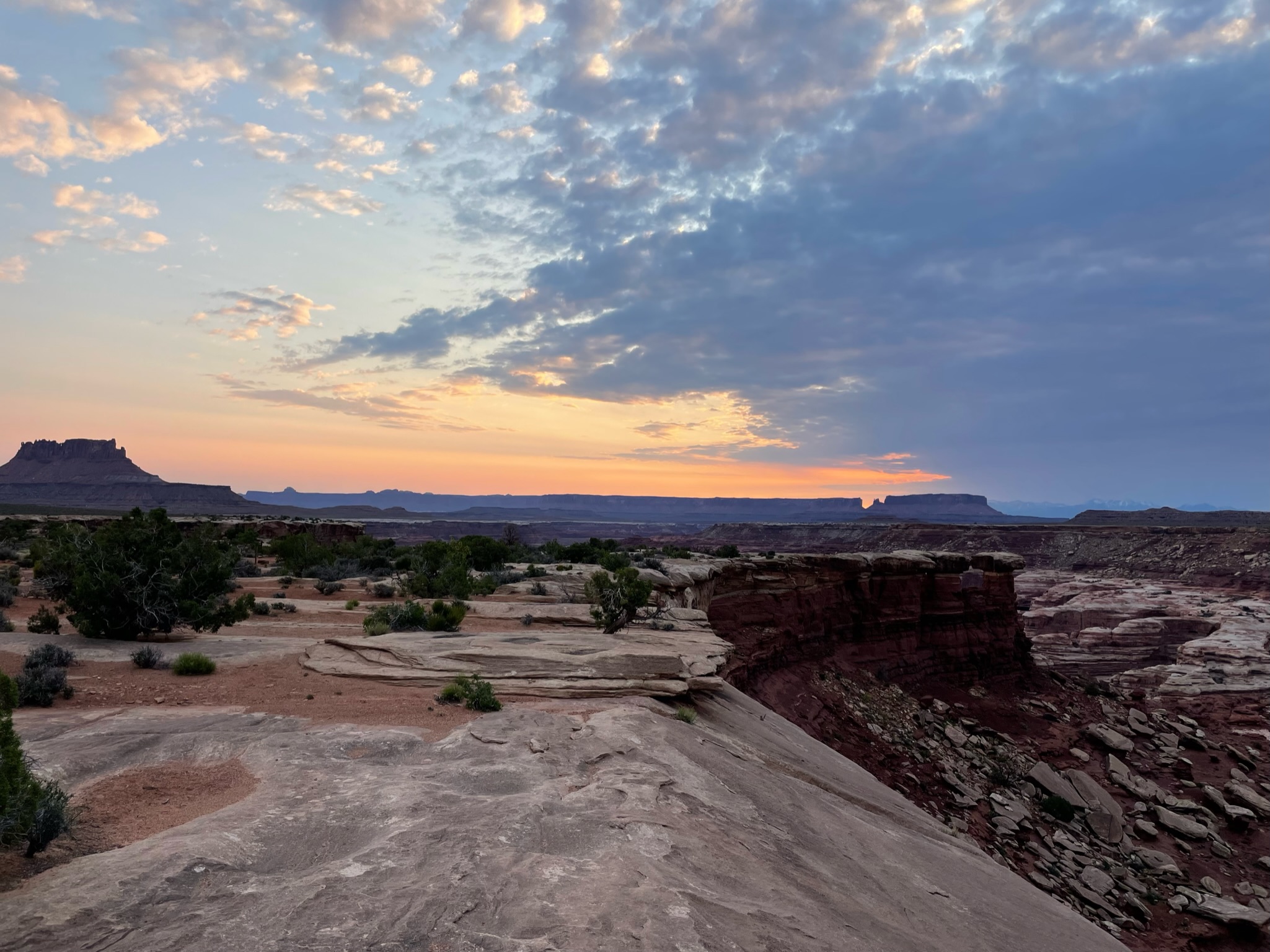
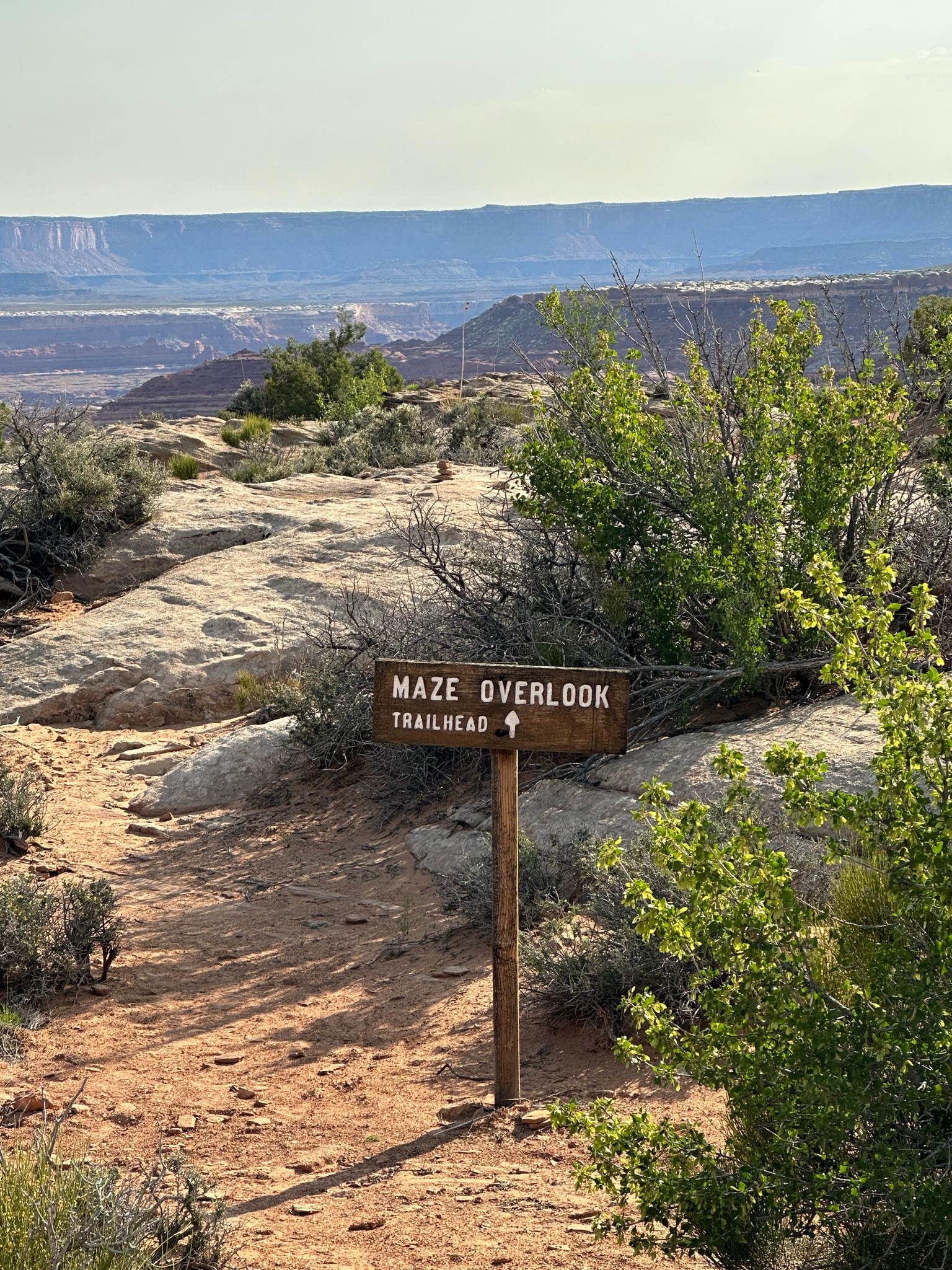
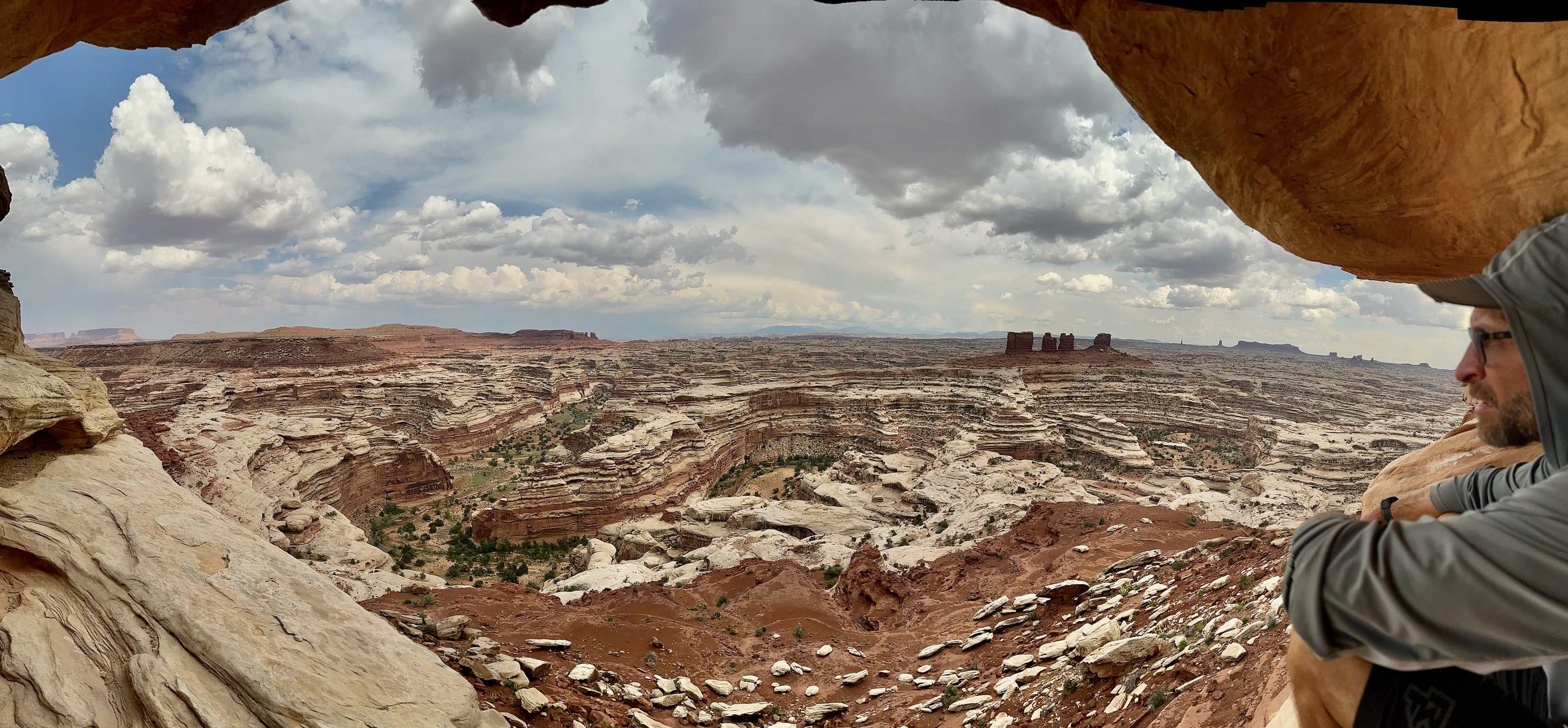
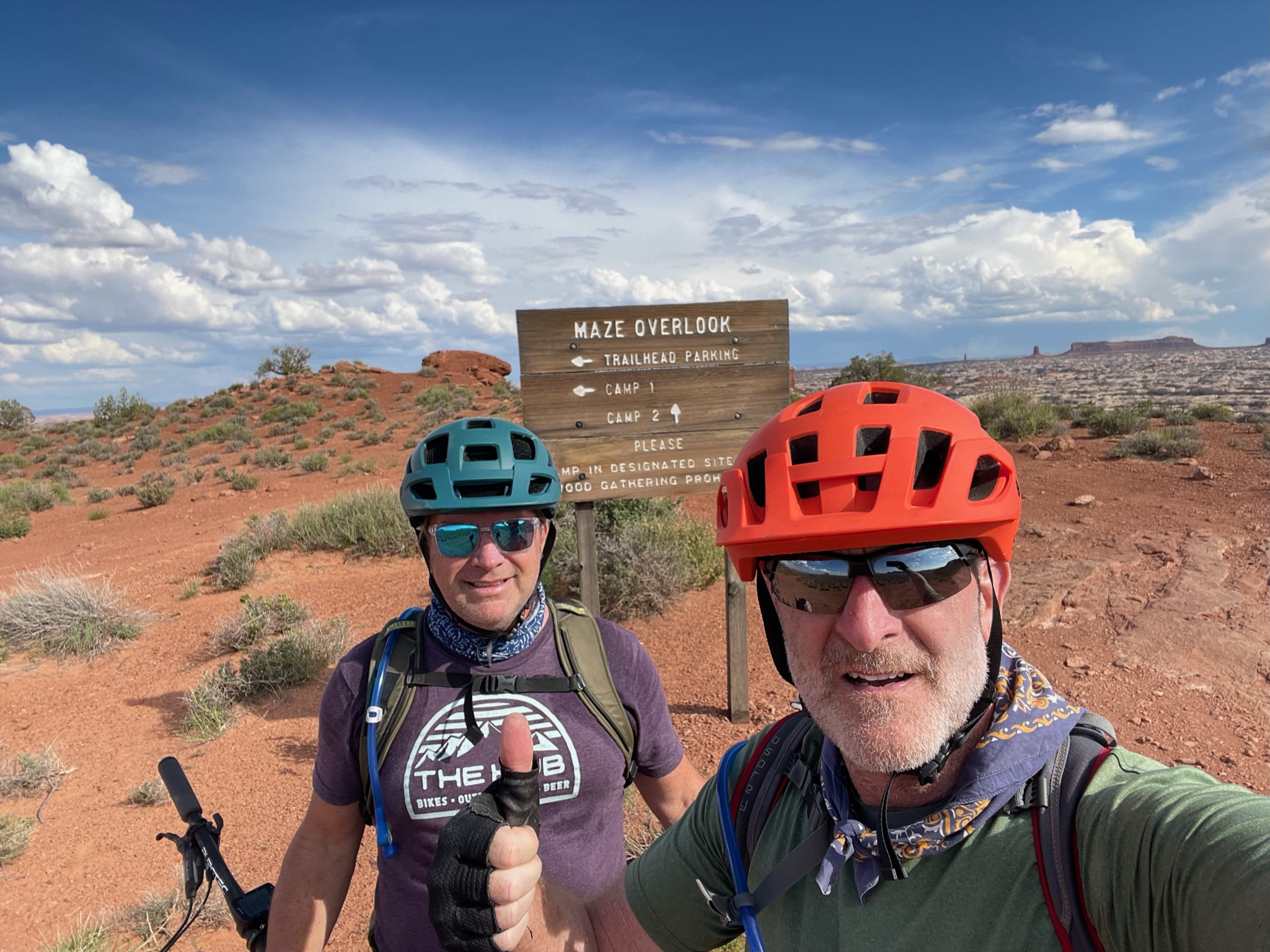
I’ve made a couple of these trips before (White Rim in 2016, Kokopelli in 2022), and I prefer this format – camping at two sites for two nights each vs. a new campsite every night – camping and decamping is a lot of work – especially when you’re already exhausted after a long ride. At this point – it’s worth pointing out that these back-country campsites are nothing more than an area marked for camping. There are no facilities – no water, bathrooms, seating, shade, fire-pits, nothing but boundary markers. But what they lack in amenities, they more than makeup for in location and stunning views. The Maze Overlook is one of the most incredible places I’ve camped at, and even the privy (aka Groover) spot has breathtaking vires while you contemplate the day ahead.
We hit the trails after packing our gear, de-gunging the bikes, doing a little bit of recovery yoga, and helping load the truck.
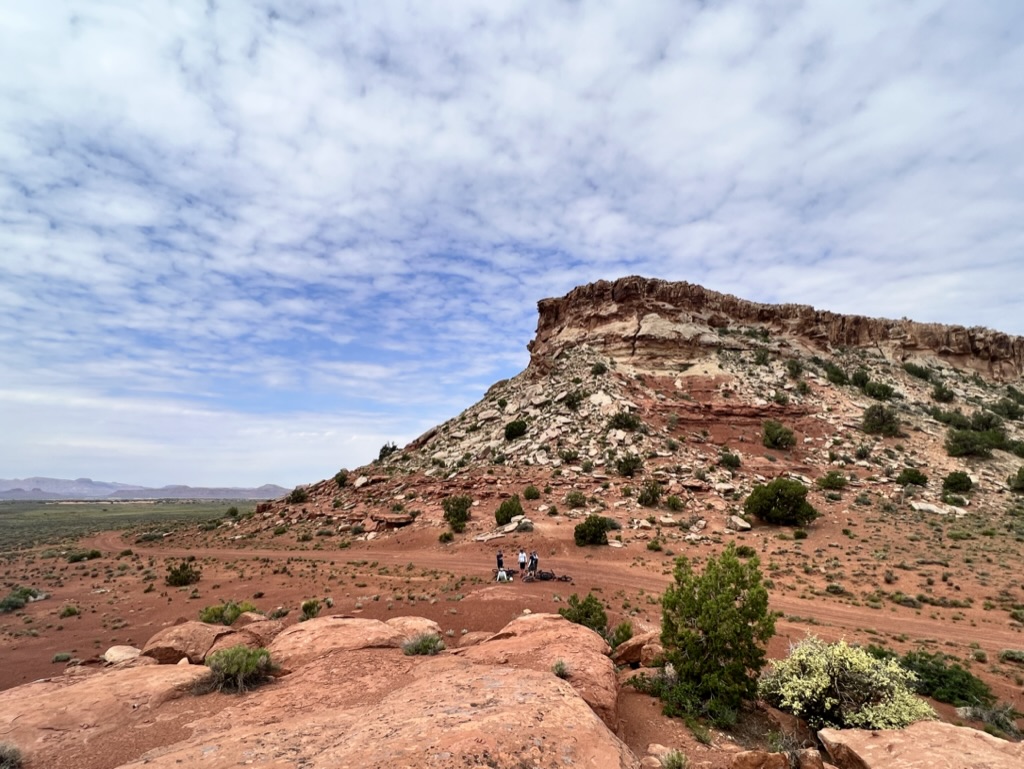
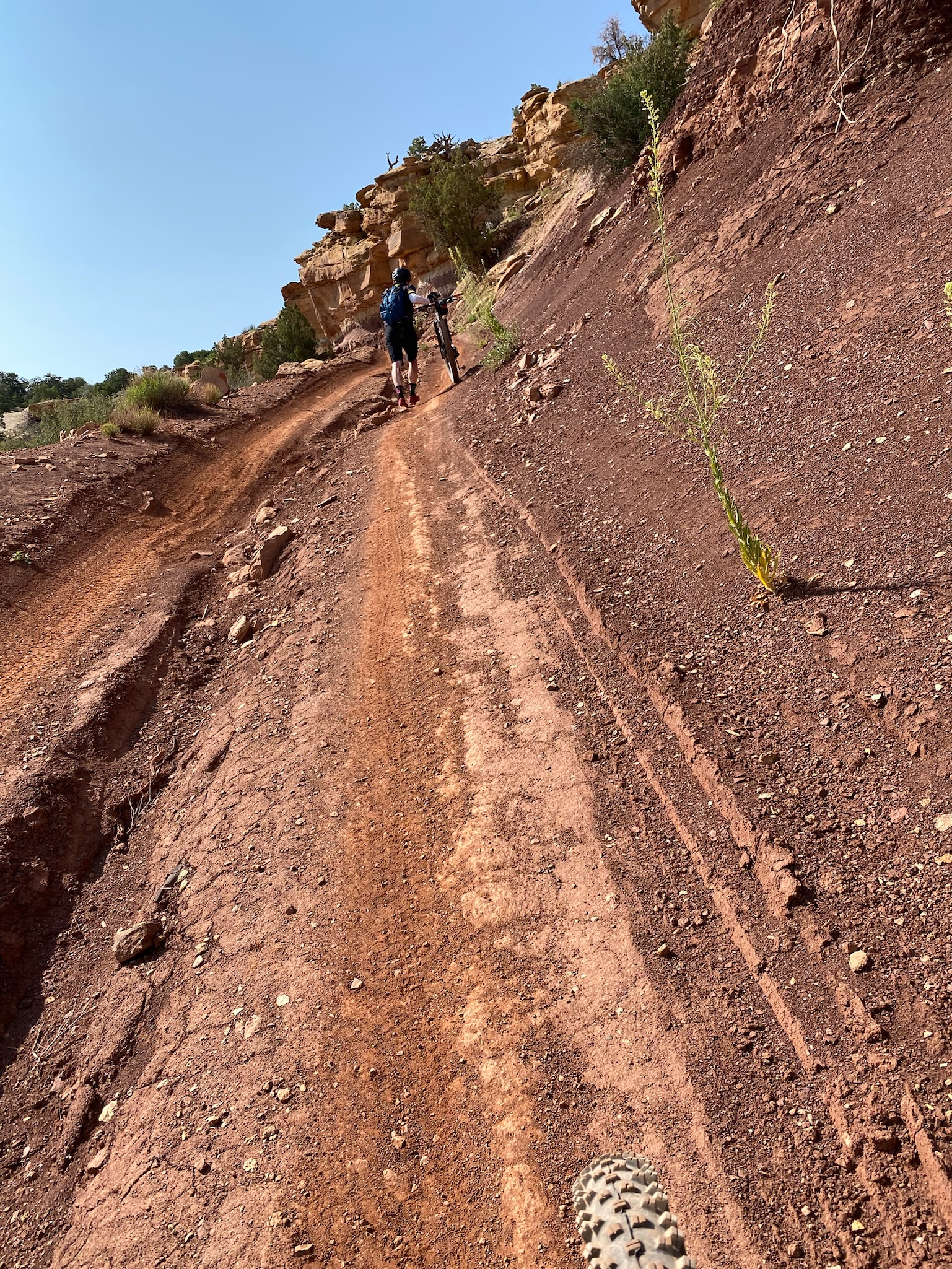
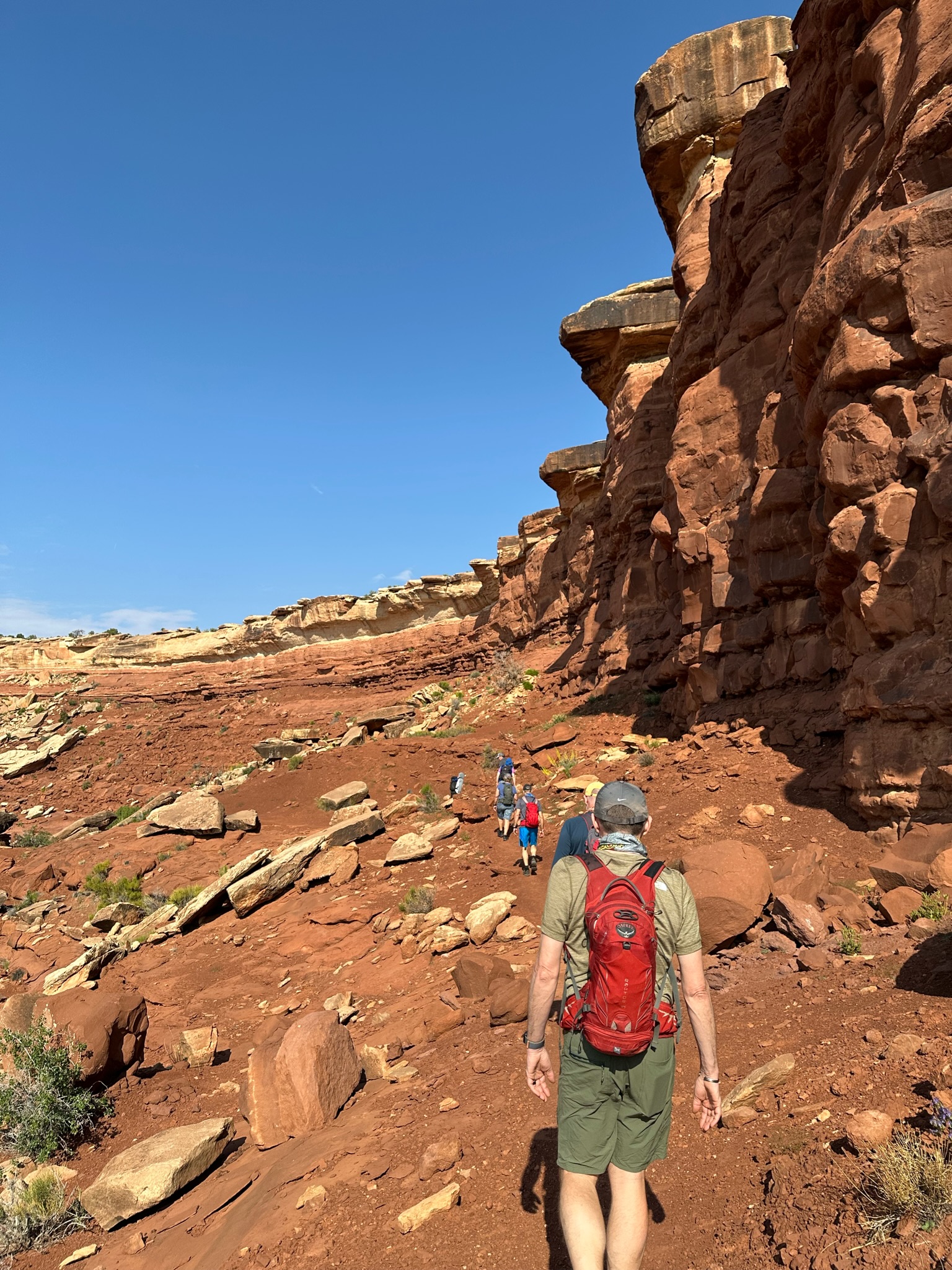
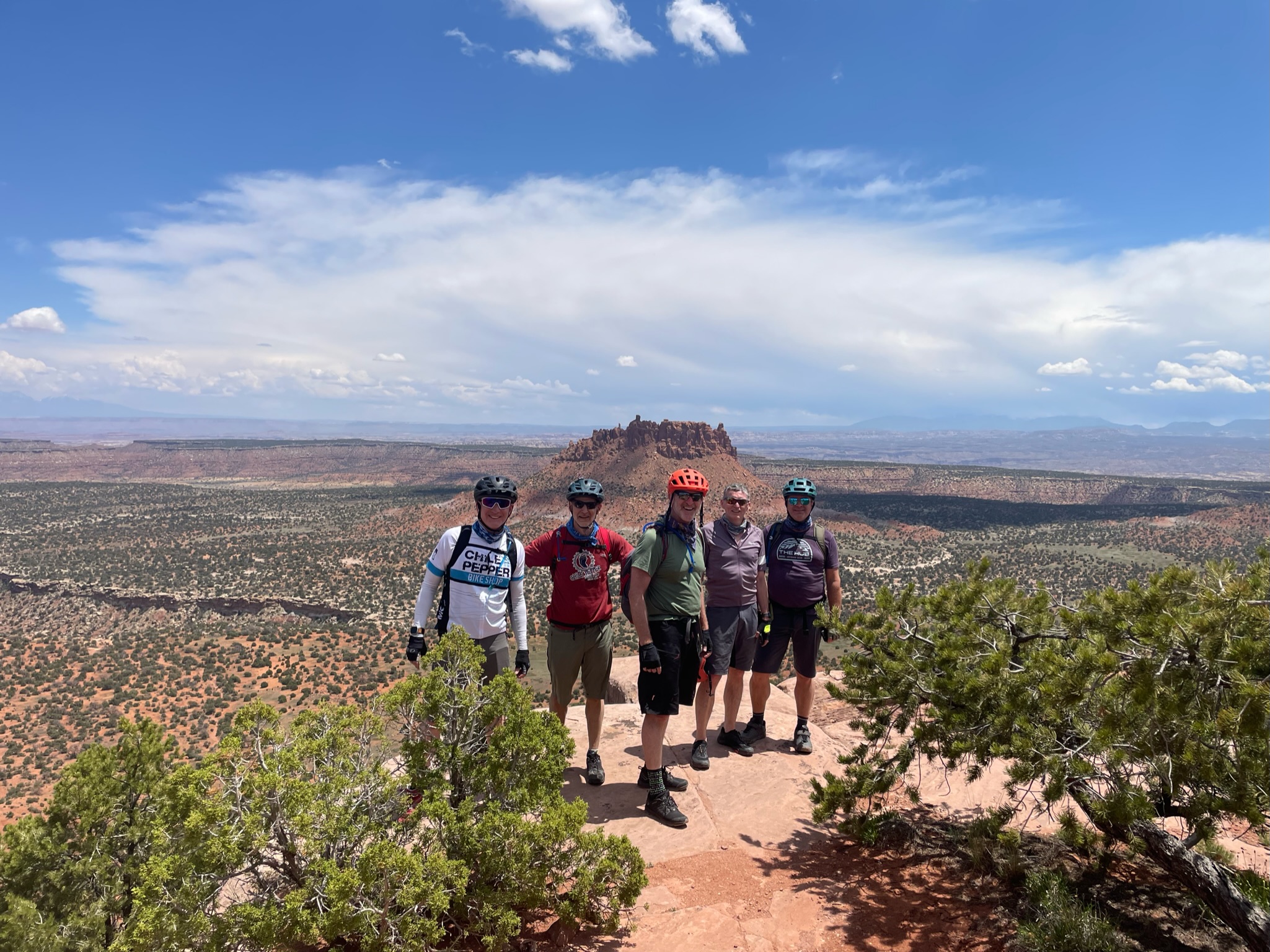
The morning entertainment was reversing our ride from day 1 – climbing back up the Golden Stairs, and regaining 800 feet in the process. After a quick photo op overlooking Canyonlands and Bagpipe Butte while we waited for the support truck to pick its way through the fairly technical uphill we bombed down and had lunch stop in a dry creek bed with little shade. Hot, hot, hot !
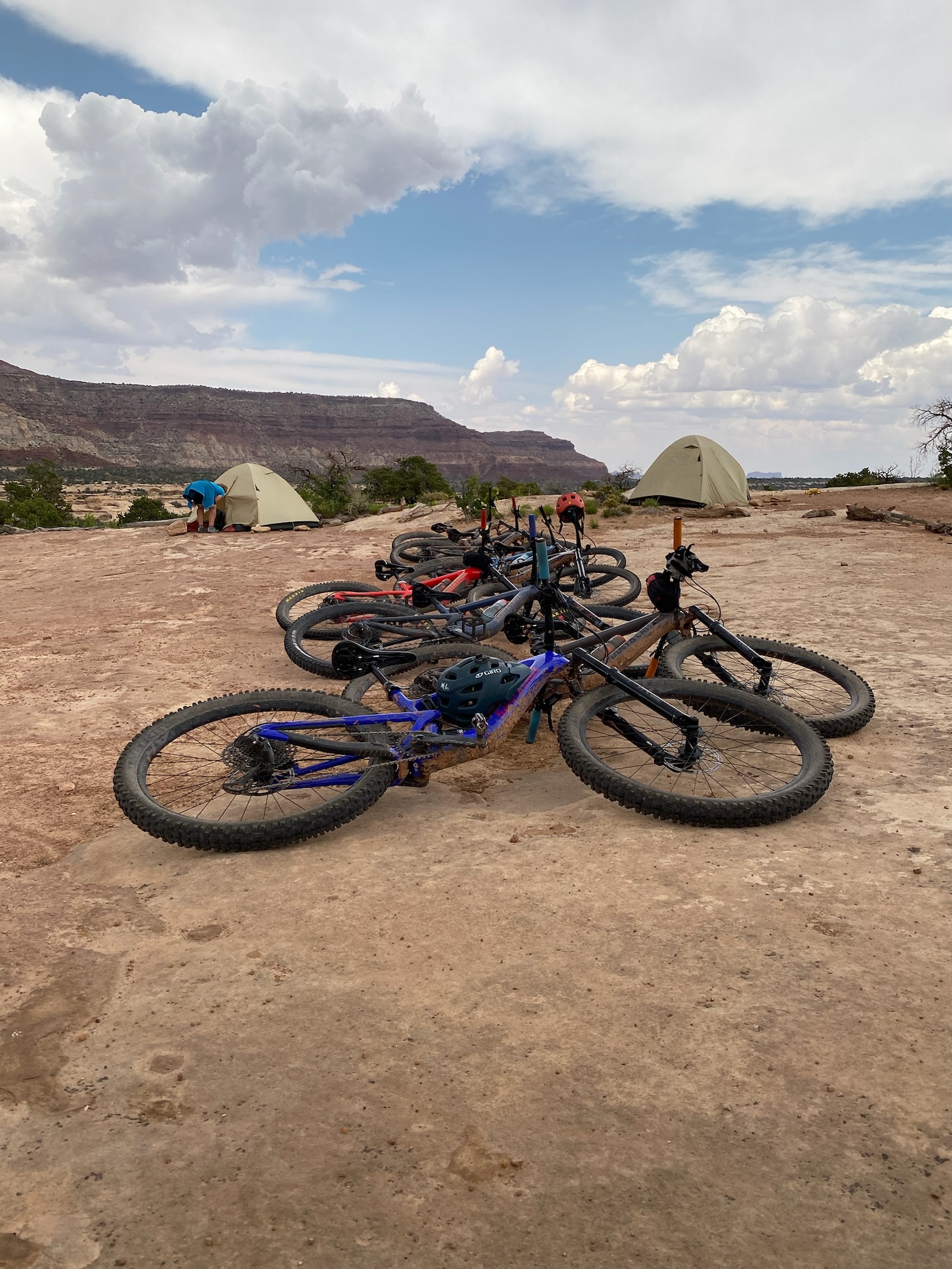
Post lunch was a leisurely cruise down to Teapot Campsite – our home for the next few nights. We had a big day of riding tomorrow on very technical trails. so we walked over to check it out and pick out some lines through the rock gardens.
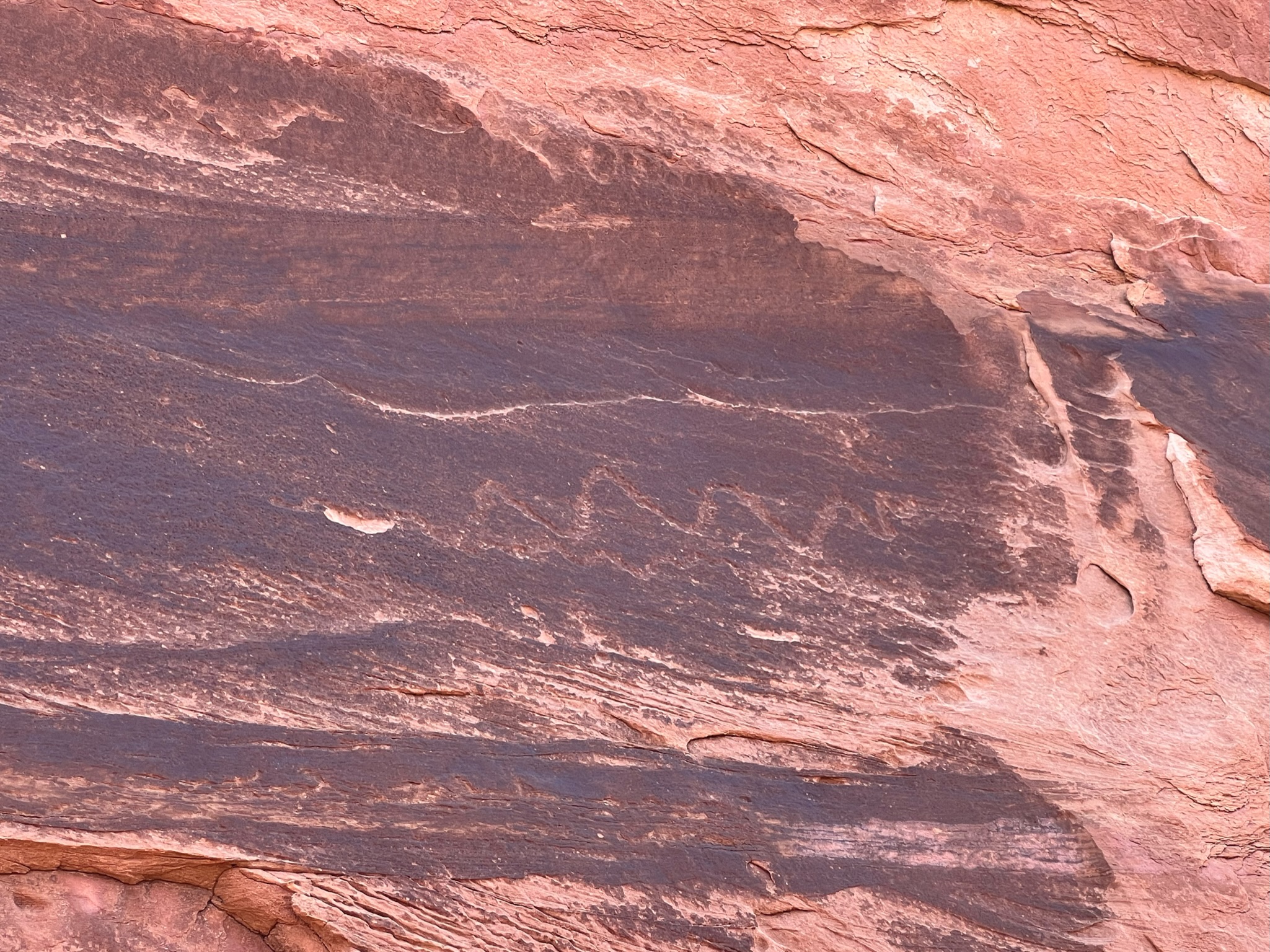
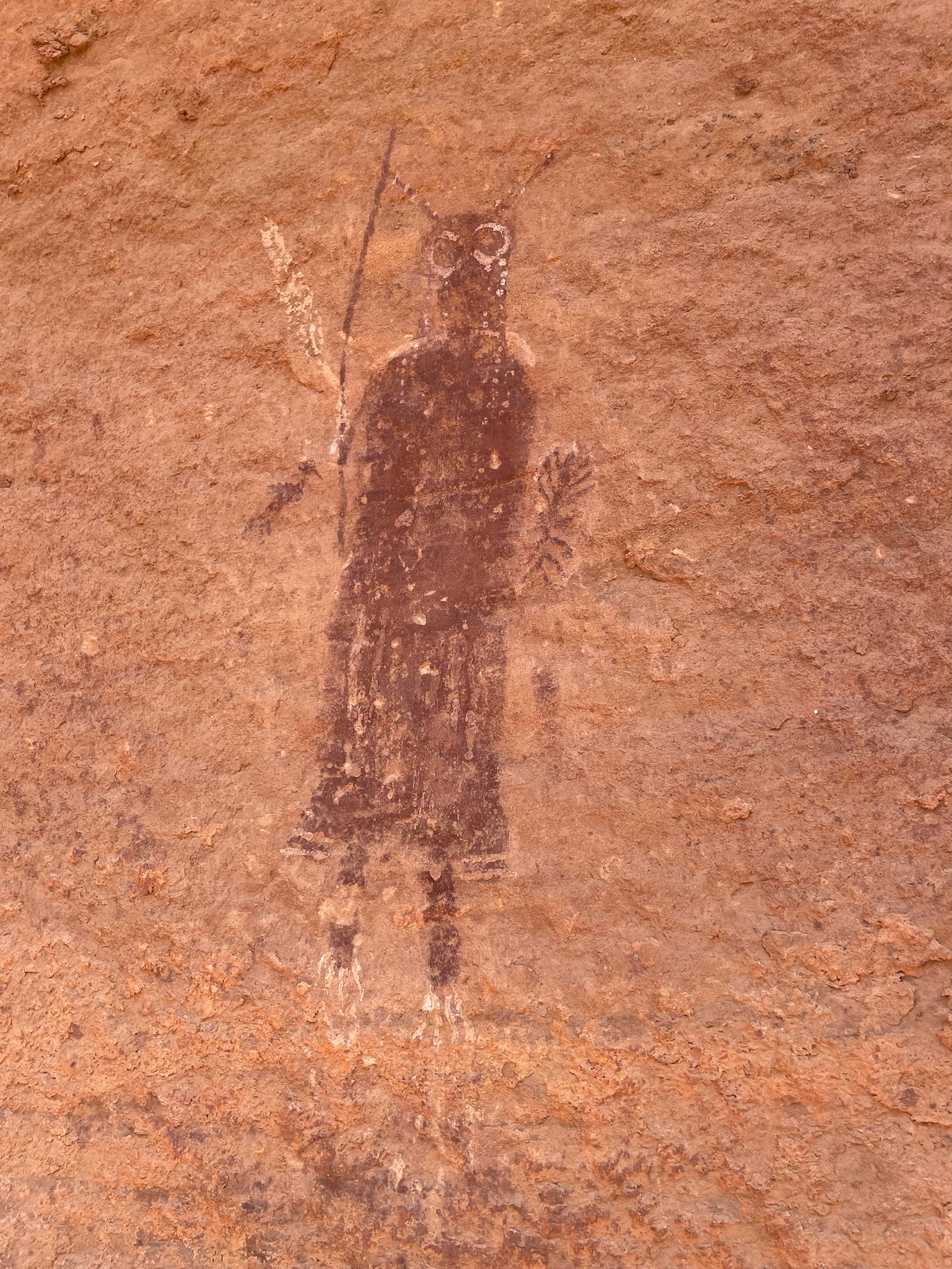
Today was a “rest” day – meaning a rest from riding. Instead, the plan was to hike/scramble/climb down into the canyon below our camp to view some of the world-famous Barrier Canyon pictographs and petroglyphs. The pictographs are believed to date from 2000 BCE to 500 CE (Common Era), but not much is known about who created them or their exact meaning.
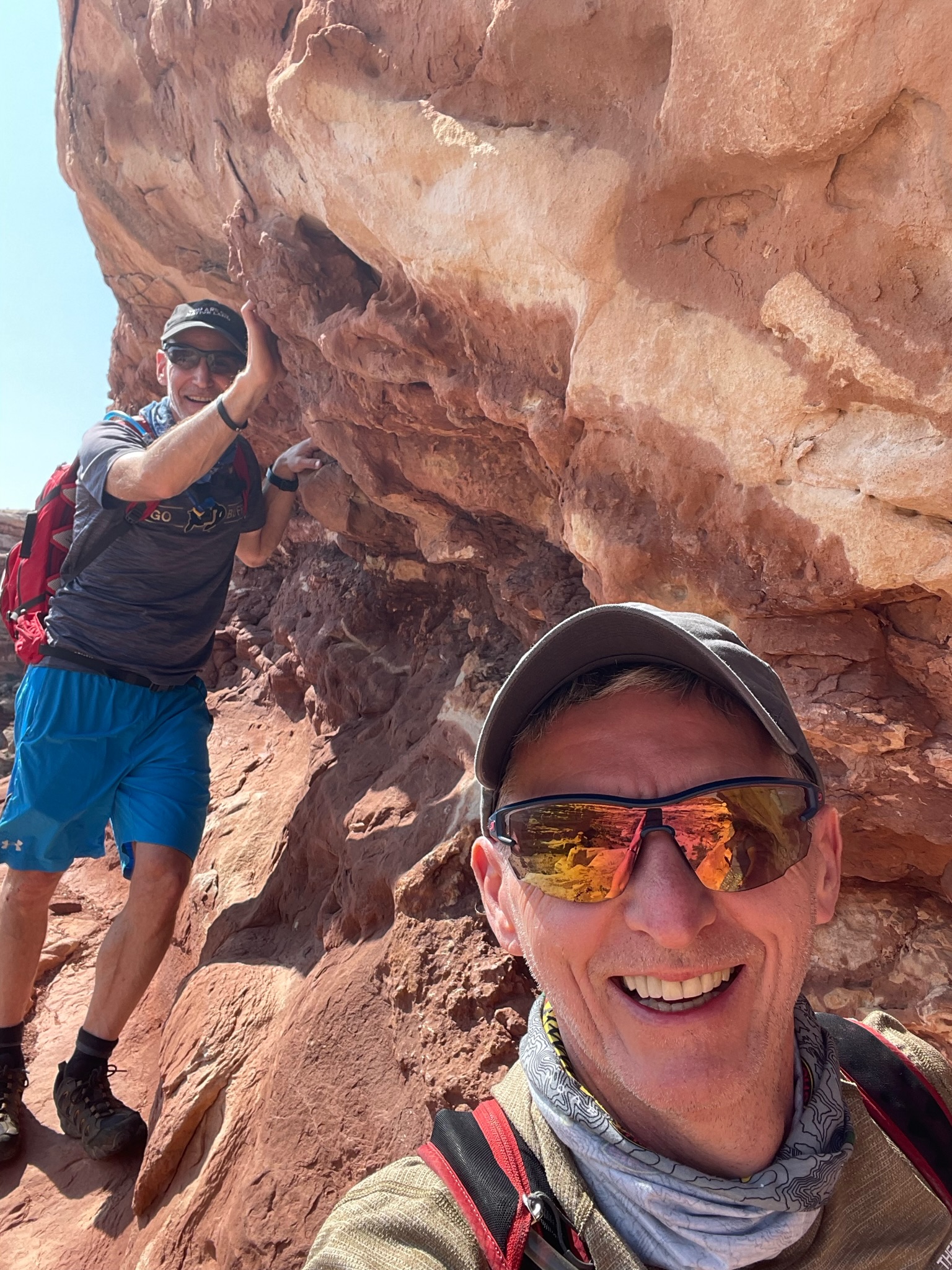
After drinking plenty of the best coffee for 50 miles in any direction and a cooked breakfast, we set off. It took us about 90 minutes to scramble down into the canyon, and unless you know exactly where you are going, I will not attempt this – there are plenty of places you could go off course and get into trouble. It’s a very exposed descent, the trial is not well marked, and a slip or fall would likely end in severe injury. There are some primitive Moki steps at a couple of points if you can find them. Getting out of the canyon with any kind of injury would be impossible without assistance and the right equipment.
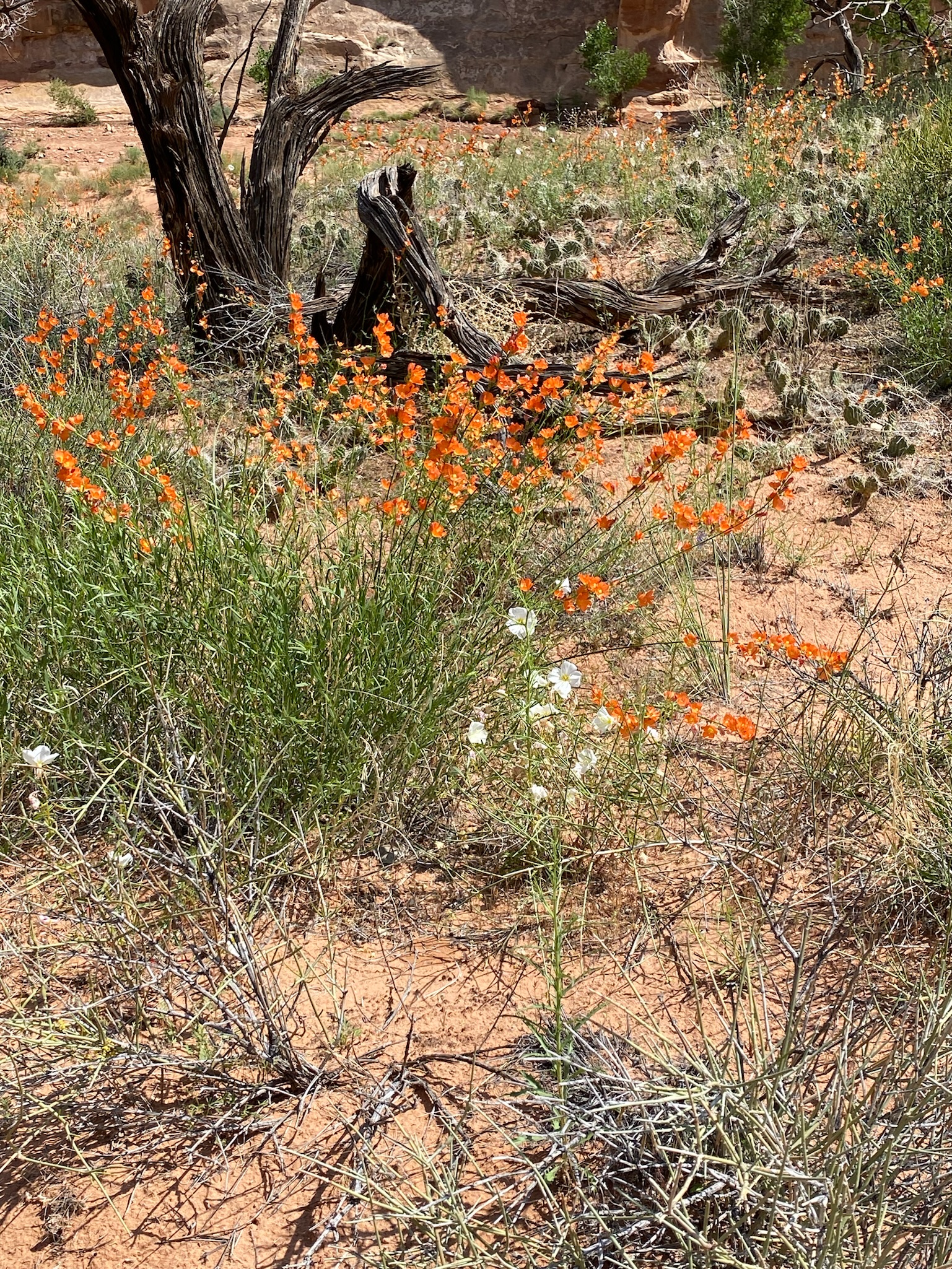
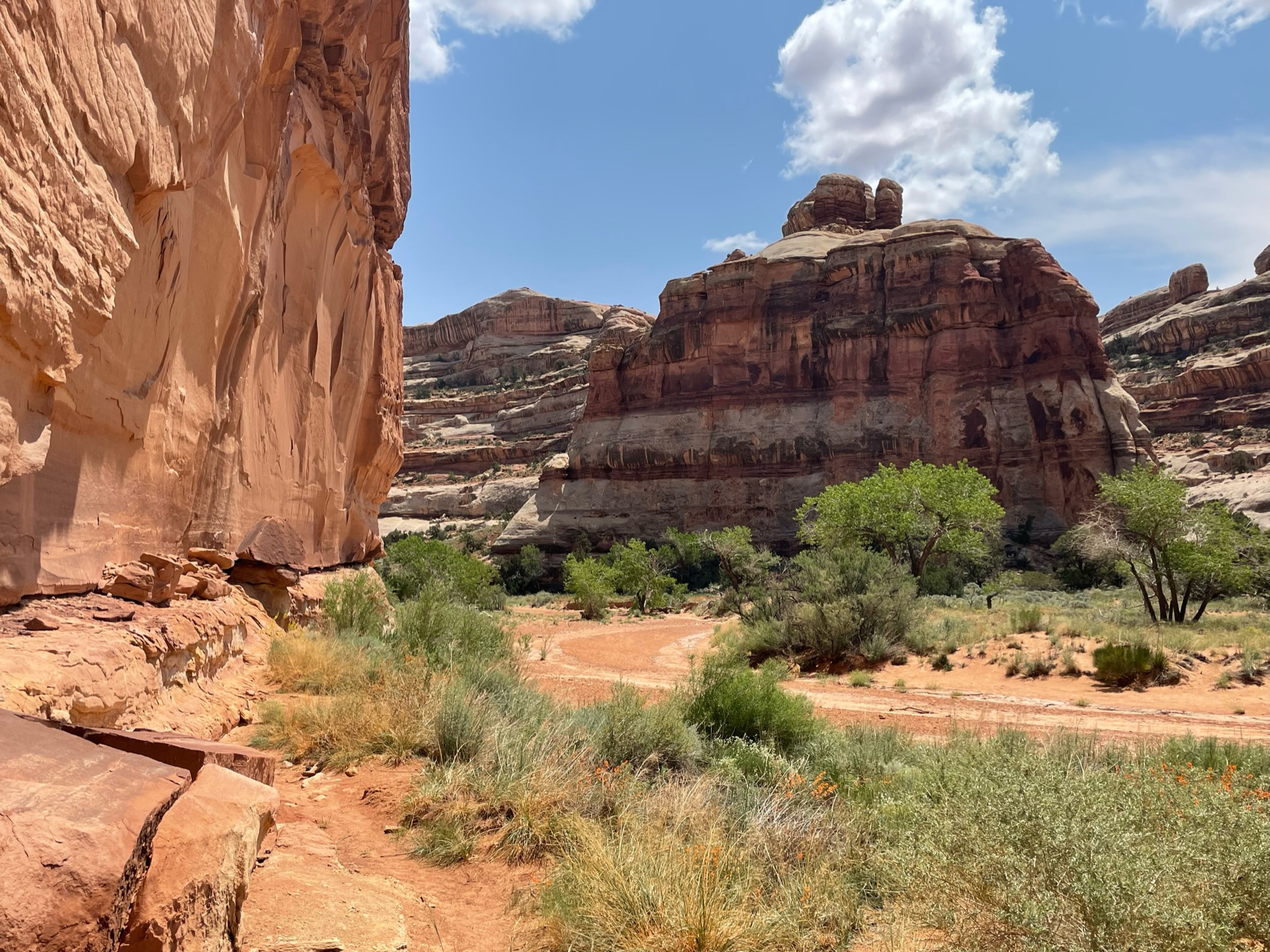
It was a toasty hike to the main Pictograph canyon with full sun, no shade, and no breeze. Once we got to the canyon floor, we were treated to an explosion of desert plants. There’s been a lot of rain in the area, and this was apparently one of the best spring blooms in living memory.
There’s not much online about these pictographs other than people’s accounts of hiking into the canyon to visit them. They are the same Barrier Canyon style as other sites in the area – nearby Horshoe Canyon being one of the most extensive sites.
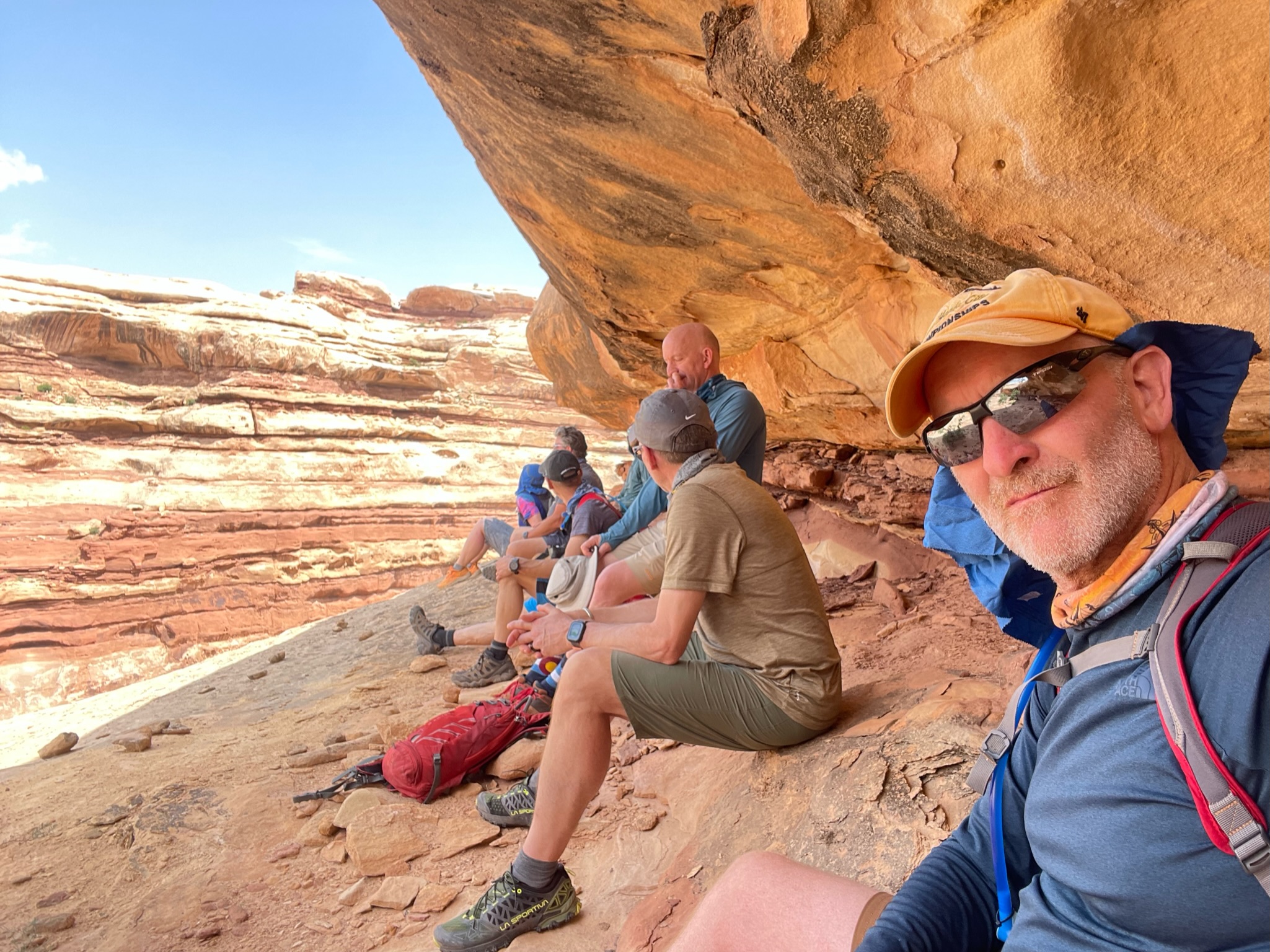
The hike back up to camp was much quicker and easier but still pretty strenuous, and we even found a little shade. Fortunately, there were no injuries aside from a few scrapes, and it was great to spend time in an area that very few people will ever have the opportunity to visit, given its remoteness.
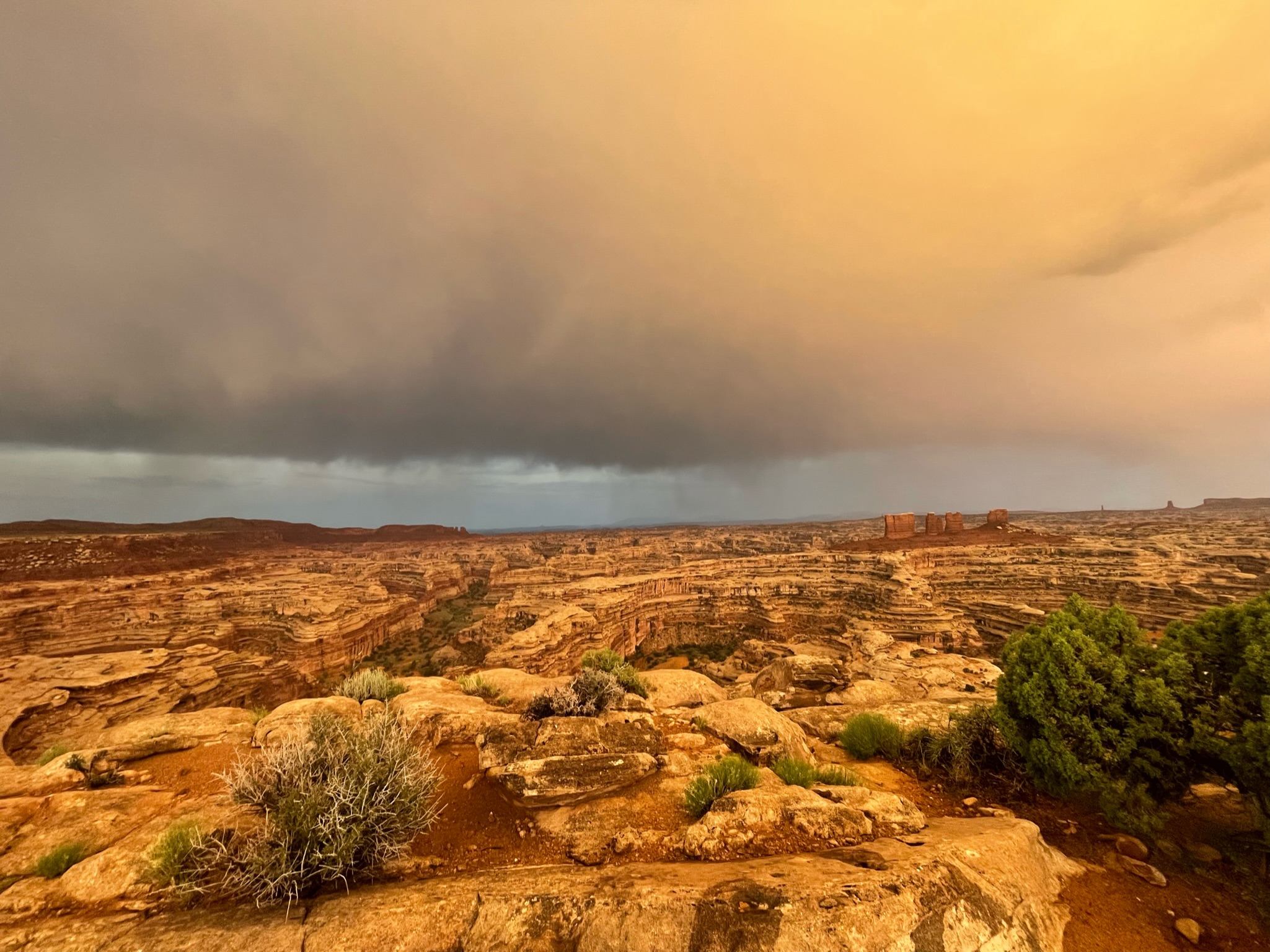
Returning to camp for a few beers, another excellent dinner, and a spectacular lighting and rainbow show was a good end to the day.
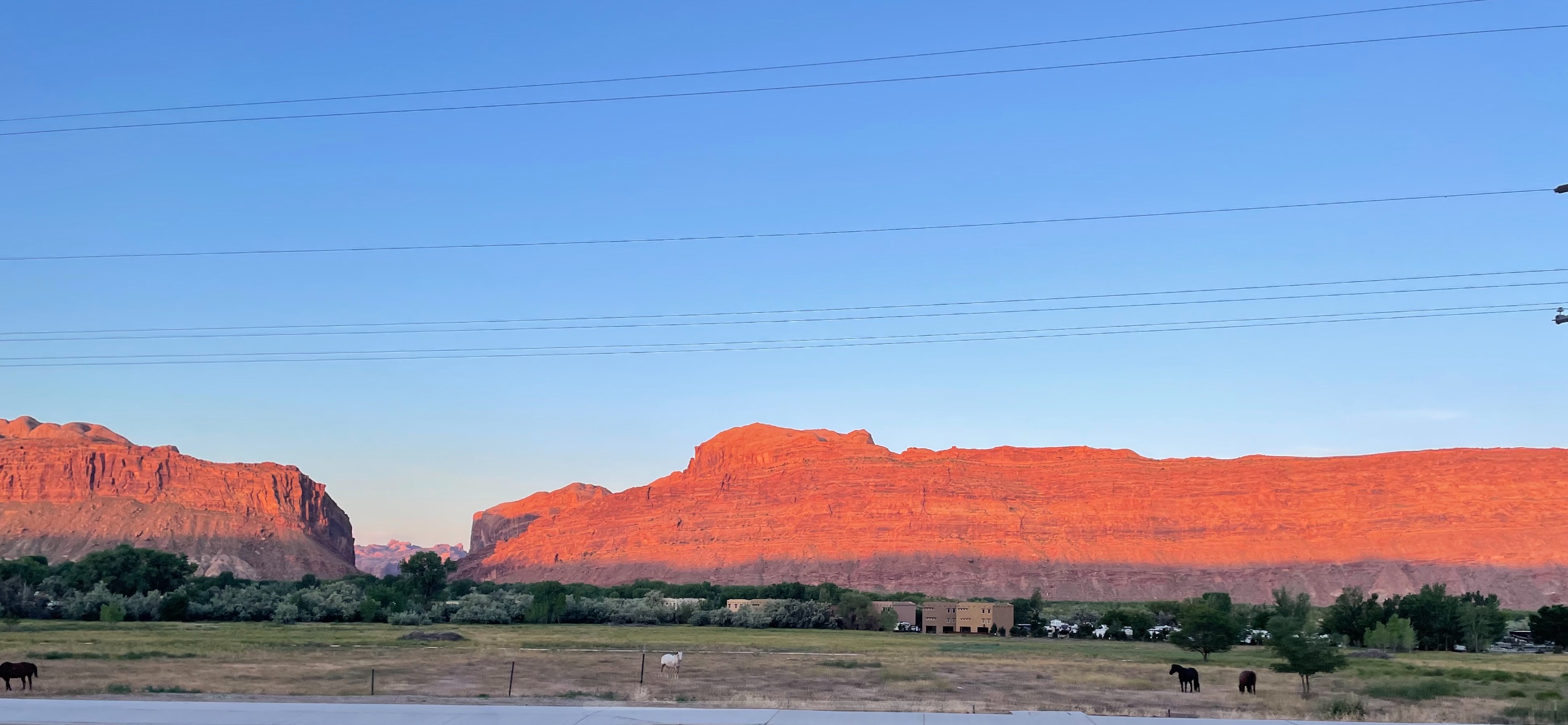
We had an early start, but as we’re all East Coasters – we were all wide awake before the 5.30am alarm. The Sunrise in Moab is always special – the red sandstone cliffs glow red, and you can start to feel the sun’s heat. We packed up the rental car – literally packed it to the gills, and headed off to Green River to meet our Rimtours guides and fellow explorers. We caffeinated on the edge of town at Horsethief Coffee and arrived at Green River in time for breakfast at Tamarisk, where we watched the very swollen Green River rush by.
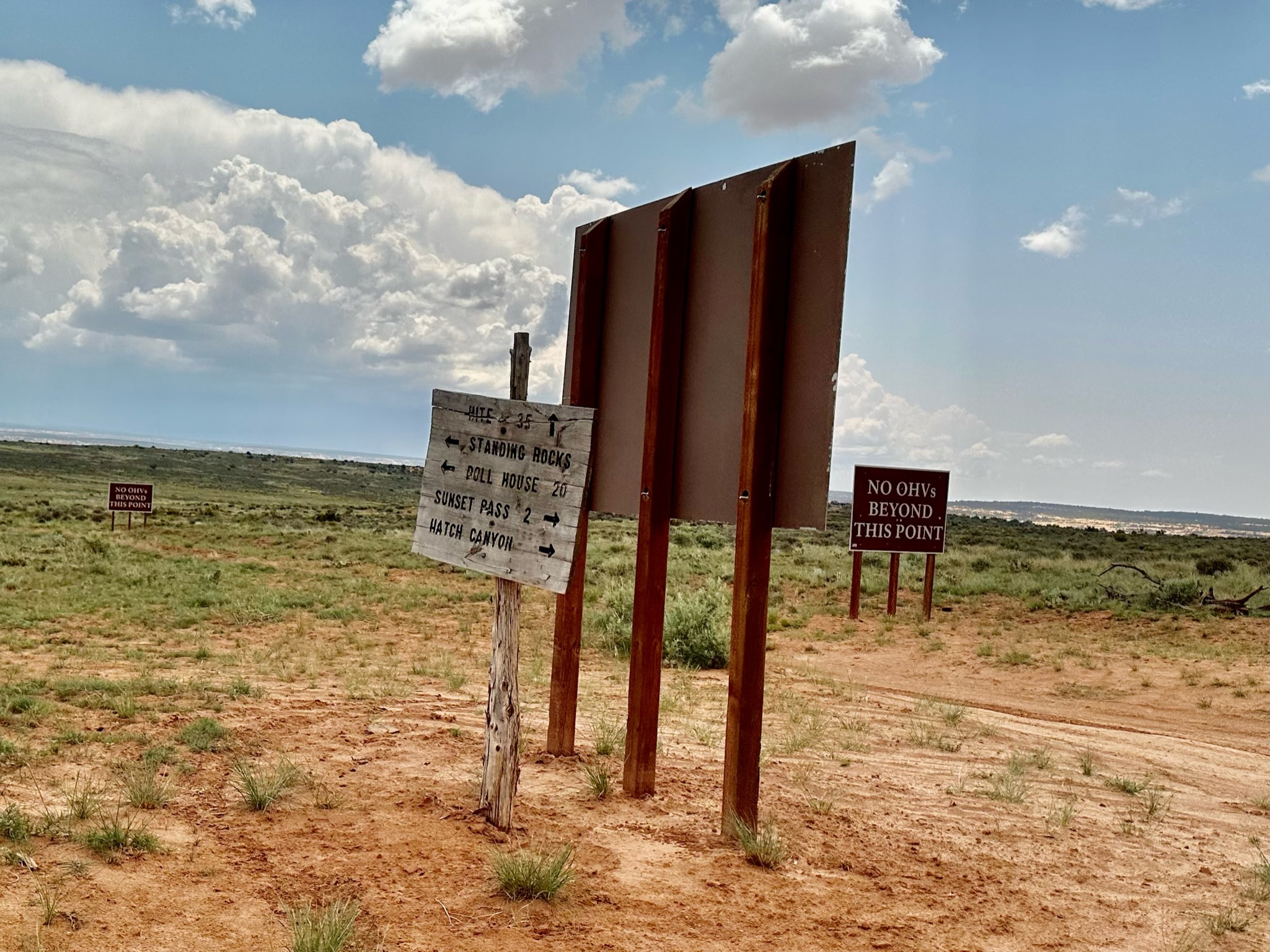
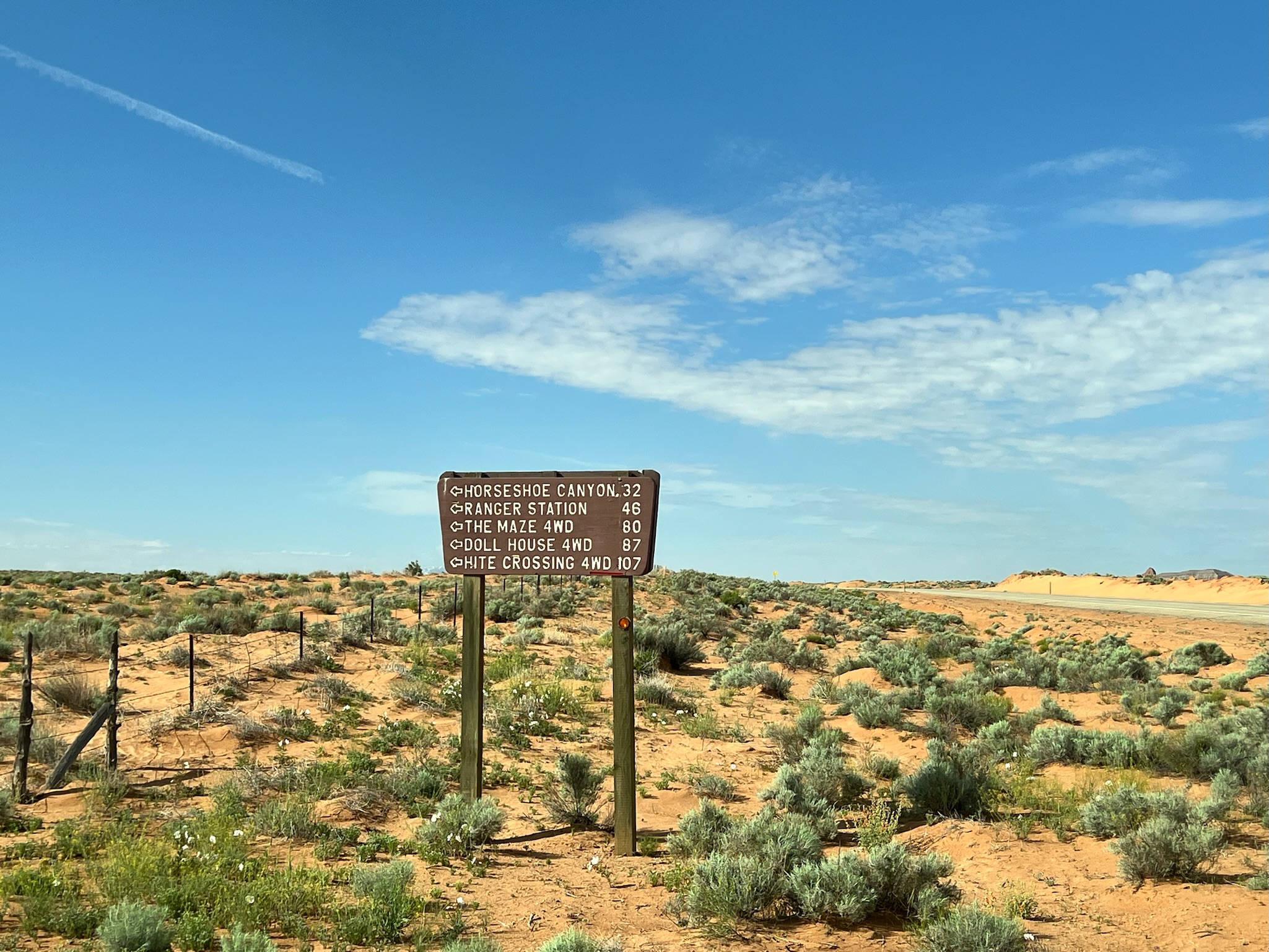
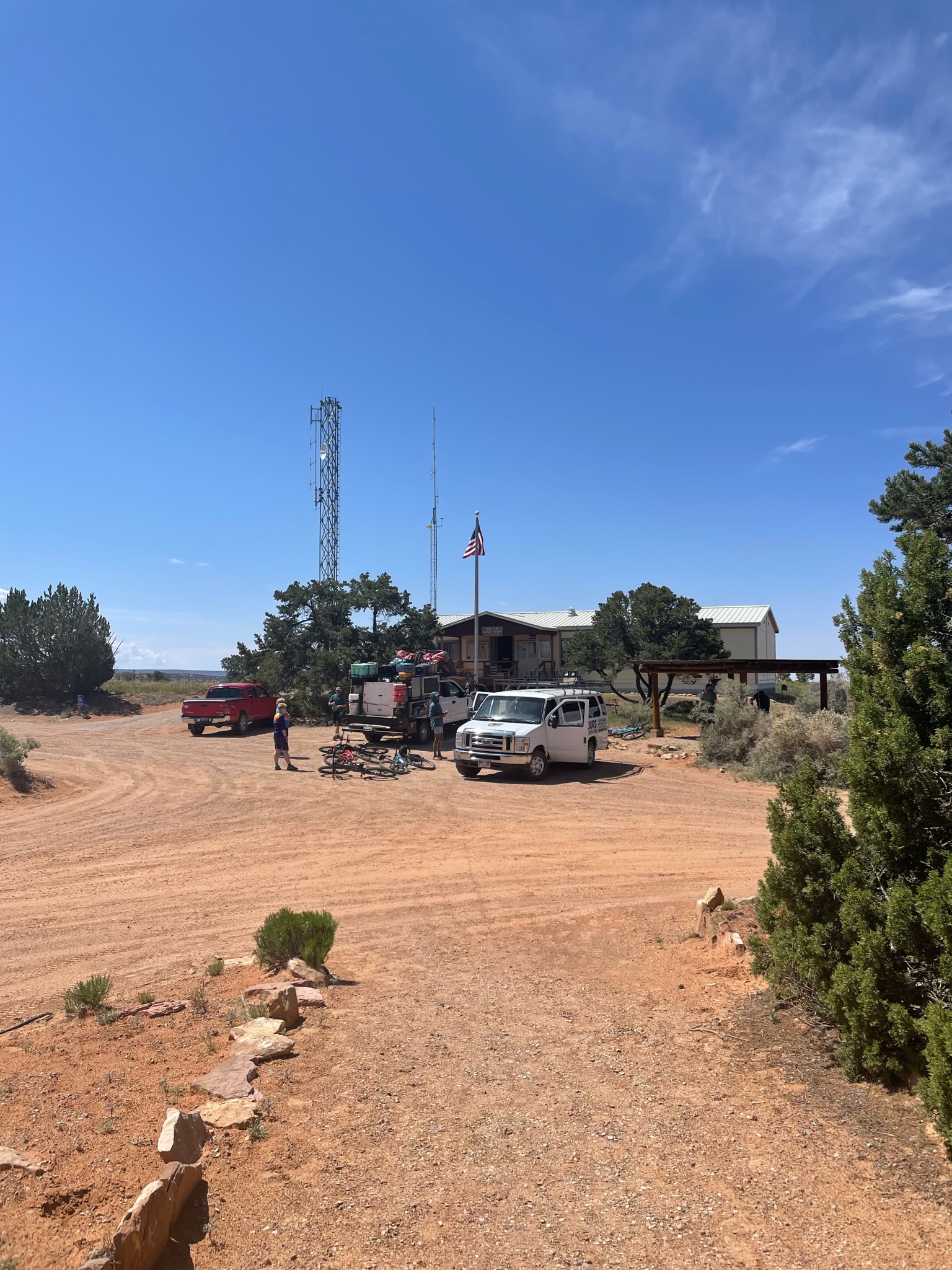
The start of our ride was at the Hans Flat Ranger Station on the western boundary of the Canyonlands. Getting there was an adventure – 46 miles of washed-out Jeep trails through barren BLM-owned high desert. Once there, we met our guides and fellow travelers (Donna and Sue), got our gear and bikes ready, transferred our packs and camping gear, and reviewed the route for the rest of the day.
Saying goodbye to civilization and the extensive facilities at Hans Flat – a shaded picnic table, a vault toilet, and a map. From here on – there’s no potable water, bathrooms, or electricity, and the only shade is provided by stubby Juniper trees and your own headwear.
The morning ride was a pretty easy, flat ride along the top of the Orange Cliffs, stopping for pictures at the Bagpipe Bute overlook; we then dropped down the Flint Trail switchbacks and had a quick lunch break at the bottom.
After lunch, we dropped a few more hundred feet and entered the Canyonlands NP, where we encountered our first Canyon. As impressive as it was – we’d discover in the next hour or so that it was barely a ditch at the side of the trail compared to The Maze.
Day 1 – mission accomplished – 28 fairly easy miles. The final destination for day 1 is Maze Overlook, Camp 1, and our base for the next few days.
I’ve been mostly happy with my Specialized Epic Carbon 29er except for a few minor niggling things which I’ve corrected over the last year or so.
The stock Formula brakes were not great. Fortuitously I snapped one of the levers off in the first few months and rather than replace just the lever; I fitted Shimano XT brakes on front and rear – they have better stopping power, less fade and are infinitely adjustable. They also use mineral oil instead of the nasty Gycol-based stuff.
The Epic’s stock tires were clearly made for speed above all else – I was never comfortable with the grip at the front. While the bike was having some down-time due to the rear shock getting serviced I added a bit more volume – Maxxis Ikon 2.2 on the back; Maxxis High Roller II 2.3 on the front – the bigger front tire really makes a difference. For what it’s worth – you might just be able to go up to 2.3 on the back and 2.4 on the front . I also went tubeless – I don’t know why specialized fit tubeless rims and tires but also ship with inner tubes – I suspect tire sealant doesn’t travel well and gets a bit messy while in transit.
Another thing I found is that the design of the front QR through-axel means it quickly degrades if too tight to the point where its no longer able to function and you have to use a hex wrench – somewhat negating the idea of a quick release. So I replaced it with the non QR version – the Maxel.
Finally I used the same maintenance window to fit a dropper. Without manually dropping the seat-post – my saddle is constantly butting me in the arse mid-jump – making for exciting nose-down landings. I do realize the Epic is a pure-bred XC bike not a dirt jumper – maybe at some point I’ll buy myself an old beater for the jumps.
Getting the right dropper for an Epic Carbon was a challenge due to i) the 27.2mm seatpost and ii) the shape of the frame which severely limits travel. The only dropper Specialized will recommend is the Command Post XCP 350mm – which is pricy and only has 3 cm of travel – that’s $15 per millimeter ! I tried the 500mm version but that rode way too high for me and would’ve resulted in a riser; not a dropper. KS now do a 27.2mm internally-routed dropper and that might have been a better option but hard to know if the bend in the Epic’s frame would’ve restricted travel. Seems to be a fair amount of trial and error with droppers. Either way, you’ll probably want to have your local bike shop fit it because the internal routing is pretty complicated; but in my opinion – well worth it.
So with these new mods in place I hit the backyard trails before dusk. Nice to have a working auto-sag again (the Specialized / Fox Brain really is a decent piece of engineering) and the front tire running about 30 PSI handled really well – feels a lot more confident.
I hit one of the jump-lines and felt much more in control – no saddle tipping me forward mid-air and the trigger is really smooth – feels natural already.
Feels great to have my bike back working better than ever – now I’ve got to rack up some miles before it gets too hot and humid !
I pre-paid for the much anticipated UP3 band in December 2014, was dissapointed with the release delay and the downgrade from waterproof to splashproof but opted for the discount vs get my money back because I thought it was worth waiting for and worth waiting for Jawbone to get it right. I was dissapointed when my first band failed after just 6 weeks, more so when the second band failed for exactly the same reason after just 3 months; as did my Wife’s first band after 3 months. After all this I decided enough was enough – I gave Jawbone a chance to explain how they have addressed the expanding case design issue. They didn’t even accept that it was a known issue so I demanded my money back – afer explaing the design flaw to a couple of tech support assistants and one manager I was told they wouldn’t be able to give me a refund as my original purchase was beyond the 60 day limit and all they could do was send me a replacement. I couldn’t find that time limit easily in their returns policy.
So here I am after 6 months with my 3rd band and my wife with her 2nd band expecting both to fail before Ground Hog Day – essentially a reluctant customer. As most marketers know – if there’s one thing worse than a non customer – it’s a reluctant customer.
Here’s the thing – the band (aside from previously mentioned design flaw) is very good – it does everything I want in the right form-factor. I think the iOS software is the best on the market in my opinion and they’ve done a decent job of iterating the band software to extend batery life and make sleep tracking easier. Their customer service rocks – they’ve never hesitated to process a return and done it very quickly each time – I suspect practice has made them good at this.
My message to Jawbone – you can do better than this; you have to do beter than this – it’s a very competitive market. Redesign the band casing / battery, make it waterproof as you orginally claimed and give your loyal but possible reluctant customers and free / cheap upgrade path.

































 Rich Sharples' Weblog