At the start of the year I re-started my home espresso obsession having grown dissatisfied with the declining quality of Nespresso pods. This isn’t my first foray into home espresso and I’ve owned a range of machines over the years. I bought my self the entry level but pretty dependable Breville BES840XL and a one shot burr grinder – the Viesimple Gen 4.
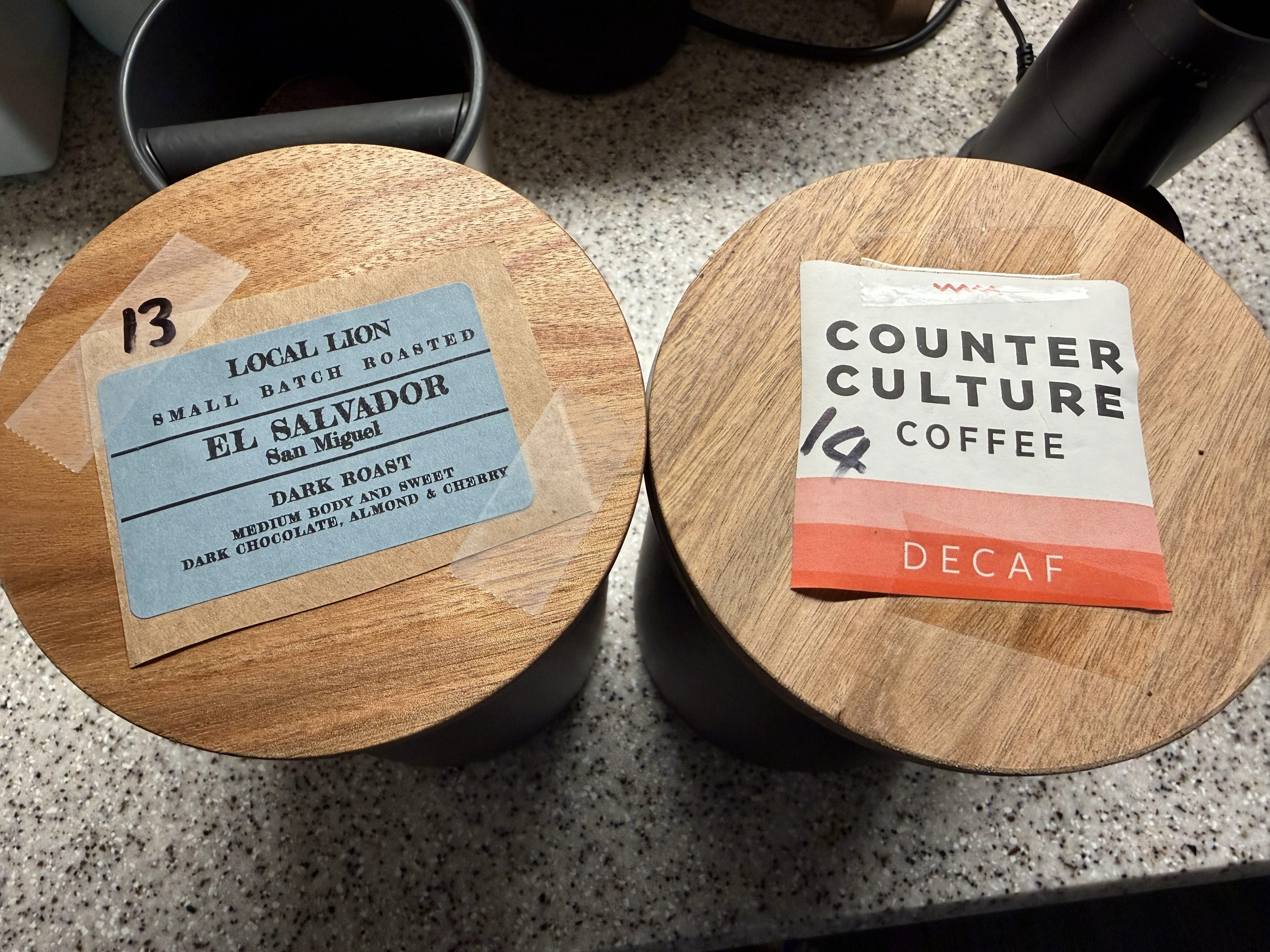
I have a couple of go-to beans from my local roaster (Counter Culture) but also like to try new roasts and usually pick up a bag or two when I travel. Every new bean takes a couple of shots to dial-in (grind, dose, pull duration, etc.) and I was keeping a log on Notes app, and scribbling the grind size on the label of the bean jar. A workable system but not ideal and not scalable.
About the same time, I was starting to play with LLM-based coding agents – Claude, GitHub Co-pilot, Codex, etc. and though it would be good to try a couple of real life software projects from ideation all the way through to delivery to get a sense of how the technology has evolved over the last couple of years. I learn best by doing.
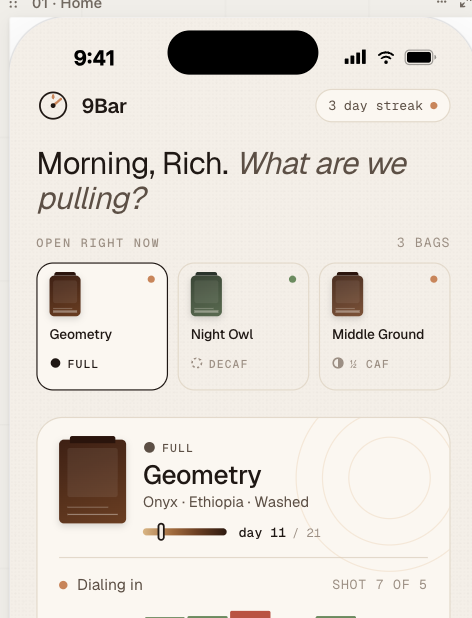
So, over a rainy memorial day weekend I wrote a specification for a basic app to track my caffeine experimentation, used Claude Design to come up with mobile UX (iPhone and iPad) then brainstormed Claude Code on the best starter implementation and within a few hours and a few iterations – I had something working.
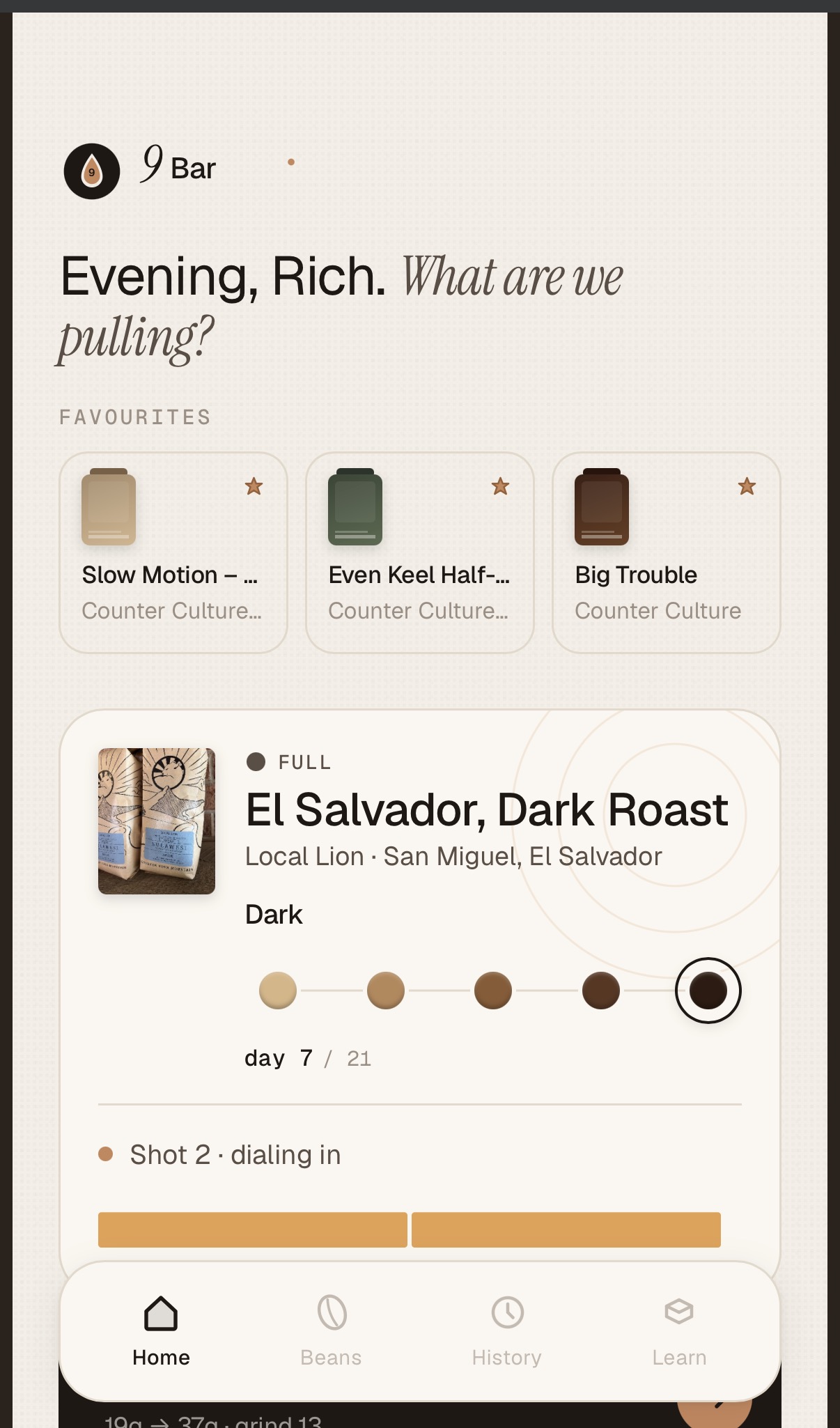
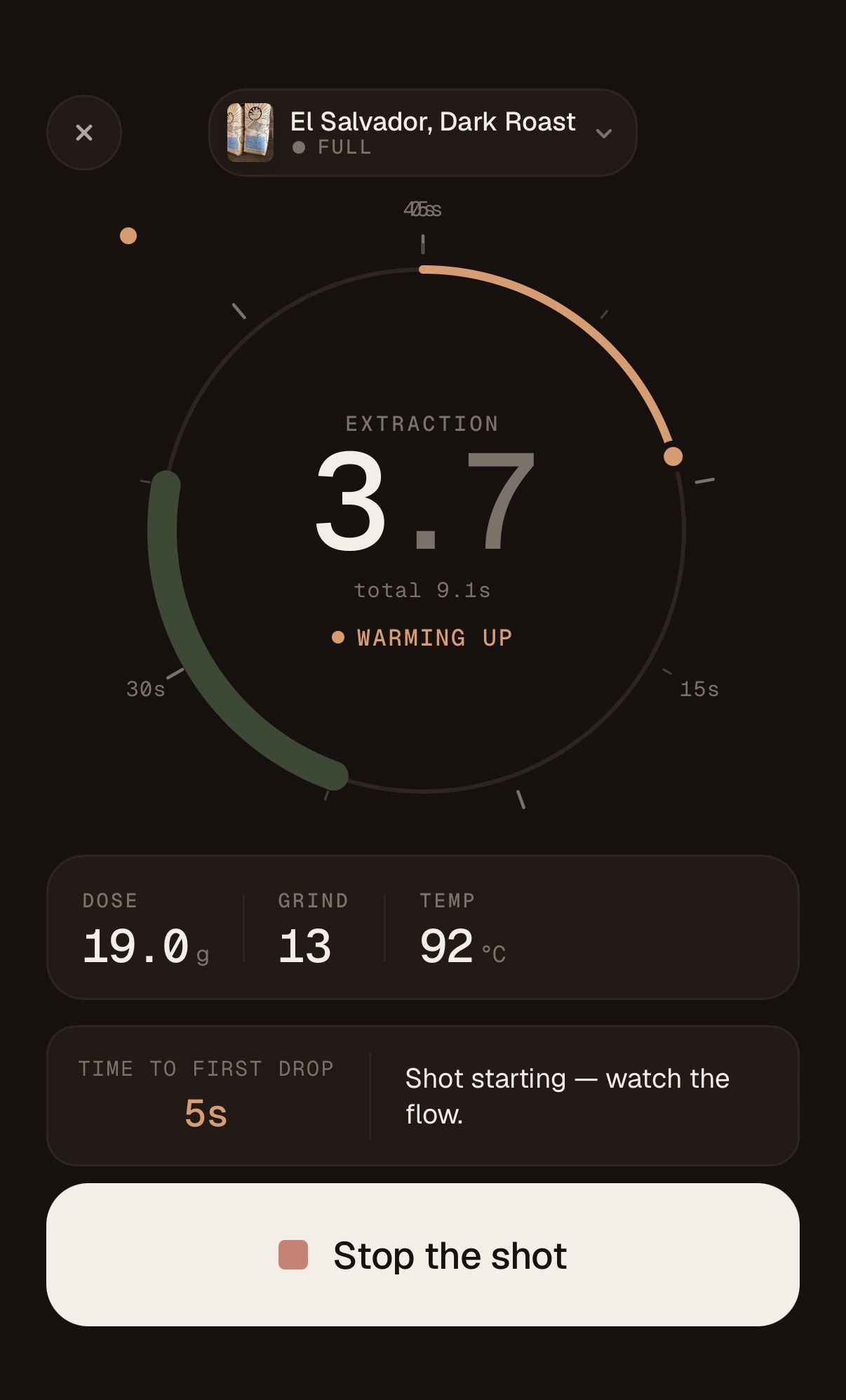
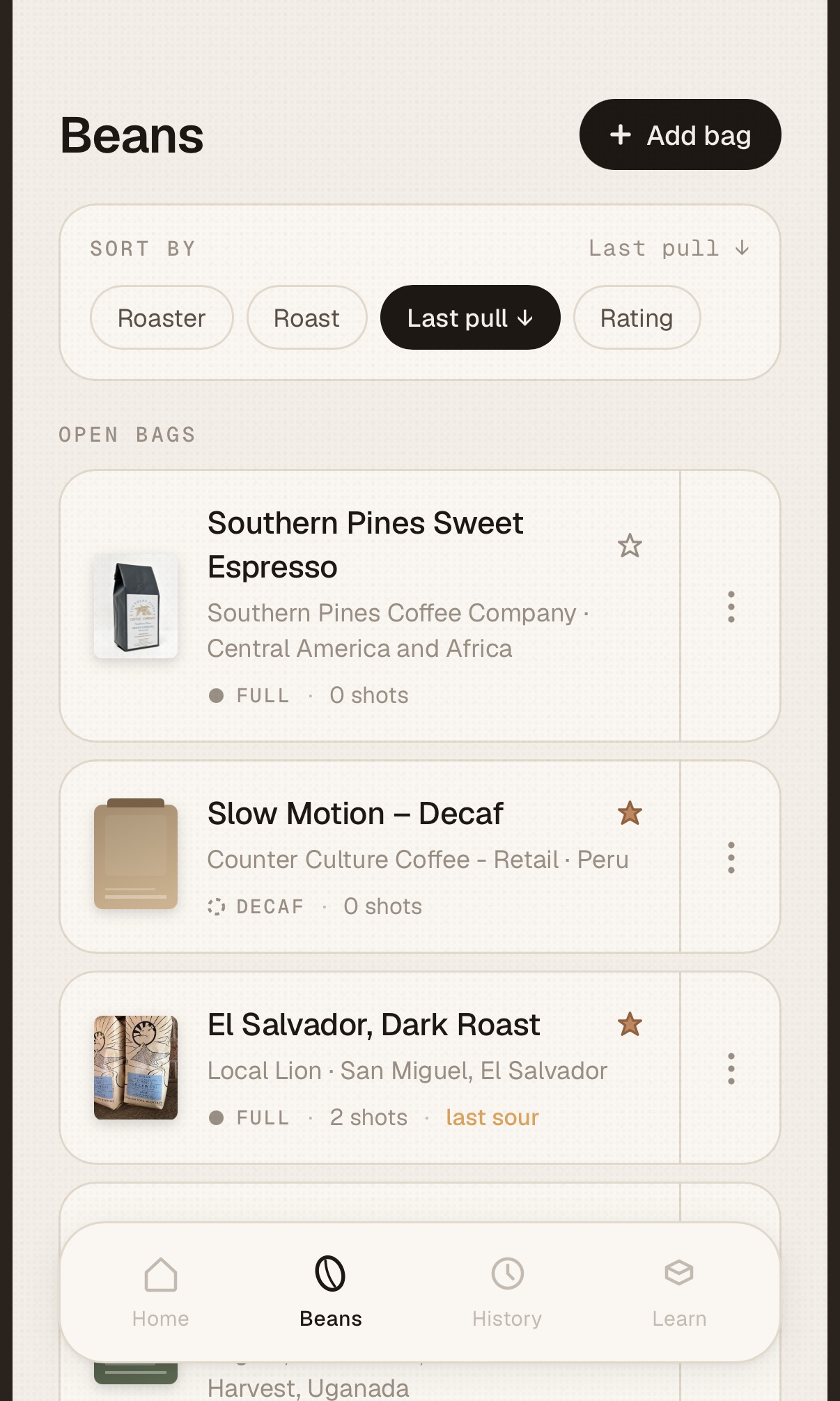
ScreenshotScreenshotScreenshot
After a few more weekend design and development sprints – I added a QR code scanner and URL scraper for adding new beans to my collection, created a flow for pulling shots and rating them and few other tweaks. Beta testing consists of pulling a morning shot using the app for a week then making changes the next weekend. I wish all beta testing tasted this good.
I’m now at the point where I think the app is actually useful and would like to share it with a few more people to get some feedback. If you are interested – leave a comment or drop me an email at sharps [AT] softwhere [DOT] org. It’s not a self contained iOS app (yet) and you need to be able to run the app on a desktop or laptop on your home network using npx (Node Package Execute) – if none of that means anything to you – you’ll need to wait a little longer for the native iOS app.
Some near term goals for the app :
Integrate it with the Half Descent Scale so the app can control the scale and also pull the timer and yield info straight into the app – I’m currently doing that manually
Re-order beans directly from the app.
Wrap or re-write the app so I can push it to the app store
Move the storage to the cloud so you can easily synch between devices
Why the cryptic name ? 9 bars of pressure is the gold standard for brewing authentic espresso.
OK a bit more agent wrangling on the two apps. over the weekend. Just a reminder : there’s a semi-serious app for producing 508 Compliance VPATs (A11yBot) and my lifestyle project 9Bar – which is basically an Espresso co-pilot / log book. For both projects I needed an easier way for people other than yours truly to access and run them without a build environment, so for now at least I went with npx – that means the any user can just :
npx @richsharples/a11ybot@beta
or
npx @richsharples/9bar@beta
For 9Bar – I plan to eventually convert it into a native wrapped iOS app and push it through the Apple AppStore with a hosted backend but for now a rea ct web app running on a machine on the local network works fine while I finesse the UX and the espresso pull logic / AI. For A11yBot – running locally with npx is probably good enough – people rightly have issues letting hosted scanners access their IP.
When I started on this journey I had a few of goals / principles in mind:
I’m not interested in looking at code, learning new frameworks, or remembering language syntax. When I was a full time developer many decades ago I took pride in knowing more then my peers and have always had a high tolerance for getting into the details. Not any more – I just don’t think that stuff matters any more.
While I’m a problem solver at heart – I don’t have a high tolerance for all of the accidental complexity and yak shaving that comes with modern software development – Git Syntax, GitHub actions, access tokens, npm publishing – it’s all incredibly awesome but like all good technology it just needs to fade into the background.
Have fun and learn something.
There is no doubt that Claude knows code, knows frameworks, can make good technology and architectural decisions and can work the local loop fine, but it is much less competent at understanding the more complex outer loop. I had to do a little research on the state of the art of publishing node packages from GitHub and provide a bit of direction. Not full on yak shaving but still a little frustrating and a lot of tokens burnt in vain. I do wish LLMs would occasionally pause and ask for help or guidance rather than just brute force ahead.
But let me put this in perspective – I spent a couple of hours on a Sunday afternoon, spent enough time on each project to implement a few more features – some trivial, some not so trivial, open sourced the A11yBot project under ASL 2.0, did a security and A11y review, wired up GitHub to build, scan and publish to npmjs.org when I cut a new release of either app. Without Claude – I probably would’ve got bored and given up at some stage – probably trying to fix some n00b syntax error. I certainly could not have achieved all of this within a few hours. This really is democratization of technology in action – right now, you still need to know a bit about the process of making software, but I’m sure all of this stuff will be significantly easier in the next 6 months.
Claude Opus 4.8 dropped on the Friday and I did switch over for a few sessions but whether it’s overloaded with users or has bigger issues I had to switch back to 4.7 for better stability. At one point Claude apologized that it had spent a lot of tokens on a design change that wasn’t needed and had to roll back the changes.
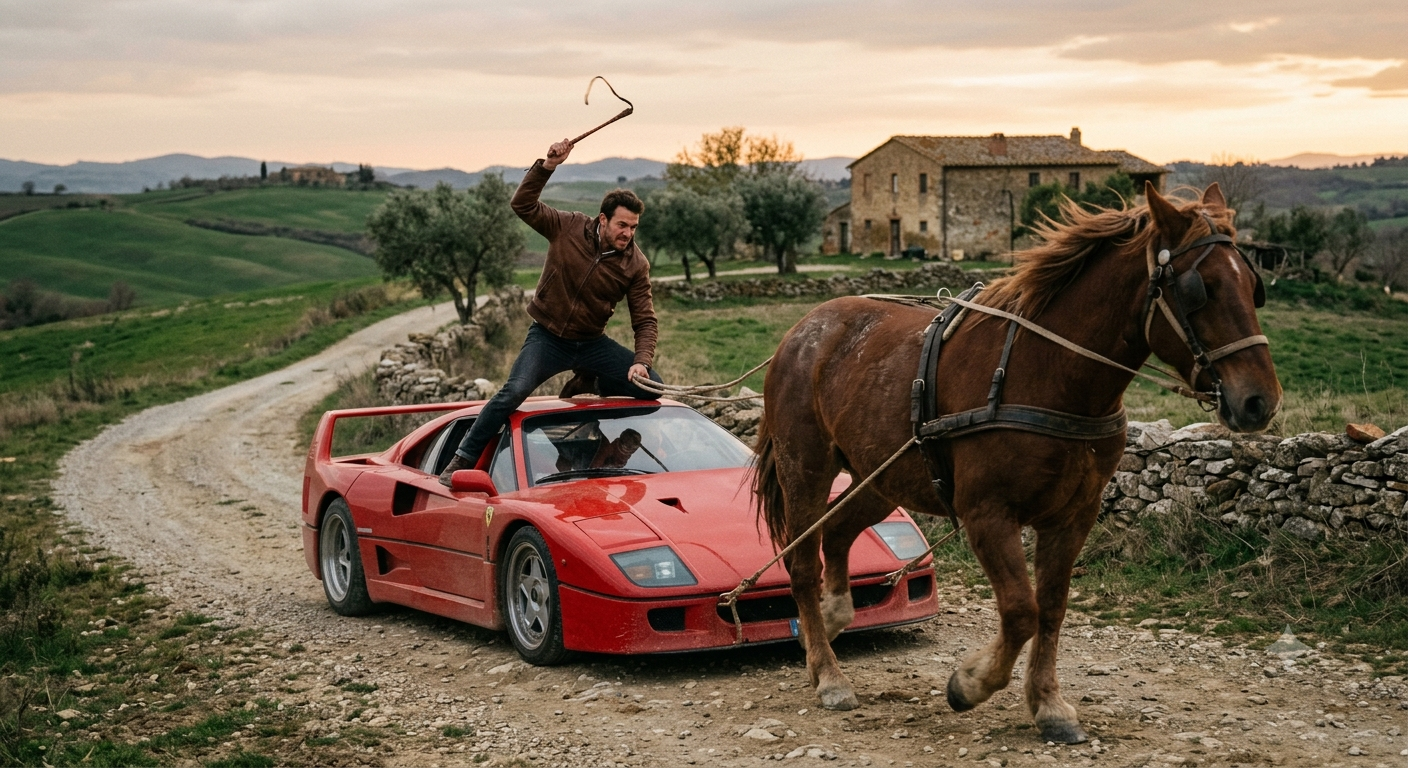
I’ve noticed I’m burning through tokens at an impressive rate – I’m not really tracking the costs it right now but suspect I’ll need to move to the Max 5x ($100 / month) plan and look at some of the tools for optimizing Claude code usage – I’m sure my current use of claude looks something like the picture above. But I’m having fun and that was one of my goals.
Although I haven’t been a full-time developer for well over 25 years, most of my career in product leadership has been in support of people building, deploying, and managing software systems, so I’ve always maintained a close interest in the art and science of software. With only a few exceptions—pretty much every year for the last 25 – I’ve managed to find a reason to actually write some code. I’m a big fan of learning by doing.
The early AI augmented co-pilots were very useful for someone who, like me, is not a regular coder and doesn’t have the time to learn the latest language, framework, or stack. The first vibe coding platforms were even more useful—producing running prototypes from simple prompts but the tools quickly became confused after a few iterations.
In the last 6 months, though—I feel like we’ve hit a significant step change in capability. On rainy Memorial weekend this year, I jumped into full AI development using Claude Design/Code, and I am pretty blown away with the speed and results.
Over the last 3 days, I developed two non-trivial apps—both of which would’ve taken me months to hand-code. Note in aggregate – I suspect I only spent about 5 or 6 hours actually developing software.
The work-related app
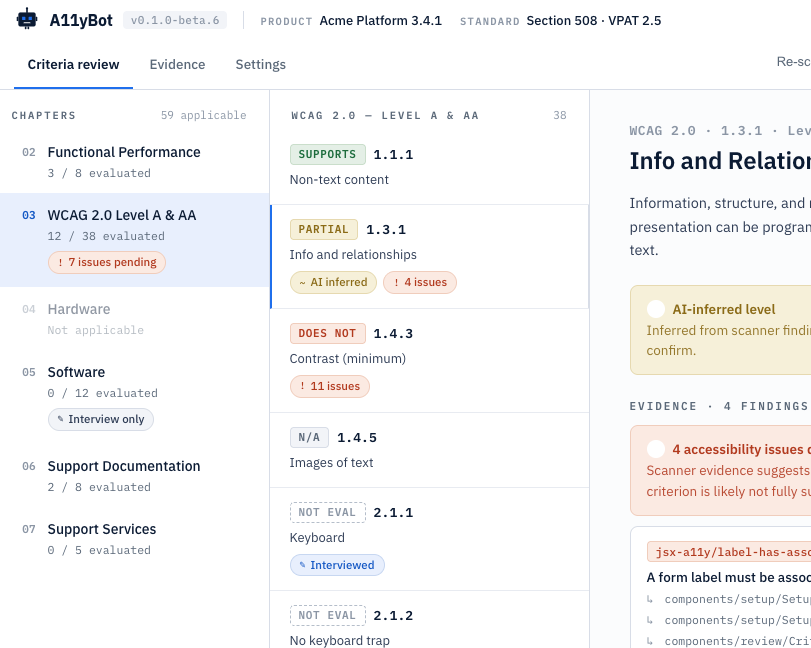
This first (A11yBot) is a web-based tool for completing Accessibility documentation (aka VPATs)—something most government customers require but part of the “whole product” that is usually de-prioritized. Yes, there are commercial apps, open-source apps and even commercial services for producing A11y report – but that’s not really the point – it’s a rich enough space to make a good target app.
A11yBot Design
The A11yBot app runs locally, scans source code and a running web apps, and produces a VPAT report covering the standards you have selected. AI-generated responses synthesize the evidence from scans and completes the report. It supports the major Accessibility standards in the US and internationally. You can plug in an LLM for the AI response generation using OpenRouter or hook up to local models using Ollama APIs.
For this app – I started with a two-page-long specification outlining the MVP, goals (as automated as possible), and constraints (easy to run locally). From that, I asked Claude to produce a design – schema, workflow, and technology stack. Got the first working release in about 30 minutes and pushed it to GitHub as a baseline.
Running local models, scanners, test environment, and builds on a 24Gb M5 MacBook doesn’t work well, so I invested time in using the remote option in Claude Code so everything is running on a bigger Mac mini in my office. I have a suspicion that Claude leaks Chrome helpers as well – ended up with hundreds consuming about 70Mb each. Reboot time.
I also spent time trying different local models (via Ollama) for the report generation, then had Claude implement an OpenRouter API so I could use larger text models – huge improvement in speed and quality. Tldr – the big hosted models are a) much faster; b) produce much better outputs. You pay for what you get.
After several iterations – the app functioned well but looked like crap, so I opened Claude Design, asked it to do a design review (just needs access to code), and then to come up with a better design. Also added a dark mode switcher and took care of some outstanding A11y issues. It took about three more sprints (maybe 2 hours in total) to get all this work done, which required some restructuring and updates to the underlying data model, but this phase truly left me impressed. I realize Claude Design is still new, but it can already do some impressive work – I need to invest more time. Once Claude Design is fully integrated with Claude Code – it will be incredible – for now you just have to copy whole design briefs over and have Claude Code ingest them.
The A11yBot project is available on GitHub under – feel free to take it for a spin. If enough people are interested – I’ll invest more time in it and push it to npmjs to make it even simpler to run and probably license it under ASL2.0. Likewise – if anyone wants to improve on it – bring your robots !
The lifestyle app
The next app came off the long list of apps that I wish existed. I’m a bit of a home Espresso aficionado and go through a manual process of dialing new beans (dose, grind, extraction time, etc.) – the science/logic is well established, but I’ve never seen a decent application to make it easier.
9Bar Design
Unlike the first app, I had a very good sense of how the app should behave, so I started in Claude Design (oops, ran out of credits) rather than diving straight into code gen. I started with a one-page specification describing the manual workflow and form factor – iPads, iPhone, and the areas I thought could be improved with an app.
MVP is:
loading a new bean – scans QR code and pulls details from the roasters’ website, or you can enter details manually.
Maintaining your Bean database (hopefully with the perfect extraction parameters).
Running an extraction, recording parameters like dose, grind, time, etc.
Taking user input on taste and giving advice on how to improve the next extraction.
I handed over the Design spec to Claude Code – asked it to come up with a schema and technical design and then let Claude go in full auto mode (oops, out of credits again).
I had to do a fair amount of debugging and research with this one (maybe 30 – 60 mins.) – especially the QR code reader. And I had to do two extra test shots to get the flow right – buzz!. I’m not making this repo public for now – need to iterate on it some more but may share it in the future. I also think this App will scale up well – the more people use it the more data on perfect extractions will be available without the need for experimentation.
Lessons Learned
A few things I’ve learned through this long weekend exercise:
For anything but minor fixes – do focused design / plan session – that gets you down to a very specific plan and goes much quicker
Maintain a regression suite. After major revisions, ask Claude to update regressions tests – I mostly do this for the data layer and APIs. Also, have some baseline reports to black box test end to end.
As long as I’m working on my own, I’m just working on the main branch though I’ve used feature branches for more speculative / risky stuff. Right now, I’m just letting Claude deal with GitHub.
Experiment in branches – code is now cheap – if the change doesn’t work, abandon the branch.
To do any kind of development, you need a $200 / month plan – I’m guessing full time devs are burning through $1000’s a month ??
Ask Claude to delegate visual testing back to you – watching Claude do testing via Chrome with screenshots is painful and very slow and no doubt burns tokens
Cost aside – code is cheap. I did start logging issues in GitHub for future work but quickly realized it takes only a little more (of my time) to ask Claude to code it.
If you have multiple machines – there are various ways you can leverage them – I’m using SSH to run stuff on my Mac mini while working on my laptop.
I find working in focussed sprints much quicker and less likely to exhaust / pollute the context window (mine and Claude’s!).
Batch up small fixes into a single prompt. This fits with how I work – I’ll run through the flow and make notes then ask Claude to fix them before the next iteration. Bigger stuff goes into a separate sprint.
Use /clear regularly – I use /clear as a matter of course when I’m starting a new “sprint”
The collapsed feedback loop is a true game changer – you can sit down with a user (myself included, in this case) and iterate in real time.
I’ve become acutely aware of token costs and have already started reading tips on token frugality.
Note – I’ve used the word sprint here – to me that’s a focussed batch of work with some outcome but instead of taking 2-3 weeks – it takes between 5 and 15 minutes with Claude.
In a previous life, I was a developer for about a decade – Assembly, C / C++, Fortran, Smalltalk, Java, I used to love developing software – you get a real sense of accomplishment but I never had the patience for the yak-shaving, obscure language syntax or arcane behaviors of someone else’s framework. Removing coding tasks from software development has been a dream for decades but we’re getting dangerously close to finally achieving it IMO.
After very convenient coffee and breakfast across the road from our hotel, we packed up our wet gear, loaded up on snacks and water and loaded up the minivan of the hotel manager who offered to ferry us back to the C&O to avoid the sktchy road detour. FWIW – you can get six people + gear and five bikes in / on a minivan with a 3 bike rack. Not pretty, probably not safe, but doable.
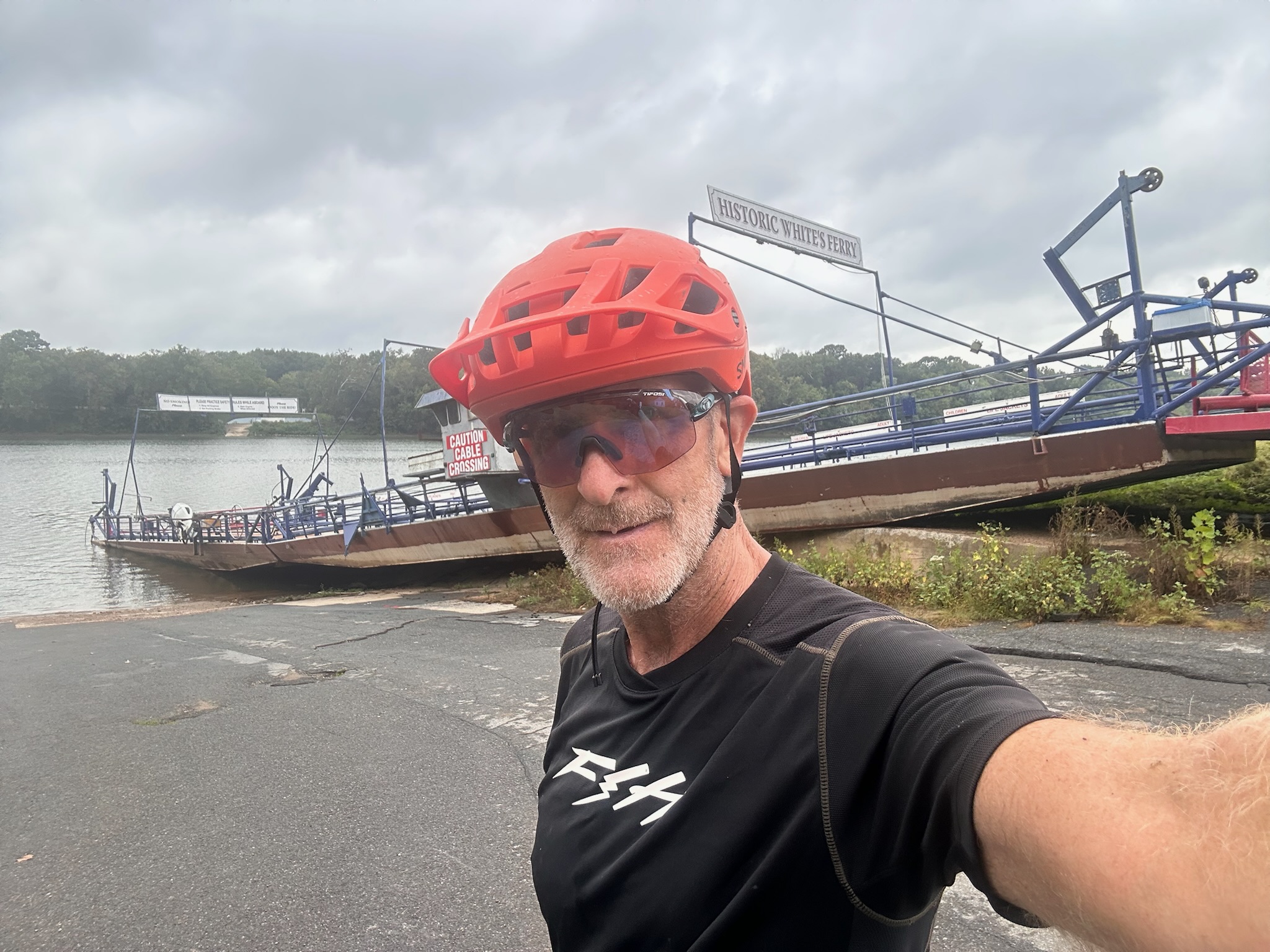
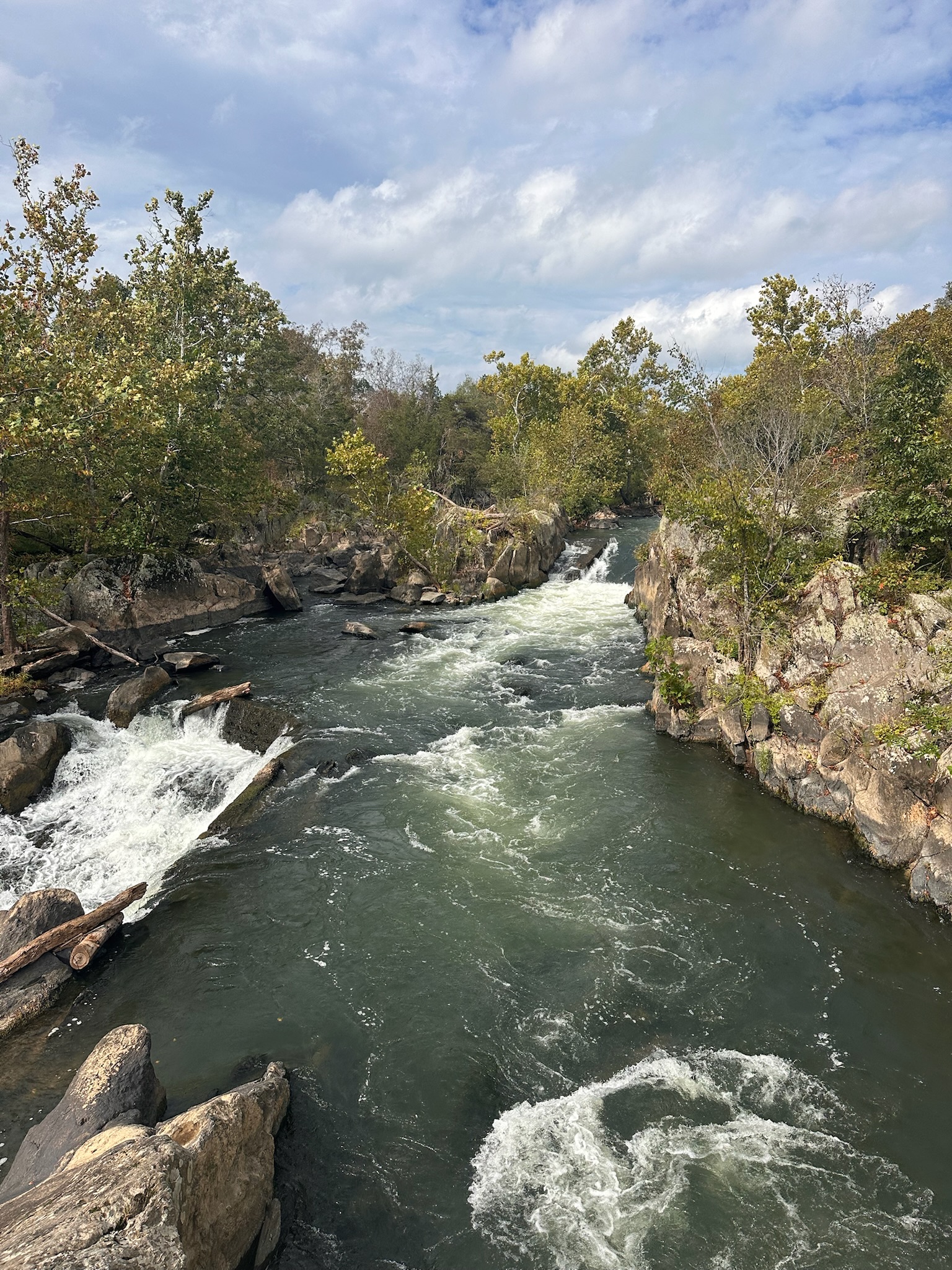
The last leg was less than 70 miles but we were all feeling pretty knackered after four days of riding. We stopped at White’s Ferry for sandwiches about half way then cruised into the suburbs of DC. The highlight was Great Falls so we stopped a few times for some sight-seeing.
Finding mile 0 of the C&O in Georgetown was a little challenging – unless you know where to look it would be difficult to find. It’s tucked away on the river bank behind the Georgetown University Boathouse.
After a few photos and celebratory fist-bumps, we then had to ride another 5 miles or so to pick up the truck and our gear we’d stashed at a friend’s house in the DC suburbs. We had a quick beer in the sun while I checked into my flight to London that same night. The other four guys we’re staying overnight so I borrowed a hotel room for a quick shower and a change of clothing. We went out for a well deserved celebratory curry and then I went straight to Dulles for my red-eye to London.
We were very lucky with the weather, had no injuries and the only mechanical issue was a blow out which sealed itself after spraying a few of use drafters with tire sealant.
Huge thanks to the gang – David, Iain and Sean and especially Bryan and ChatGPT :) for managing the logistics and to Tim for letting use his house as a staging post. I’d definitely recommend the GAP C&O – it’s not just a trip through some amazing scenery but also a trip through time – from Civil War battlefields to America’s industrial revolution – there are few places in the US so steeped in it’s history.
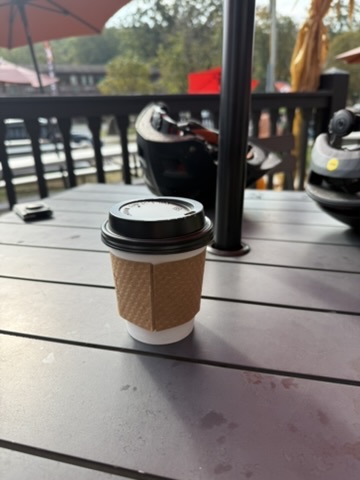
We ate left-over pizza for breakfast as nothing else was open. Stopped in Williamsport to find a bike shop, coffee and food. Bike shop was closed but we found a decent little cafe and loaded up on carbs and caffeine.
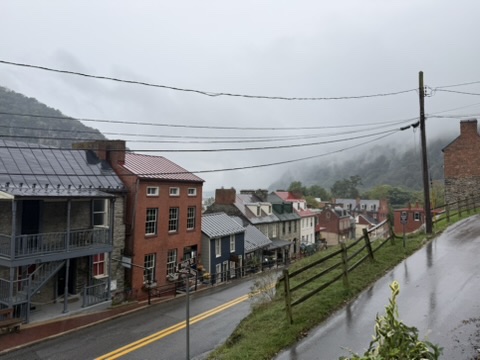
The weather forecast wasn’t looking good and we wanted to get to Harper’s Ferry before the rain caught us so we hammered through the morning with just a few short stops. Passed pretty close to my namesake – Sharpsburg – famed for being the site of the Battle of Antietam, the bloodiest single day of American Civil War. By lunchtime the rain had caught us so we pulled off the C&O to eat a decent lunch in the little college town of Sheppardstown. For the first time – pulled on my rain jacket and we spent the next few hours getting pretty soaked. When we reached Harpers Ferry we had to do a pretty hilly and very sketchy detour in busy traffic as the bridge over the Potomac was closed for repairs.
Arrived at our funky little hotel pretty soaked and tried to get everything hung up to dry before venturing out for dinner and re-hydration. The detour added a few extra hilly miles – topping out the day at 74.2 miles.
Did a quick recce into town to find some decent coffee (Clatter Cafe) and warm up the aching legs – it seems that every road in Frostburg us uphill in both directions. A hearty breakfast and a chat with the owner of the Allegheny Trail House about the trail ahead of us. Then re-packing, a bit of bike maintenance and we were off – at 77.3 miles – this was our longest distance but having crossed the continental divide we were mostly heading downhill or flat.
It was a pretty damp start but we managed to dodge the rain. First stop was Cumberland where the GAP and the C&O connect and there’s a well stocked bike shop right on the trail. Cumberland is a good place to stock up on snacks as there aren’t too many food options for the next 50 miles or so.
Our lunch stop was the School House Kitchen in Oldtown – very basic food but it did the job. I suspect this place only stays open due to it’s proximity to the C&O trail – like a lot of the towns you pass through on the GAP and C&O the collapse of the mining, steel, and coke industry is a big economic gap to fill. Reminds me of areas in the North of England – similar landscape, remnants of the industrial past and signs of economic distress.
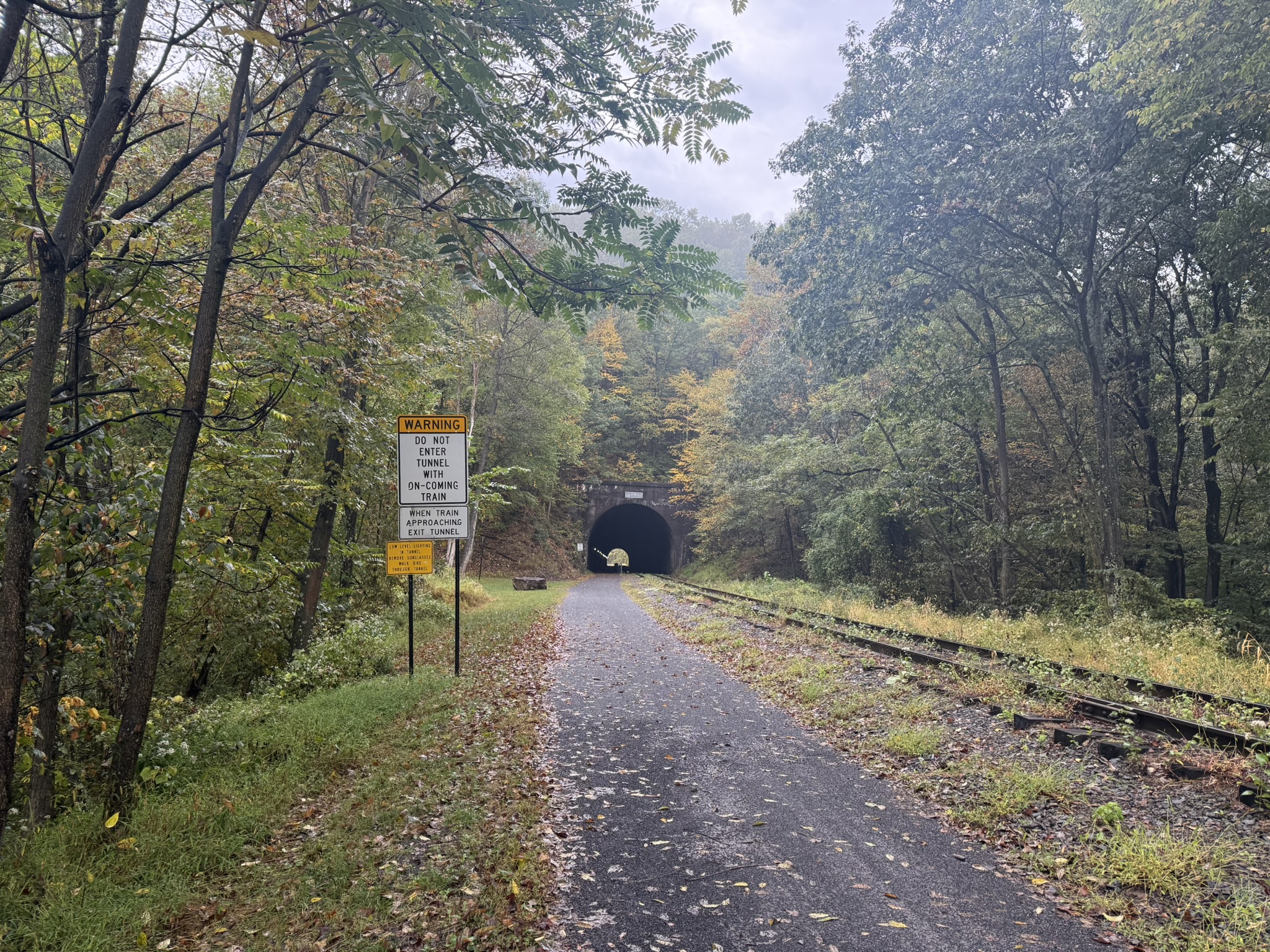
The big event of the day was the Paw-paw tunnel (3,118-foot-long canal tunnel and significant feat of engineering). To ride this without lights would be very difficult – the surface is rutted and washed away in places. Stopped for coffee / break at Bills Place in Little Orleans only to find out it’s been closed for about 5 years. Hammered through to Hancock and our AirBnB for the night.
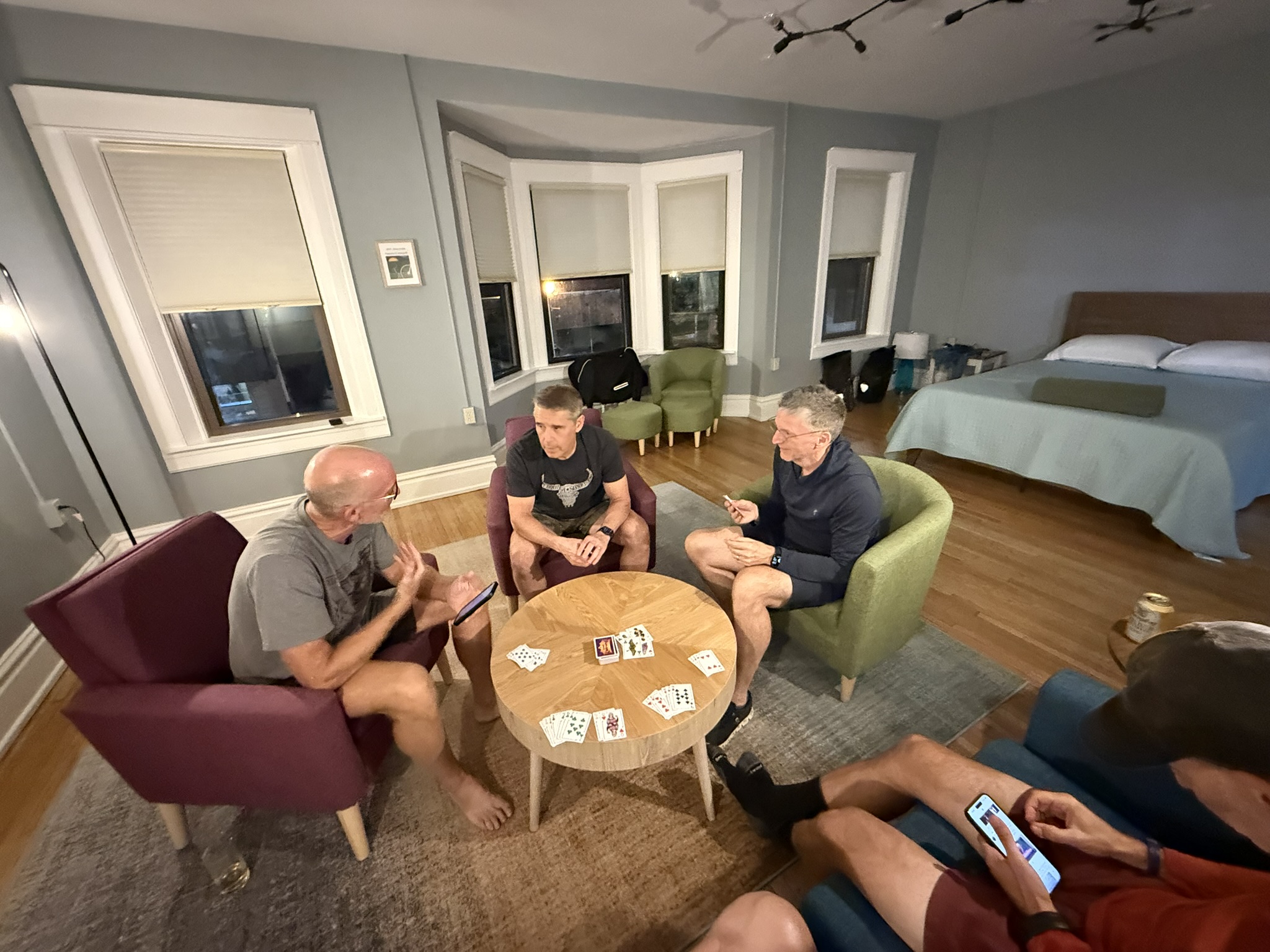
Hancock a decent sized town but it was mostly closed down (I guess it’s a seasonal town) so it was Pizza Delivery, beers from the gas station and a night of laundry and yup – you guessed it – Five Crowns.
Despite drawing the short straw and sleeping on the couch, I had a pretty decent night’s sleep. Note – trying to find AirBnBs for 5 people is more challenging that you’d think. After coffee at the eclectic Crawford Coffee followed by a decent breakfast in the Valley Dairy we packed up and got back on the trail – rode the first few miles with a couple of riders from Texas and Canada. Today was going to be our 2nd longest day in the saddle (76.8 miles) and slightly uphill to the highest point of the ride at the eastern continental divide.
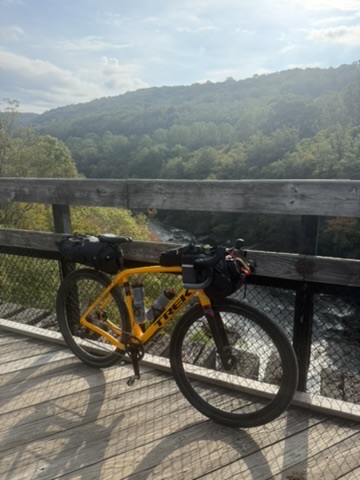
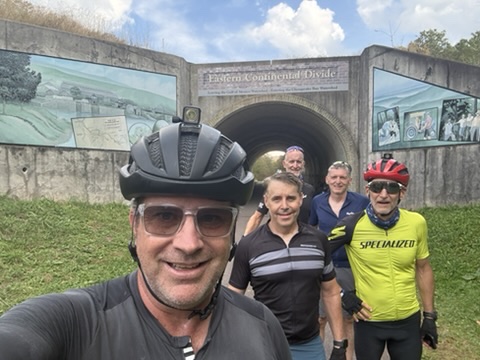
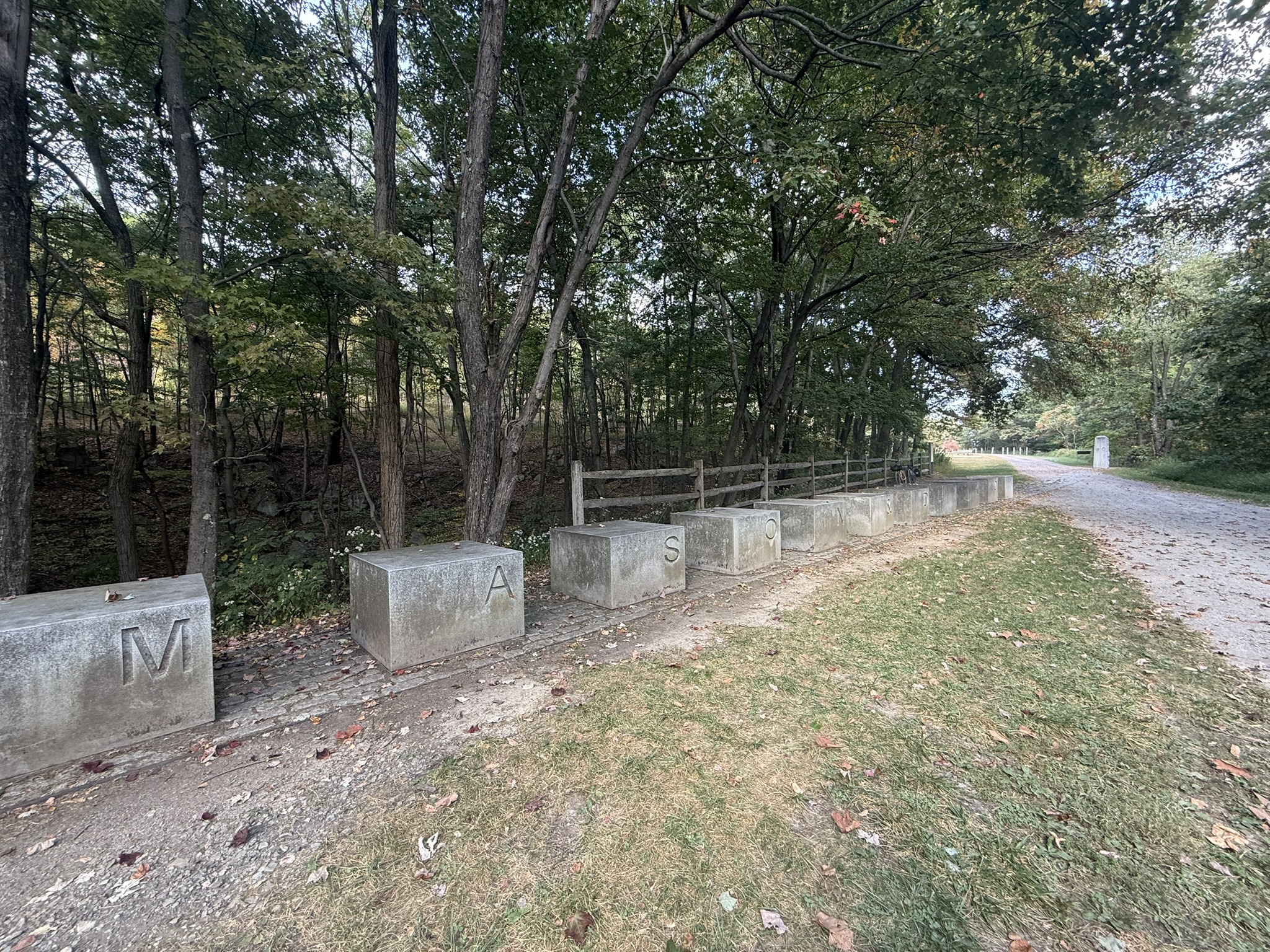
On the way we stopped for views of the river from the many steel bridges and stopped for a coffee break in Ohiopile then onto the Eastern Continental Divide (water at this point flows into the Gulf of Mexico on one side and the Atlantic on the other). Through the big savage tunnel (one of three long tunnels – you’ll be glad you bought lights!) then some history / culture as you cross the Mason-Dixon line. A punchy set of climbs off the GAP Trail got us to our rest stop for the night in Frostville – the very funky Allegheny Trail House. We were all pretty starving after a long day in the saddle – so a quick shower, hosed the bikes down and headed for dinner at the local Mex followed by the usual end of day entertainment – 5 Crowns !
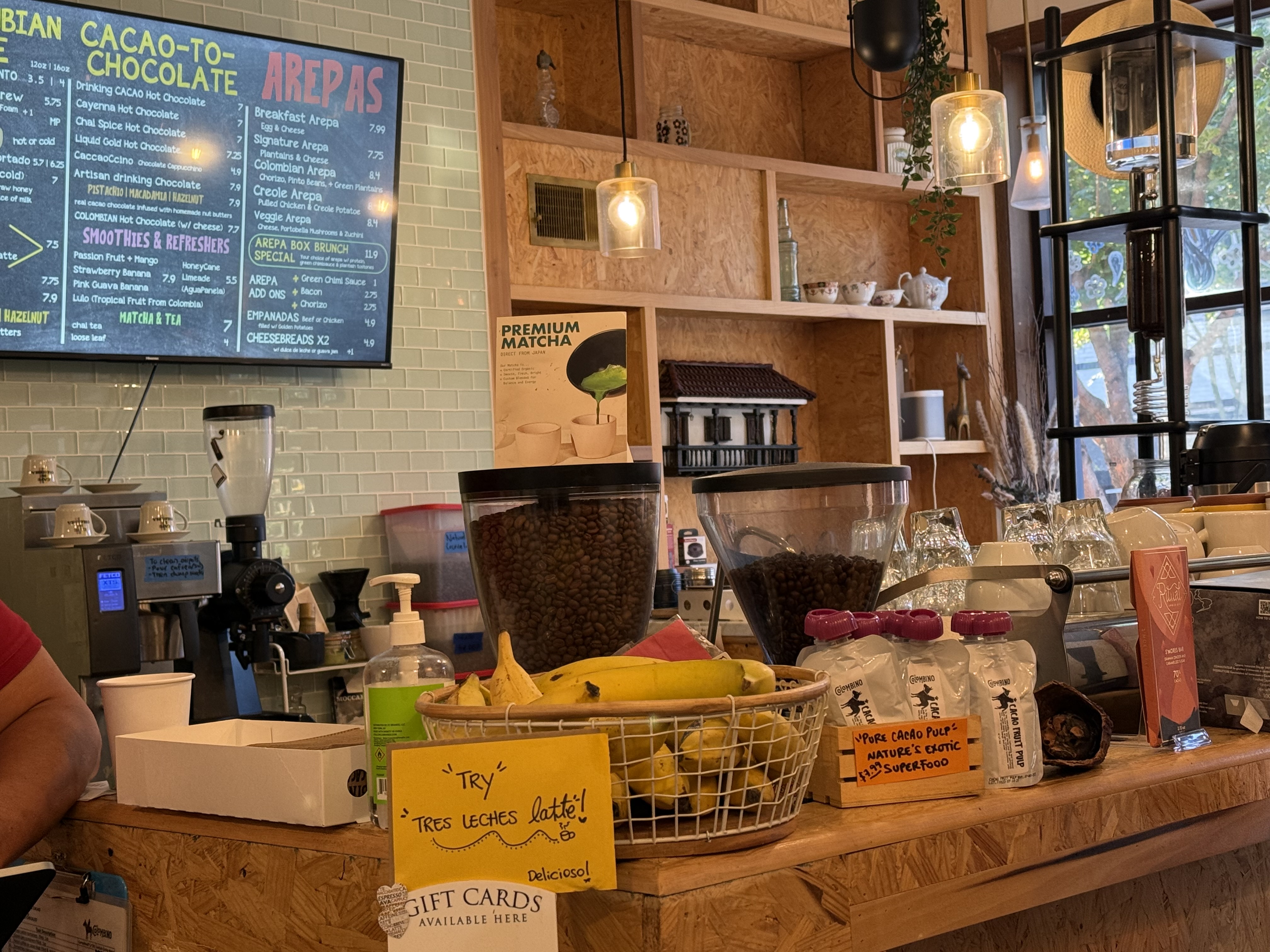
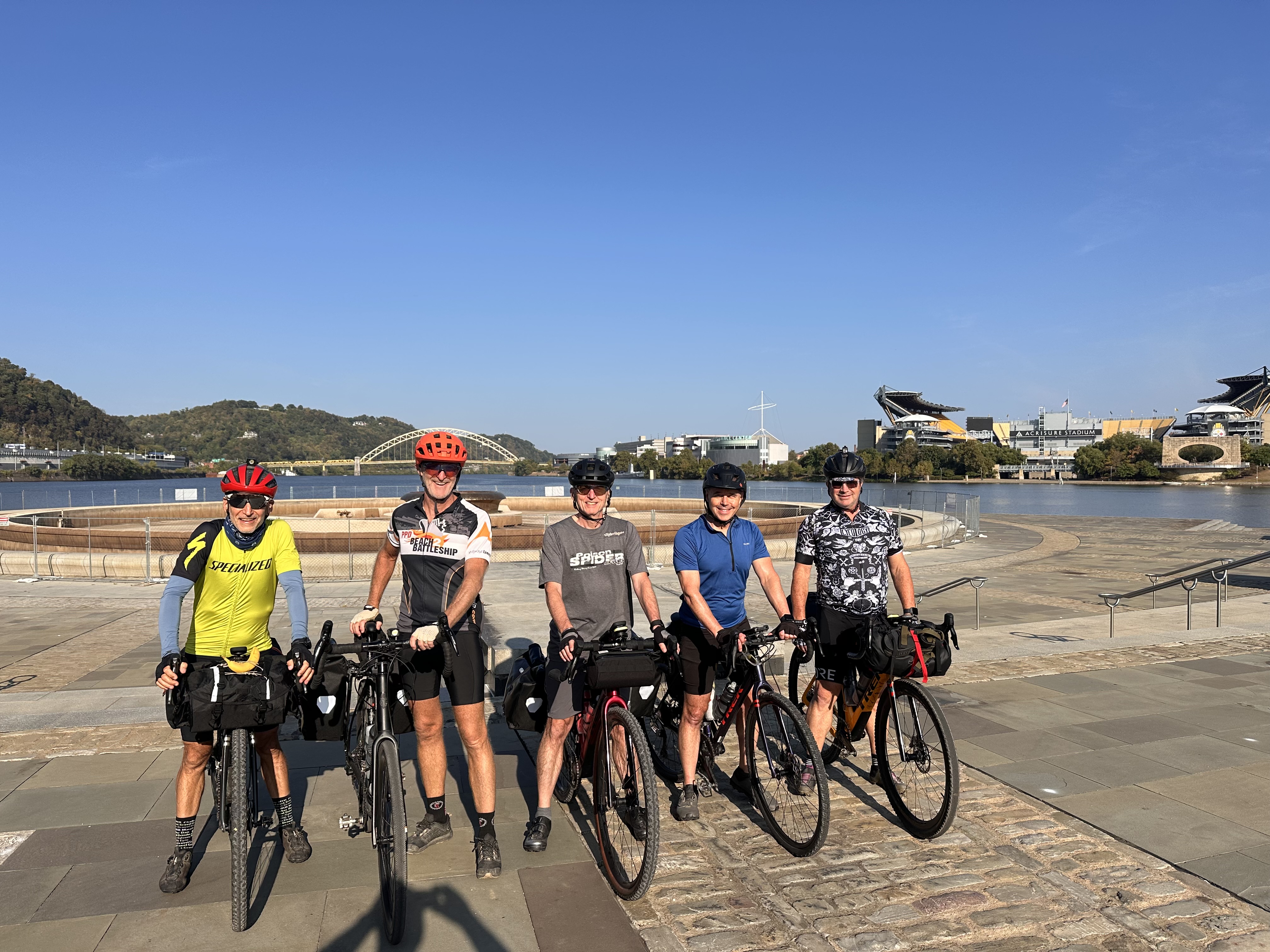
We kicked off the start of the adventure with a decent breakfast and some Columbian coffee in the Northside of Pittsburgh then rode down to start / end of the GAP in Point State Park at the confluence of the Monongahela and Allegheny Rivers. Unfortunately the fountain was under repair so I guess we’re going to have to return for the group photo at some point.
First day’s riding was pretty easy (63 miles, flat to slightly up hill) and weather was perfect. We stayed in an AirBNB right on the trail in Connellsville, had a couple of beers, and dinner at the River’s Edge as the Youghiogheny River and freight trains on the railroad rolled by.
This years boys biking trip was a bit of a departure from the usual red sandstone and desert of the South West – instead, we planned to ride the 330 miles from Pittsburgh, PA to Washington, DC on the GAP (Great Allegheny Passage) and the C&O (Chesapeake and Ohio) Canal towpath.
The 150 mile Great Allegheny Passage follows a railway corridor through wooded hills and small towns, reaching the Eastern Continental Divide before descending into Maryland. After Cumberland, Maryland, the route shifts onto the C&O Canal Towpath, traveling 184 miles along the Potomac River through peaceful forests and rural countryside all the way to Georgetown. Interactive map here.
Logistics
We drove gear and bikes to DC on the Friday and organized a shuttle to Pittsburgh on the Saturday – breaking up the trip over a couple of days avoided spending 10+ hours driving. We were able to leave a vehicle and post-ride gear at a friends house in the DC suburbs which helped tremendously.
We planned for 5 days of riding and here’s the day-by-day account:
As we were staying in rental house, B&Bs with washing machines and dryers and eating our meals out, we were able to pack pretty lightly. I packed about 13lbs of gear:
2 days of cycling gear (with layers for different temperatures)
3 days of non-cycling gear
spares and tools divided amongst the 5 of us
snacks, toiletries, first aid kit
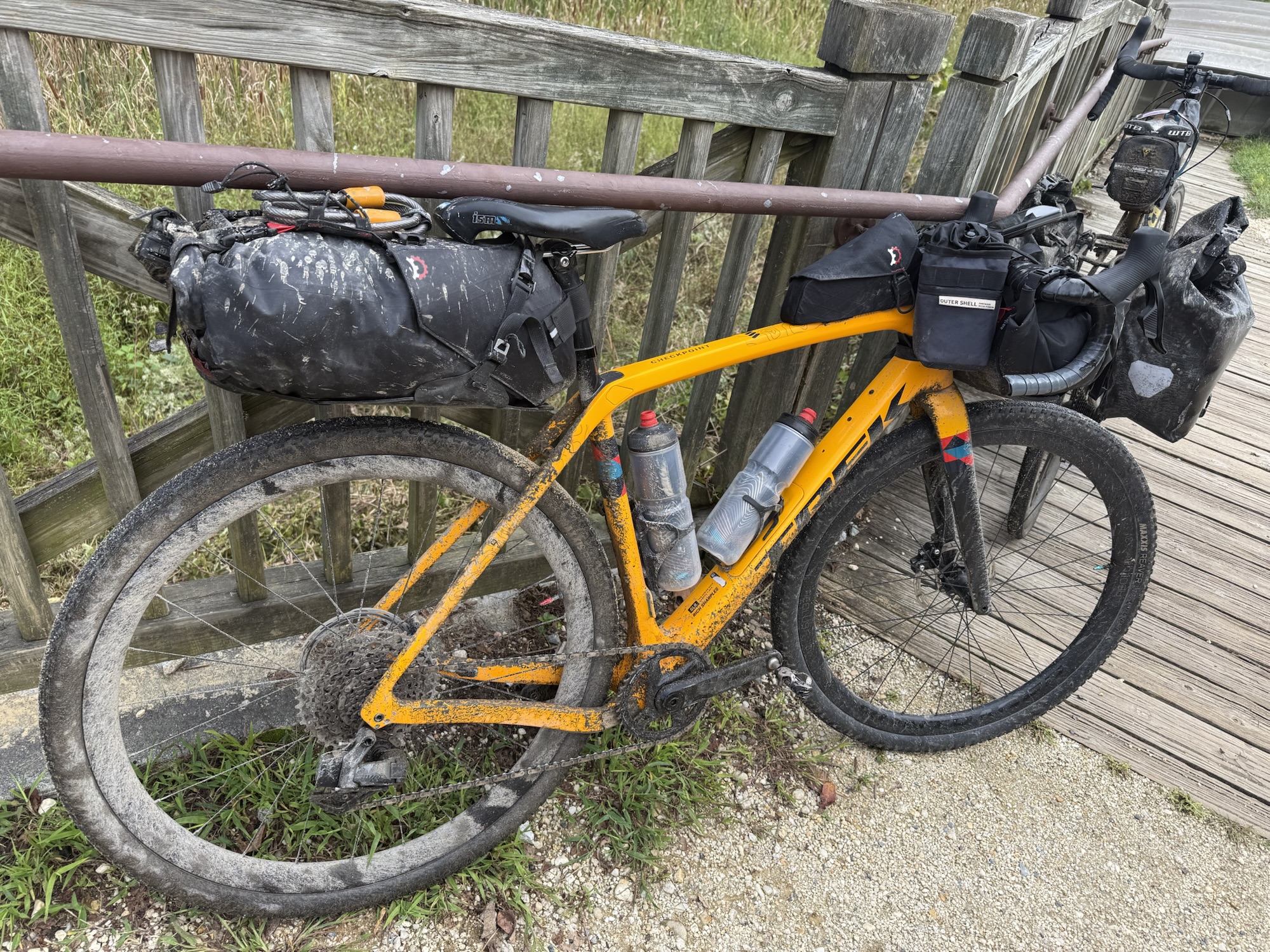
Instead of traditional paniers, I opted for a smaller saddlebag and bar bags, specifically :
Revelate Designs – Spinelock 10L saddle bag on the back for stuff I’d only need at the end of the day (clothses. toiletries, charging cables, etc)
Revelate Designs – Harness and Saltyroll on the front for stuff I may need during the day (tools, spares, warm clothes)
Revelate Designs – Mag Tank – for tool kit, snacks.
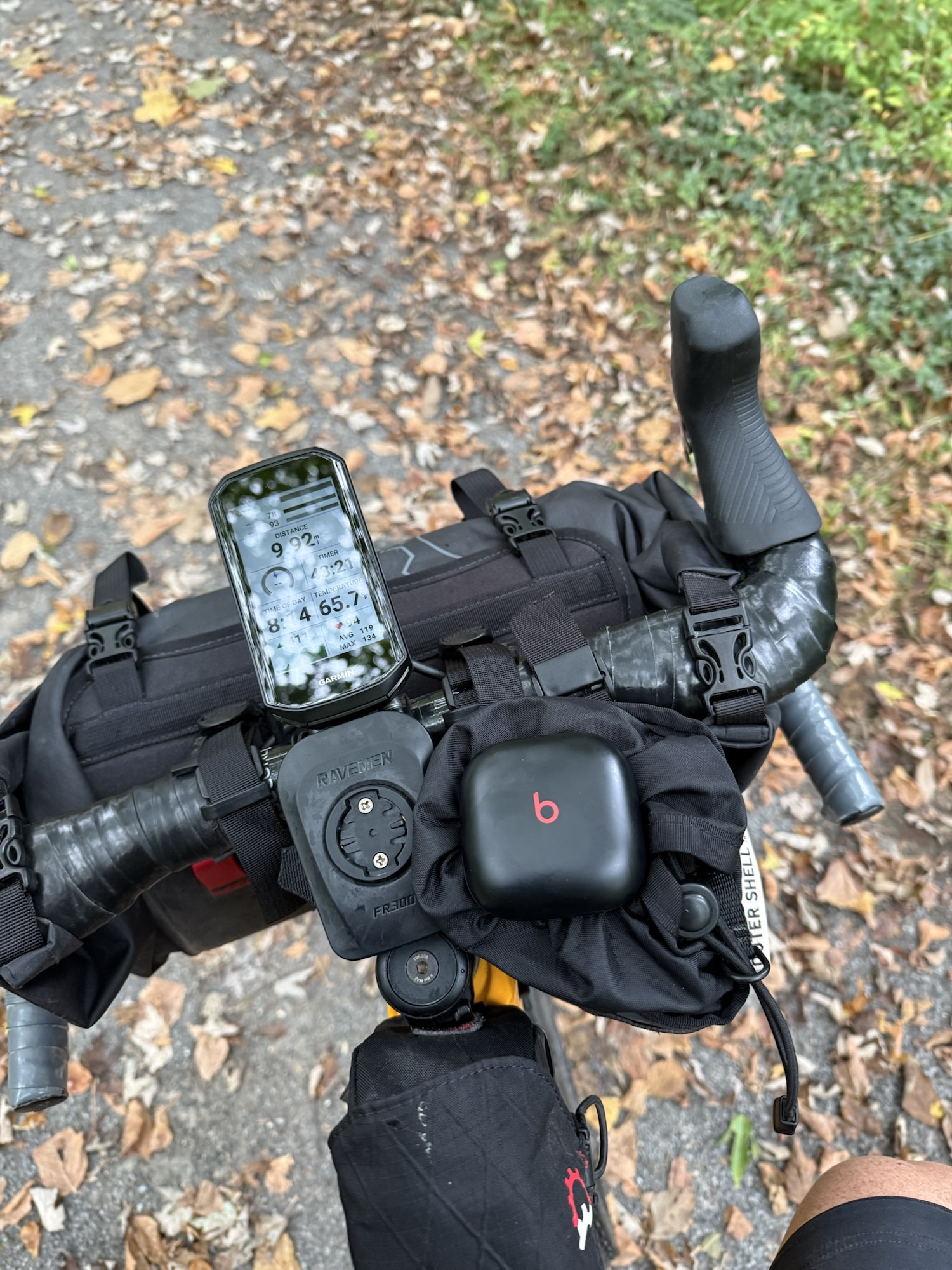
Outer Shell – Stem Caddy – for quick access to rain jacket, headphones, cellphone
I used everything in my packs except a down vest that was good for additional padding so not a complete waste.
The other 4 riders in my party opted for traditional racks and Ortlieb waterproof panniers and I’d say 70% of other riders we met did the same. My reason for choosing bar and saddle bags we’re, in no particular order:
keep the weight down
lack of mounting options on my Checkpoint
ability to use the same bags on my mountain bike
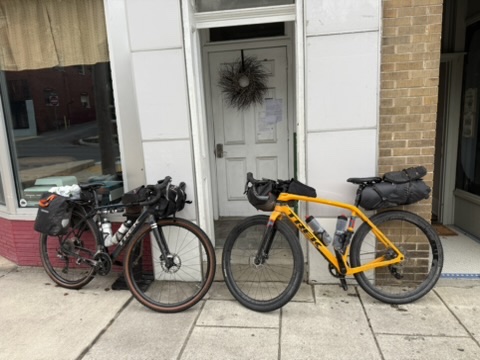
Bike is a pretty standard Gen 2.0 Trek Checkpoint SLR 6 AXS, with an ISM 2.0 saddle and a Garmin Edge 1050.
I’ve been a happy, occasional WordPress user since 2008 – this blog is hosted by Automattic – I pay them money even though there are cheaper ways to host a low-volume WP site. I’ve even had the pleasure of meeting Matt Mullenweg a couple of times over the years. I’ve seen WordPress the product and community grow to the point where it’s become the de-facto content management system for the modern web – powering 478 million site – 43% of the web.
The WordPress community has recently been thrust into the spotlight due to a public disagreement between the two major players: Automattic, led by WordPress co-founder Matt Mullenweg, and WP Engine, a popular WordPress hosting provider.
At the heart of the dispute are questions about contributions to the WordPress ecosystem, trademark usage, and the balance between commercial interests and open-source principles. Automattic has raised concerns about WP Engine’s level of contribution to WordPress development, while WP Engine maintains that its contributions are substantial and in line with industry norms.
The situation has escalated to legal actions, with both parties sending cease-and-desist letters and WP Engine filing a lawsuit against Automattic and Mullenweg. This conflict has led to technical disruptions, internal restructuring at Automattic (Matt offered employees a decent severance package to leave if they disagreed with his position), and broader discussions about governance in the WordPress community.
As the dispute unfolds, it highlights the complex relationships within open-source ecosystems, where commercial entities both benefit from and contribute to shared resources. The outcome of this situation may have far-reaching implications for how open-source projects, particularly WordPress, navigate the balance between community collaboration and commercial interests in the future.
For the record – I don’t like open source freeloading – especially when it’s large well funded organizations doing the exploitation. Open Source collaboration depends on a certain degree of fairness – contributors take out more than they put in and it’s a fine balance that’s easily disrupted should someone decide to not give at all.
That said – I think Matt Mullenweg / Automattic could and should have handled this much better. If you are the dominant force in a community (as Automattic is in the WordPress community) and can’t defend yourself from freeloaders – you are doing something very wrong. If you control the code – there are thousands of tweaks you can make to the release model, cadence, APIs, to advantage you and disadvantage others. We lived this every day at Red Hat – it can be done without cease and desist notices, laying off employees who disagree with you and fracturing the community.




















 Rich Sharples' Weblog